Book Your Seat on the PhotoPills Expedition to Socotra before January 18th and Get €500 Off (Only 2 Spots Left)
We’re going to Socotra...
Are you in?
Around the Waxing Crescent Moon...
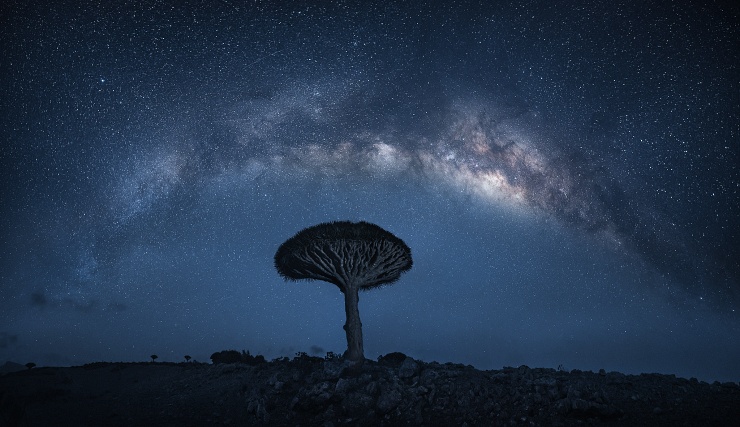
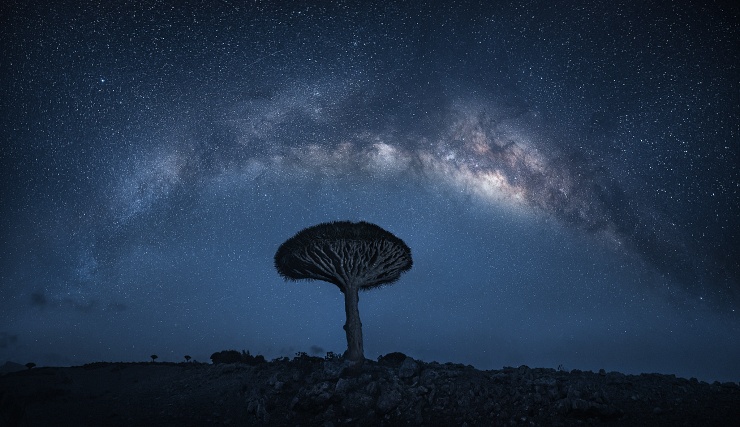
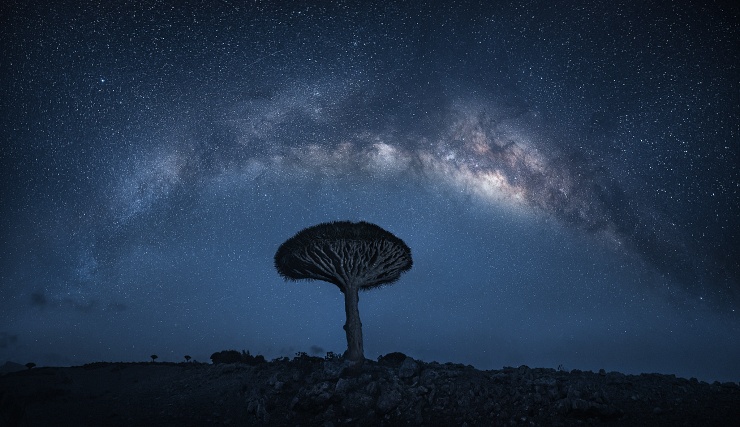
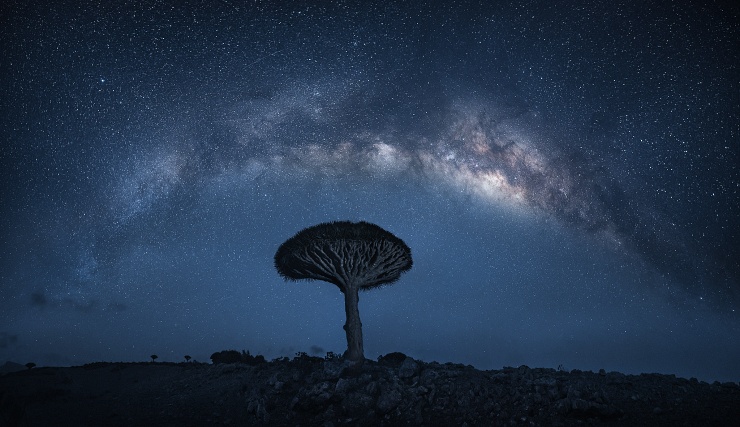
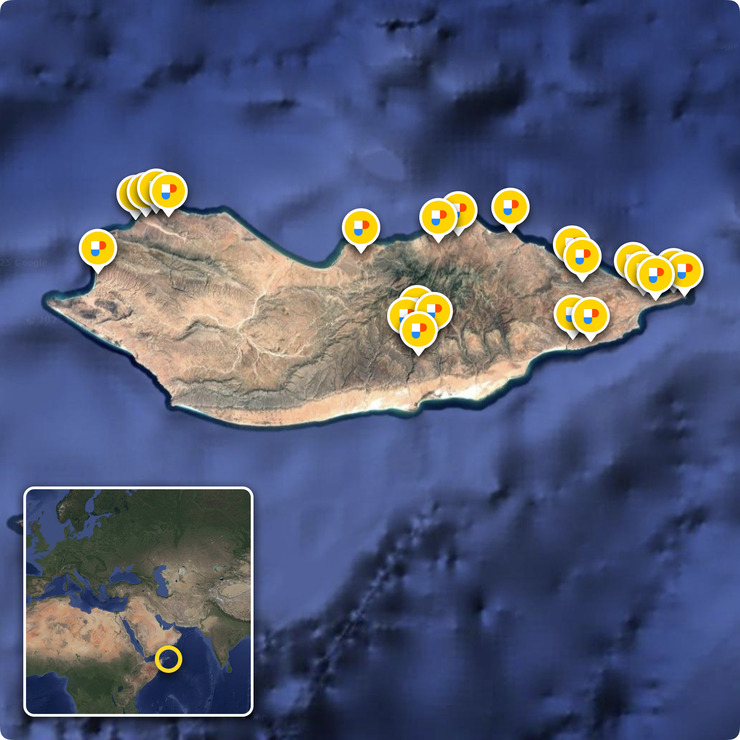
From March 16th to March 23rd 2026, Andy Marty (PhotoPills Master) will jump into 4x4 vehicles and travel across the island of Socotra to photograph the Milky Way and the Golden Light along with immense white sand dunes, strange rock formations and the magical dragon blood trees...
In the most alien-looking place on Earth!
With nearly 700 endemic species (found nowhere else), and recognized by UNESCO as a World Natural Heritage Site in July 2008, Socotra is a jewel of biodiversity lost in the Arabian Sea.
Located in the Republic of Yemen, Socotra is an isolated place awaiting to be discovered.
Of course...
We’ll be taking photos all day long...
But...
Can you imagine it?
To photograph the Milky Way and the Golden Light with immense desert seascapes, tall white-sand dunes, secret infinity pools, mystical dragon blood trees, pink-flowered bottle trees, sea-turtles, Egyptian vultures and strange rock formations...
We’re dreaming about it!
To achieve it, we’ll use the planning power of PhotoPills and the expert knowledge of Andy Marty to always be at the right place at the right time.
Top secret: we have quite a few legendary photos planned already ;)
The Deal (Only 2 Spots Left)
We're offering you a €500 discount on the regular price!
All you have to do is to book 1 of the 2 spots available before Sunday January 18th.
Read carefully all the details of this unique adventure.
And when you’re ready, click here to book your spot:
Please, book as soon as possible. The seats are sold on a first come, first served basis.
The Adventure
12 PhotoPillers | 2 PhotoPills Masters | Socotra | Endless legendary photos
Warning! This is not a honeymoon... We’ll be camping and sleeping under the stars!
This adventure isn’t too tough if you’re in good shape. But if you’re not used to hiking, expect a moderate to challenging experience.
The terrain is rough and uneven, so even short walks can quickly become demanding and require good balance. Solid footing and a good level of fitness are essential. Plus, the heat can really take a toll, so be sure to pace yourself and stay hydrated!
We’re recruiting 12 brave PhotoPillers (PhotoPills and photography nerds) to join us on a 8-day expedition to photograph the Milky Way and the Golden Light along with some of the gems hidden in the ancient island of Socotra.
This expedition is a non-stop adventure to chase legendary photos and you are a key asset!
We have planned tons of photos, and we’ll travel many kilometers to capture them...
We’ll be camping under the stars, right next to the planned shooting spots.
But we also want to maximise our flexibility in terms of itinerary and schedule in order to take advantage of all the opportunities that the changing weather will surely put in our way.
If we see something interesting happening in the sky, we’ll pick the best location possible, stop and take advantage of the occasion.
When we are hungry, we’ll stop and eat. When we are tired, we’ll stop and rest...
You are about to embark on a PhotoPills style journey. And it’s not going to be a honeymoon precisely... :P
You’ll be a true PhotoPiller!
Are you in?
Day 1. Monday, March 16th - Getting Ready for Socotra
It’s Monday morning...
After your international flight, you and the rest of the expedition members (including Andy) land in Jeddah Airport in Saudi Arabia.
We’ll spend one night here, to get ready for our Adventure in Socotra.
3:00 pm
Check in at our hotel inside the airport: Hotel Best Western Plus Airport Jeddah.
4:00 pm
Expedition briefing.
It’s time to meet Andy and the rest of the PhotoPillers on the expedition.
Andy will go over the itinerary for the week, explaining the logistics, the locations and the photo opportunities we’ve specially planned for you. They’ll also cover the recommended gear and some important safety instructions.
4:00 pm
The PhotoPills class begins.
Get ready to learn how to use PhotoPills once and for all. We’ll share lots of tips and tricks that will make planning your photos much easier and faster!
7:00 pm
Dinner at the hotel.
8:30 pm
Bed time!
Tomorrow we’ll get up early to catch our flight to Socotra!
The adventure is about to begin!
Day 2. Tuesday, March 17th - Welcome to Socotra
7:30 am
Good morning PhotoPillers! Our travels continue...
After checking out from the hotel, we walk together to the airport’s check-in area to catch our flight. But before that, you can have a quick breakfast at the airport.
2:30 pm
After a 3h 30min flight, you and the rest of the expedition members (including Andy) land in Socotra airport.
There, we meet our expert local guide, our drivers and cook. And we jump into our comfortable Toyota Land Cruiser 4x4 vehicles equipped with tents (1 per person), water, food... and everything we need to survive one week in Socotra.
The adventure begins!
03:00 pm
Socotra is an island of the Republic of Yemen in the Indian Ocean, between the Arabian Peninsula and the Horn of Africa, located 240 km east of Cape Guardafui (Somalia) and 380 km south of Ras Fartak (Al Mahrah, Yemen).
Despite Yemen's ongoing civil war, Socotra is open to tourists from all around the world.
Although most countries do not recommend travelling to Yemen (Socotra included) since the start of the war in 2014, this remote island full of treasures is worth the adventure. In fact, this is going to be our fourth adventure here! We just love Socotra!
Our first destination: Detwah Lagoon.
4:30 pm
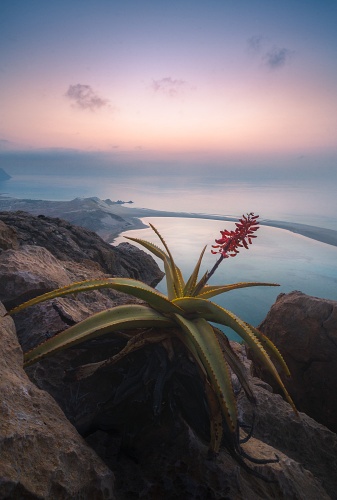
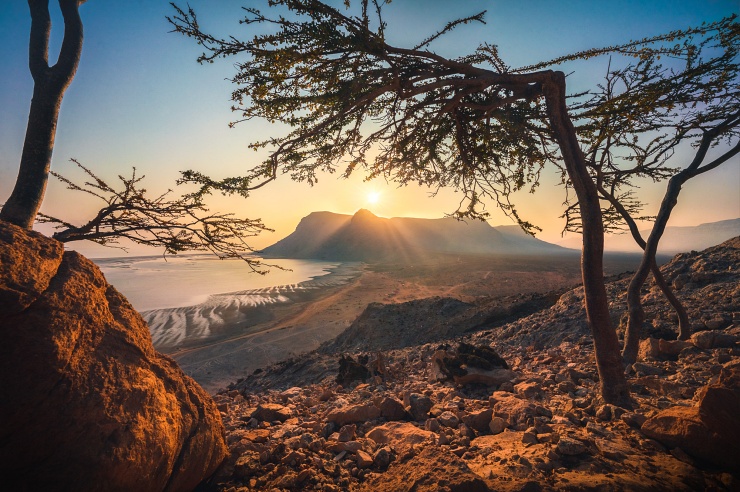
Detwah Lagoon is located on Socotra's northwest coast. We’ll drive through the village of Qalansiyah to get there. The saline lagoon connects to the Gulf of Aden, from which it is separated by a spit.
As soon as we sort out our luggage, we have lunch and relax for a bit.
After a bit of tea, coffee, fruits and cookies, and as the Camp Master sets up the camp for us, we’ll go explore the area to fine tune the planning for our Sunset and our Milky Way shots.
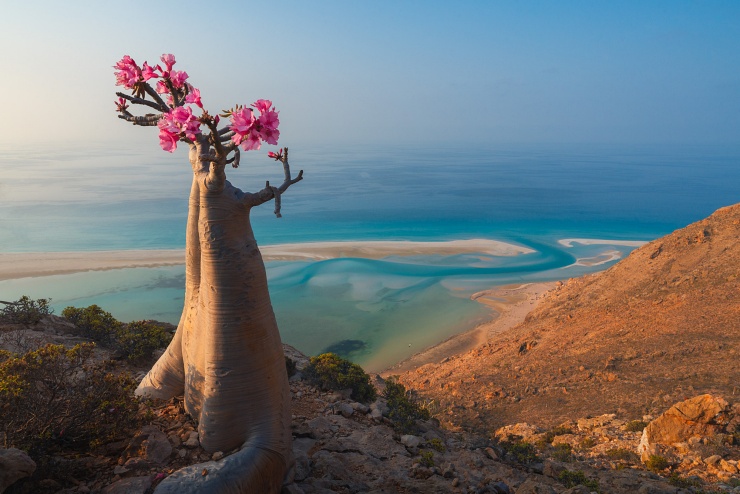
The beach is just beautiful, the lagoon immense, and if we hike up a bit, we’ll discover a strategically positioned bottle tree.
We all dream of photographing the bottle tree and its pink flowers. And I hope we’re lucky enough to find them blooming. But nothing is guaranteed when it comes to the bottle tree. The blooming season can vary a lot. And also, a strong storm might blow the flowers away.
Oh! I almost forgot it, sea-turtles and Egyptian vultures are often seen here.
5:00 pm
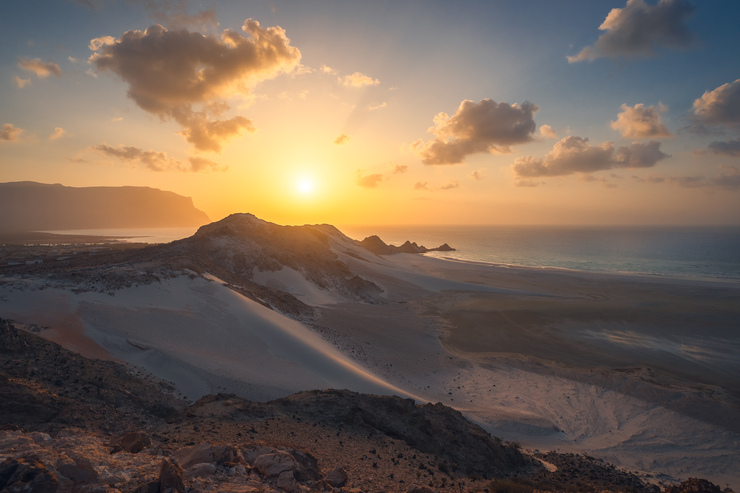
Look! As the Sun goes down the golden light begins to fall on the lagoon.
The spot is perfect to use both a wide angle lens and a telephoto lens if you want to capture some parts of the landscape.
Open PhotoPills and check this out:
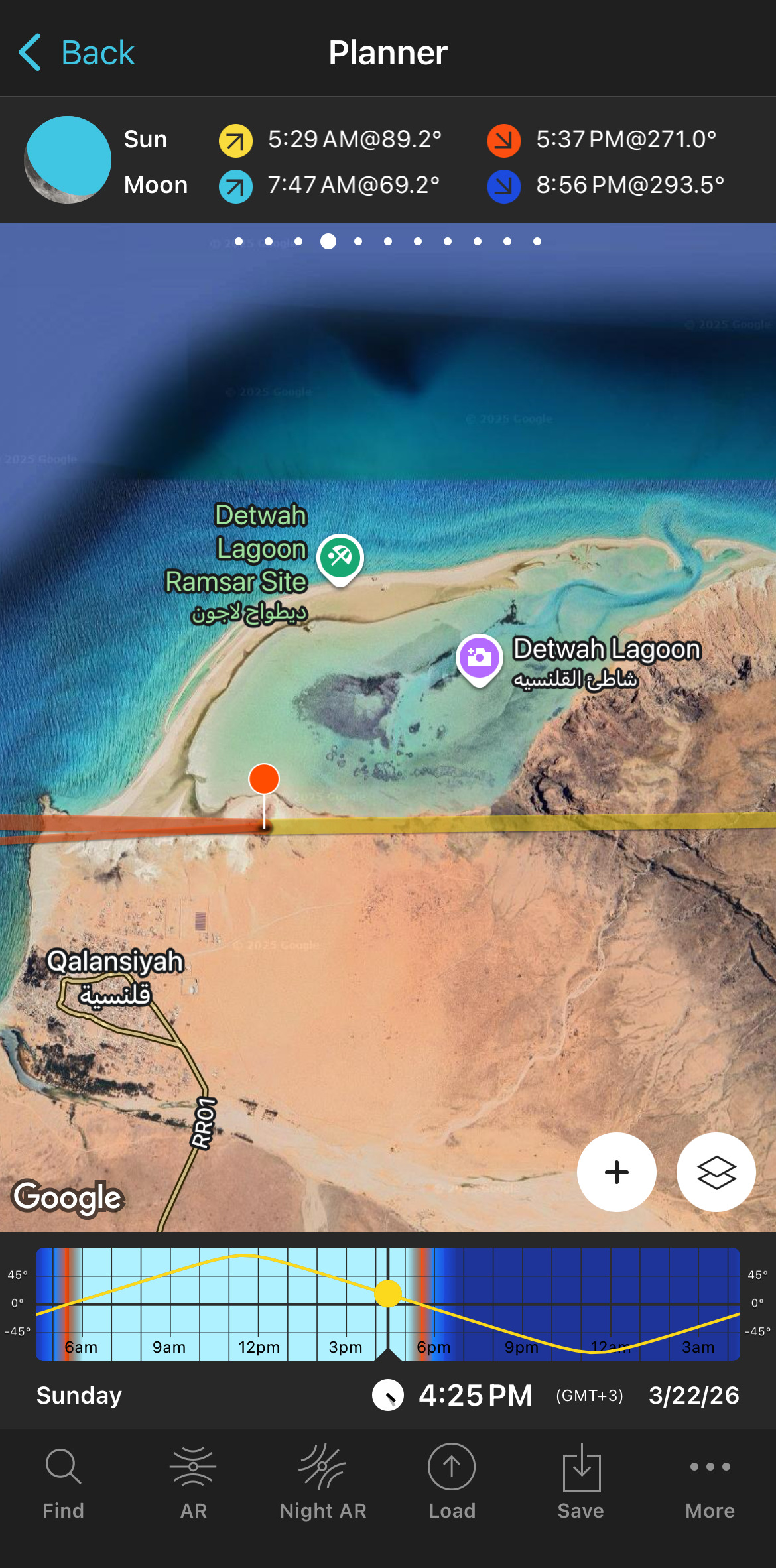
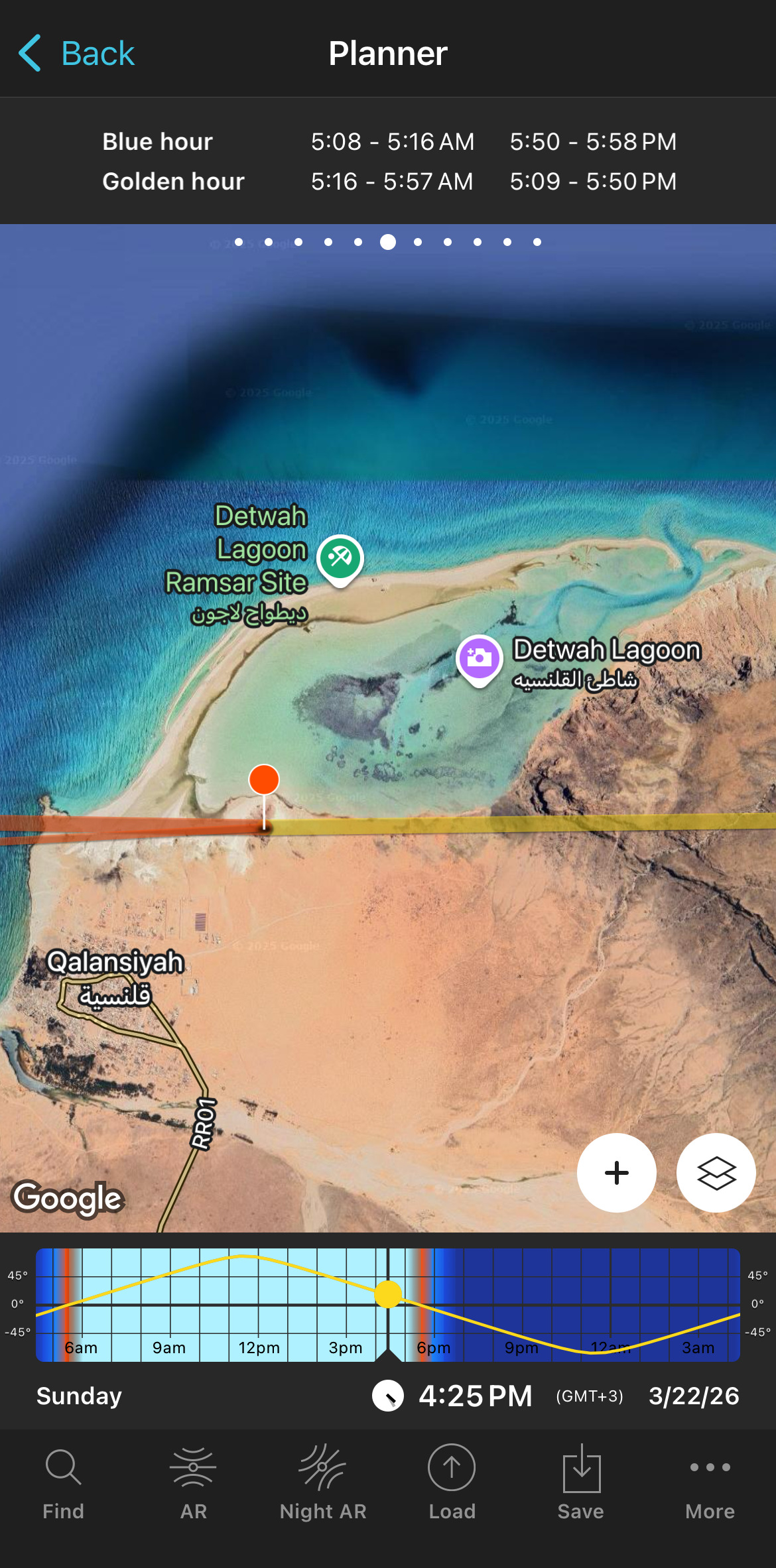
Don’t know how to use PhotoPills? Don’t worry, you’re at the right place. We’ll learn how to make the most of PhotoPills while in the field.
Golden hour begins at 5:09 pm, Sunset is at 5:37 pm, golden hour ends at 5:50 pm, and blue hour ends at 5:58 pm.
7:00 pm
We’re back to the camp, where a delicious dinner awaits.
Our daily meals will be simple but at the same time packed with tasty mixed-salads, goat stew, grilled fish (when available), fried-chicken, local bread (flat bread), rice and many more dishes...
8:00 pm
Off to bed.
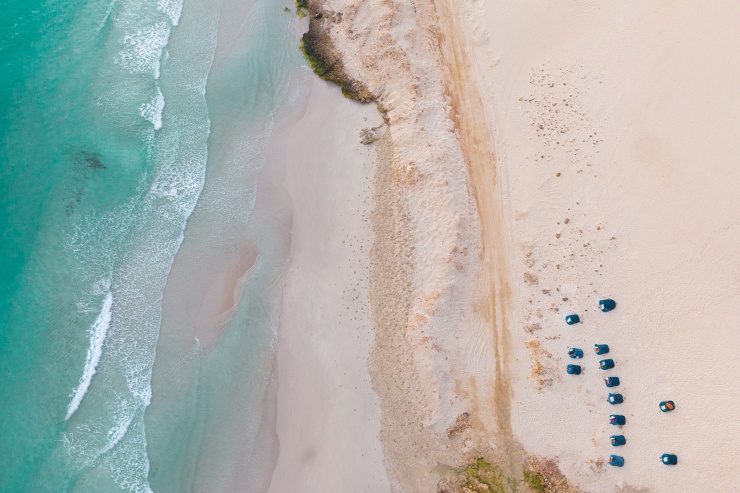
We’ll be sleeping in tents planted on the sand (one tent per person). And you don’t need to bring any camping gear with you, all will be provided (mattress, light blanket...).
Photographic pills:
- Sunset, golden hour and blue hour at Detwah Lagoon.
- Bottle tree during golden hour.
- Wildlife at Detwah Lagoon.
Day 3. Wednesday, March 18th - The Pink Queen
2:00 am
Wake up! We’re going to photograph the Sunrise with the landscape and Detwah Lagoon.
2:40 am
After a short drive to the trailhead, we’ll start an 85-minute uphill hike to reach our planned shooting spot. The trail is 1.6 km (1 mi) long with a 240 m (787 ft) elevation gain.
It’s not an easy hike... The terrain is rough and uneven, so come prepared!
4:00 am
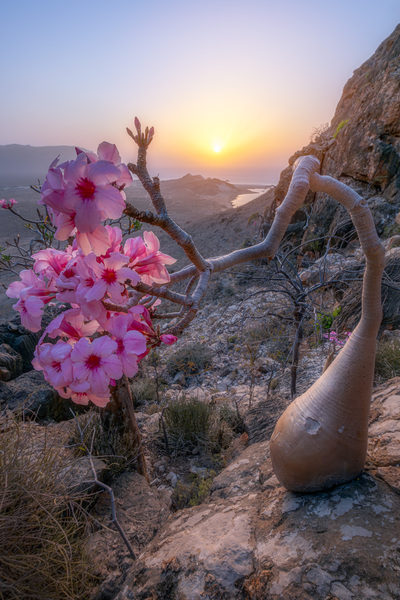
As the blue hour begins, the scene changes completely. The sky is filled up with beautiful cold colors.
Later, as the Sun rises, the blues give way to the reds and oranges. The colors of the golden hour...
Colors that fall on the lagoon and landscape, just in front of us.
Blue hour begins at 5:07 am, golden hour begins at 5:15 am, Sunrise is at 5:28 am and golden hour ends at 5:56 am.
7:15 am
After hiking down for about an hour or so, we finally get to the cars.
We have a 10-minute drive to reach the camp and have breakfast.
9:00 am
We have approximately 3.5 hours to get to our next camp on Diksam Plateau.
But we’ll stop along the road as soon as we see something that deserves to be photographed.
Hmmm...
Knowing how unique Socotra landscapes are, experience tells me we’ll be stopping a few times here and there :)
12:30 pm
As we settle into our camp, surrounded by the largest concentration of dragon blood trees on the island, you’ll feel like you’ve stepped into another time.
We have lunch here and some time to explore the area. Don’t expect to see many tourists in this remote place.
2:30 pm
Further south of the camp, there is an area where we find a few cool dragon blood trees. This is the area Andy will scout for our Sunset and Milky Way photos.
You can stay at the camp and relax a bit!
4:20 pm
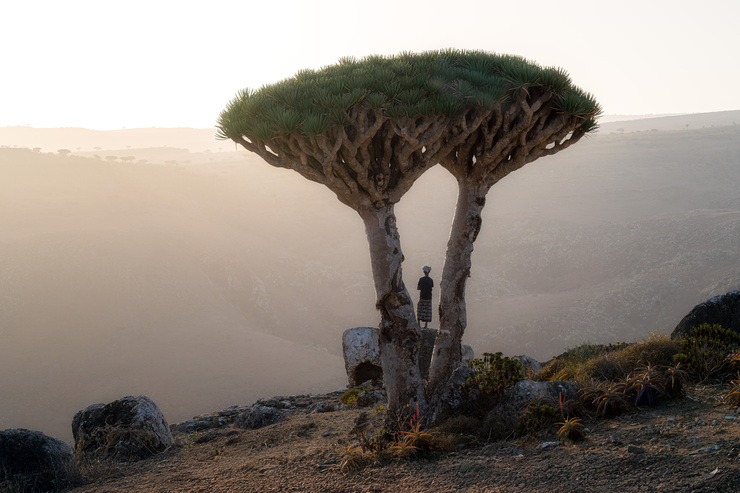
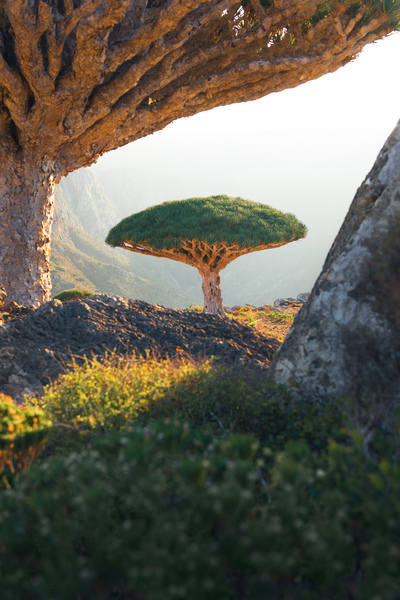
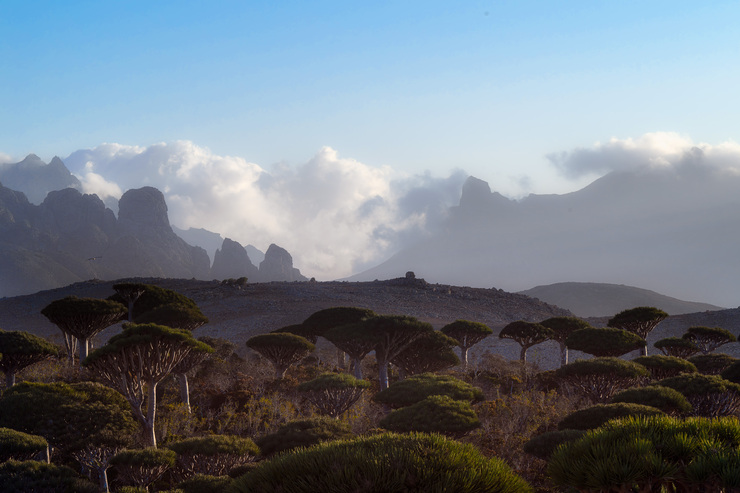
This evening, we journey deep into one of the most surreal and iconic landscapes on Earth: the Diksam Plateau. Nestled in the heart of Socotra, this remote highland is unlike anywhere you’ve ever been.
Here, scattered across rocky terrain and rising from canyons like guardians of an ancient world, stand the legendary dragon blood trees.
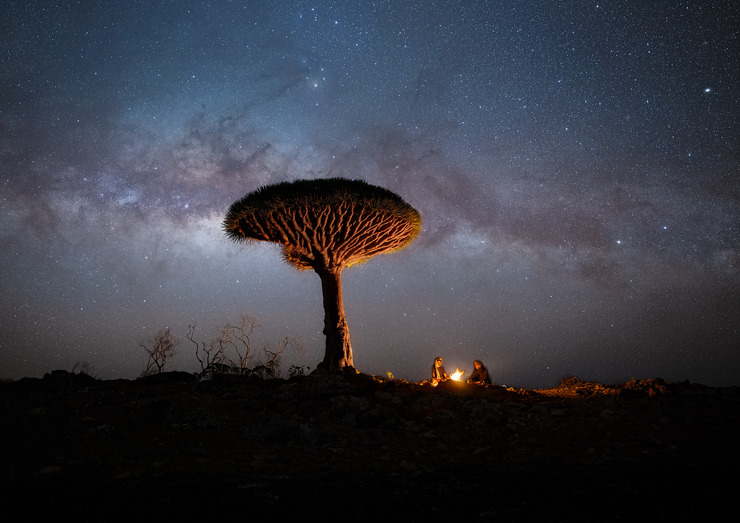
Found only on Socotra, these trees are living relics... Umbrella-shaped canopies with thick, winding branches that seem painted by myth itself.
For centuries, their dark red resin (or “dragon’s blood”) has been harvested for medicine, dyes, and incense, weaving them into the island’s lore and legend.
When evening comes, we set out on a 20-minute (short, but a little demanding) hike from camp to a hidden viewpoint overlooking a vast canyon. The land here opens wide, revealing layers of stone and winding valleys, punctuated by the silhouettes of these extraordinary trees.
As the Sun moves toward the horizon, magic begins.
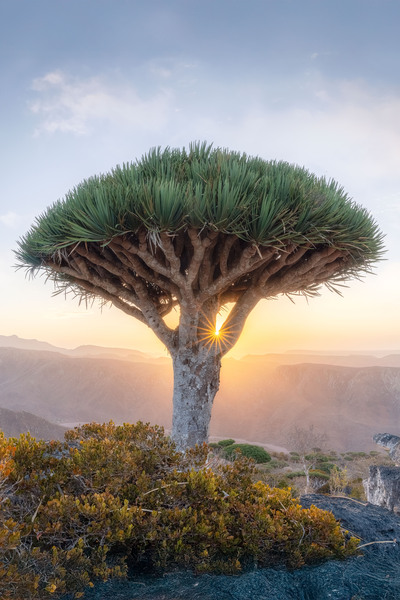
The low golden light filters through the dragon blood canopies, igniting their thick branches and casting intricate shadows on the ground. Shooting into the light, we’ll experiment with silhouettes, capture starburst flares through the branches, and layer the dramatic canyon backdrop to add depth and storytelling to each composition.
The dragon blood trees will tell their story, and your camera will bring it home.
Golden hour begins at 5:09 pm, Sunset is at 5:37 pm, golden hour ends at 5:50 pm, and blue hour ends at 5:58 pm.
6:00 pm
Let’s start walking back to the camp.
7:00 pm
Dinner at the camp.
8:30 pm
Try to get some sleep because our adventure continues very early tomorrow...
Photographic pills:
- Sunrise, golden hour and blue hour at Detwah Lagoon.
- Sunset, golden hour and blue hour at Diksam Plateau.
Day 4. Thursday, March 19th - Dragon Blood
1:30 am
And here we go!
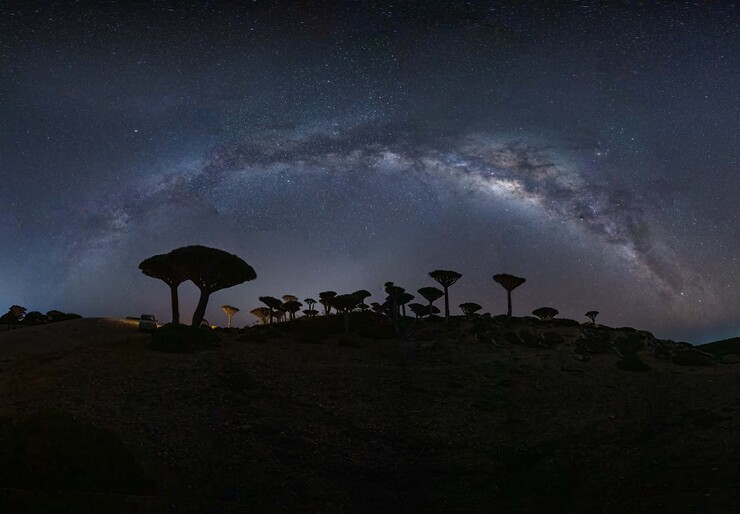
The plan is to start walking to a nice spot full of dragon blood trees to capture them along with the Milky Way :)
1:40 am
Long after the Sun has set and the plateau has fallen silent, we venture out into one of the most otherworldly astrophotography locations on Earth: a remote dragon blood forest under Bortle Class 2 skies.
Here, there’s no light pollution. No hum of civilization.
Just the silhouettes of ancient trees, their umbrella-shaped canopies reaching toward a sky ablaze with stars.
As we walk in darkness, the Milky Way emerges in staggering clarity, arching high over Socotra like a cosmic river of light.
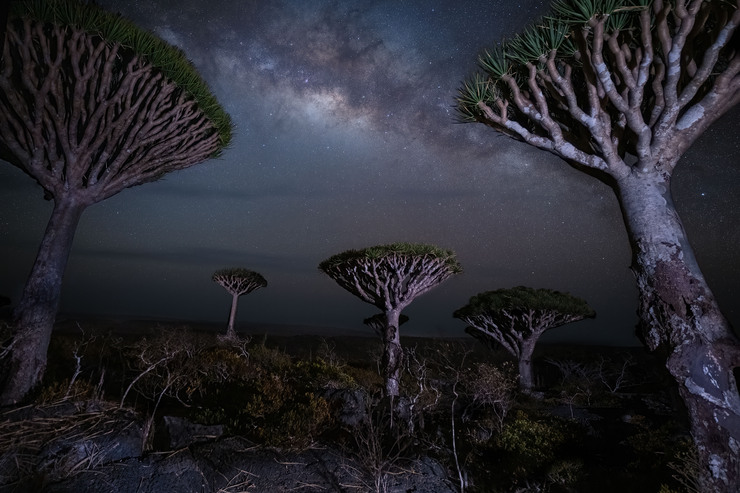
We’ll set up our tripods, composing carefully to make the most of the dragon blood trees’ distinct shapes. They’ll serve as powerful foreground elements, grounding your images and telling the story of a primeval world beneath a cosmic sky.
With the night deepening, we’ll capture the full sweep of the Milky Way, experimenting with vertical frames to accentuate scale or panoramic shots to showcase its majestic arch. This is not just astrophotography.
This is a rare communion with a place that’s barely changed in millions of years, and a sky that reminds us just how small we truly are.
Under the dragon blood trees, the universe feels close enough to touch.
And tonight, your camera will capture that feeling forever...
5:00 am
As the hours pass, a soft glow will begin to rise on the horizon: a delicate gradient of pre-dawn light that paints a completely different mood into the scene.
The darkness fades to soft blues, then pastel pinks and golds, and soon the silhouettes of the ancient trees, which just hours ago stood as stark shapes beneath the Milky Way, come alive with color and detail.
We stay in the same remote spot we used for astro, where the trees line dramatic cliffs and the land opens up to sweeping views of the valleys below and distant mountains beyond.
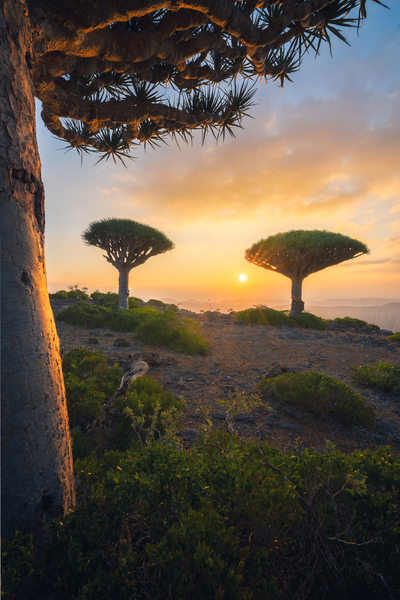
As the Sun rises, a golden glow spills across the rugged terrain, highlighting every curve, every trunk, every branching canopy.
We’ll compose wide frames to capture the expansive plateau, layering the dragon blood trees against misty canyon ridges that stretch to the horizon. Shooting into the light, we’ll use the trees as striking foreground silhouettes, carefully positioning the sun between branches and trunks to create brilliant sunbursts.
Want to go tighter? We’ll switch to longer lenses to isolate textures and shapes, capturing the unique architecture of these legendary trees bathed in soft morning tones.
As haze builds in the canyons below, it adds depth and atmosphere, turning the entire landscape into a dreamlike, layered composition.
It’s quiet. Ancient. Untouched.
Blue hour begins at 5:04 am, golden hour begins at 5:12 am, Sunrise is at 5:25 am and golden hour ends at 5:53 am.
7:00 am
Breakfast at the camp and time to rest after a very long morning!
11:00 am
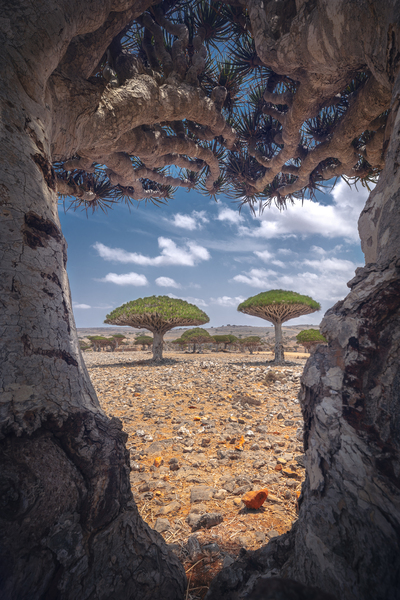
When the Sun climbs high and the light outside turns harsh and blinding, we slow down, stay close to camp, and discover a hidden world beneath the dragon blood trees.
With their thick, umbrella-shaped canopies and intricate branching patterns, these trees transform midday light into something entirely different.
What feels unforgiving in the open becomes soft and luminous underneath: sunlight bouncing off the rocky ground, filtering through layers of bark and branches, and wrapping everything in a gentle, glowing tone. This is when we leave the sweeping landscapes behind and focus on form, texture, and perspective.
We’ll wander through the forest with our cameras and eyes wide open, guided by Andy, scouting for unique tree shapes that tell their own story.
Want a few ideas of striking compositions?
Start positioning yourself directly under the canopy and shoot straight upward, letting the branches radiate outward like a starburst.
You can also adjust your stance slightly to catch the Sun peeking between branches, and with a small aperture, you’ll create dazzling Sunbursts piercing through the foliage.
Or you could highlight the textures of the bark, the intricate patterns in the canopy, and the play of directional light for dramatic contrast.
No matter what you choose, you’ll create images unlike anything else you’ll shoot on Socotra!
12:00 pm
Lunch at the camp and free time to relax.
4:20 pm
This afternoon, we return to a place we know: the canyon viewpoint we explored during our previous Sunset session.
The beauty of coming back to a location is familiarity. We’ve walked these trails, scouted these trees, and already seen how the light moves through this ancient forest. Now, with that knowledge, we can refine our approach, seeking out the compositions we loved and perfecting the ones we missed.
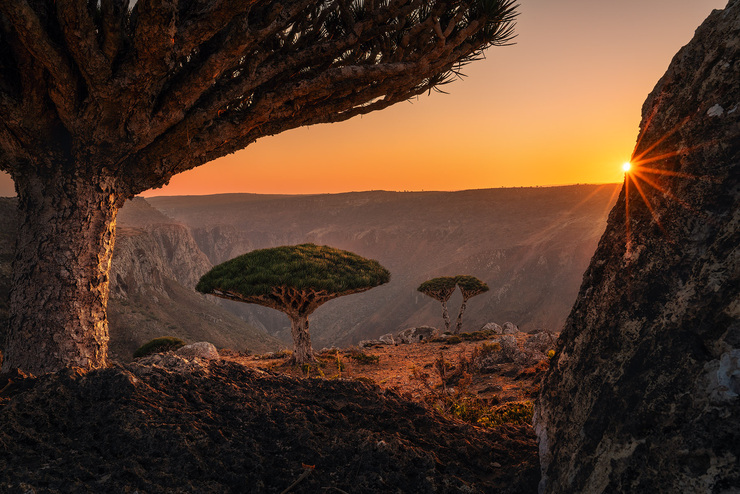
As the Sun dips low, the atmosphere shifts. The harsh midday light softens, turning golden, then fiery, as it filters through the umbrella-like canopies of the dragon blood trees. Shooting into the light, we’ll create dramatic silhouettes and Sunbursts framed by the gnarled branches.
From our elevated position, the canyon stretches out below, adding a sense of scale and depth to every frame.
And if the weather gives us a gift (what about some glowing clouds?) our returning visit means we’re ready to capture something entirely new.
Different mood. Different story. Same legendary place.
As the Sun finally sets and the plateau cools, we’ll head back to camp knowing we’ve squeezed every drop of magic from this unforgettable spot.
Golden hour begins at 5:07 pm, Sunset is at 5:35 pm, golden hour ends at 5:48 pm, and blue hour ends at 5:56 pm.
5:55 pm
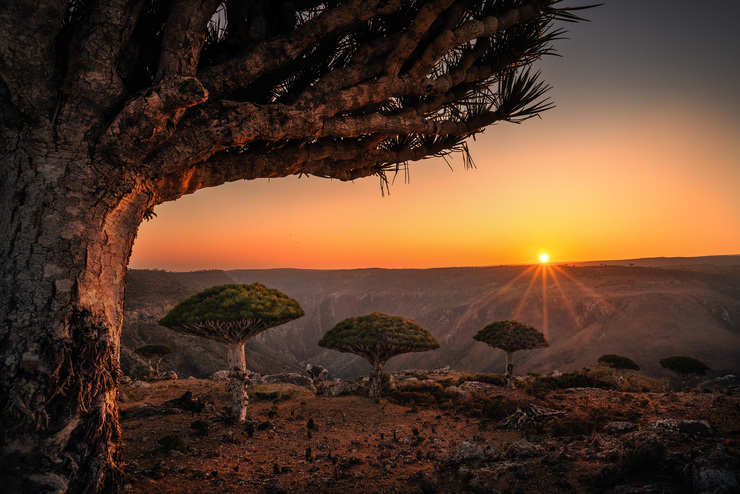
We have a special Star Trails photo planned for the night. The idea is to leave the camera shooting for hours to capture super long trails.
Choose a dragon blood tree near the camp, plan a cool Star Trails with the PhotoPills’ Night AR and capture it!
Here you can grab your blue hour shot for the foreground or wait a bit more until it’s nighttime and take a night long exposure for the foreground.
Night time starts at 6:45 pm and the Galactic Core visibility starts at 11:27 pm.
The Moon (38.3%) sets at 11:02 pm, so you can use it to illuminate the foreground.
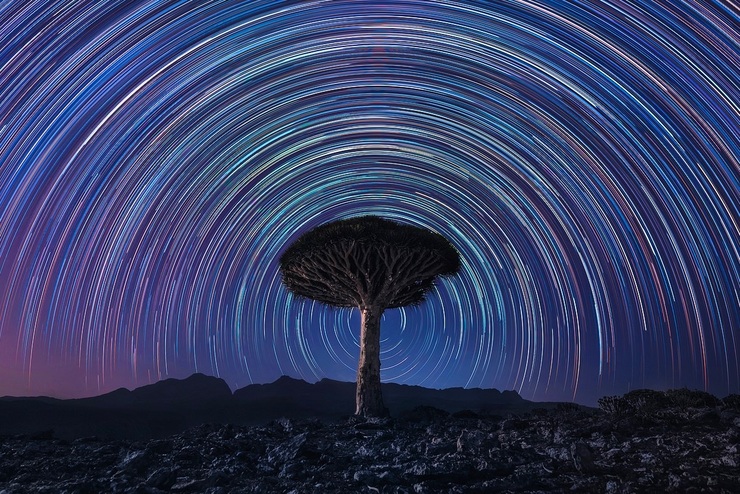
6:30 pm
After setting our gear for the Star Trails shooting session, we’re back at our camp.
Nighttime begins at 6:44 pm. So your camera will start shooting at that time if you set a timer when preparing the gear setup (which is highly recommended!).
Time to photograph the vast landscapes and the dragon blood trees under the stars!
7:00 pm
Dinner at the camp.
8:30 pm
Bed time. Tomorrow the Milky Way and the Galactic Center awaits.
Photographic pills:
- Milky Way arch and Galactic Center over a dragon blood tree (if skies are clear).
- Sunrise, golden hour and blue hour at the dragon blood forest.
- Sunset, golden hour and blue hour over dragon blood forest.
- Star Trails over a dragon blood tree (if skies are clear).
Day 5. Friday, March 20th - The Dragon Blood Forest
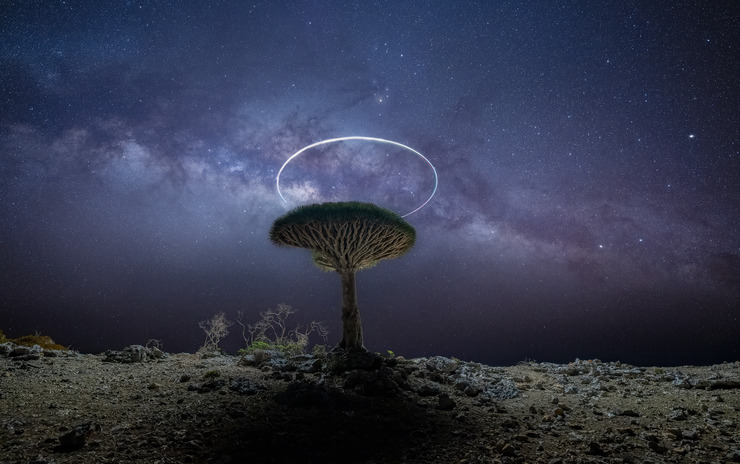
1:15 am
Rise and shine!
Socotra still has several hidden secrets that we intend to photograph today!
But first...
2:00 am
Let’s go back to yesterday’s Star Trails’ shooting spot. We have to collect our cameras!
2:20 am
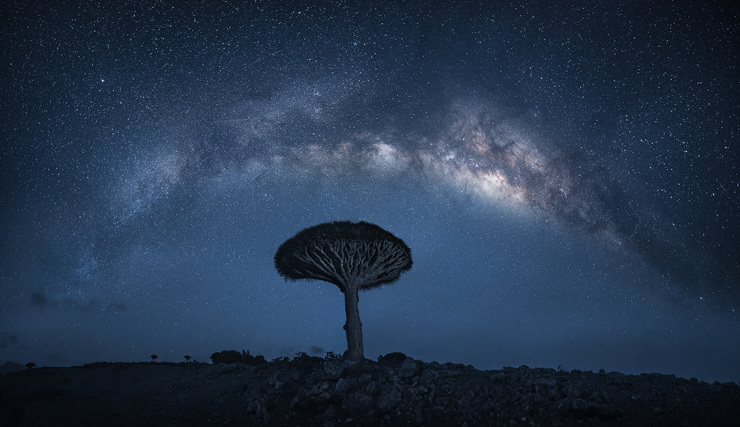
After a short hike (only 20 min) we get to our Milky Way shooting spot.
The Galactic Center is visible from 11:27 pm (-1) to 4:14 am. But we’ll start hiking at 2:00 am, because we want to have it a bit higher in the sky.
Around 1:30 am the Milky Way will be arching above the dragon blood trees in the southeast. It’s the perfect time for a panorama, and also for a beautiful diagonal of our galaxy.
The Moon (45.4%) rises at 10:38 am in the east after Sunrise (5:25 am) so it won’t bother us.
4:50 am
After walking back to the camp, we walk a bit further away (10 min) to reach our Sunrise shooting spot.
Take advantage of the AR view of PhotoPills and figure out where the Sun will rise. Then, choose the shooting spot to get the composition you want.
We’ll photograph the dragon blood trees and the surrounding landscapes until the end of the golden hour.
Blue hour begins at 5:03 am, golden hour begins at 5:12 am, Sunrise is at 5:25 am and golden hour ends at 5:53 am.
6:15 am
We’re back at the camp to empty the tents and have breakfast.
9:40 am
Today, we move deeper into Socotra’s highlands and set up camp in a completely different dragon blood forest.
Here, the land opens up. The trees are more widely spaced, giving the landscape a different rhythm and a fresh atmosphere compared to what we’ve already experienced.
The understory vegetation changes, adding new textures and tones to the scene, while the openness makes it easier and more comfortable to wander freely in search of unique compositions.
12:40 pm
Lunch at the camp and siesta (nap time).
3:00 pm
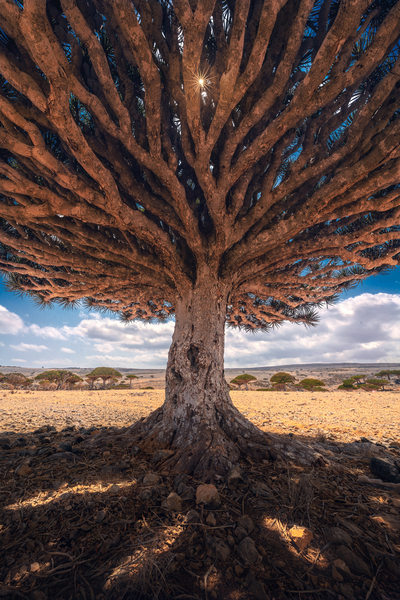
In the afternoon, you have plenty of time to scout.
The highlights here are both the forest of dragon blood trees and the isolated trees.
This is not a rush to set up tripods: it’s a chance to slowly walk the forest, observe how each tree twists and stretches, and watch the light filter through the canopies. Every tree has its own story to tell, its own silhouette to frame.
Even in the bright, harsh midday Sun, there are incredible images waiting to be made. Stand in the shadow of a dragon blood tree, point your camera upward, and let the light bouncing off the ground and streaming through branches create soft tones and subtle highlights. It’s a completely different feel than morning or evening
And while you’re on the field, open PhotoPills to check the Sunset direction and plan your shot. Then, check the position of the Milky Way and keep planning photos.
It’s going to be a fun afternoon!
5:00 pm
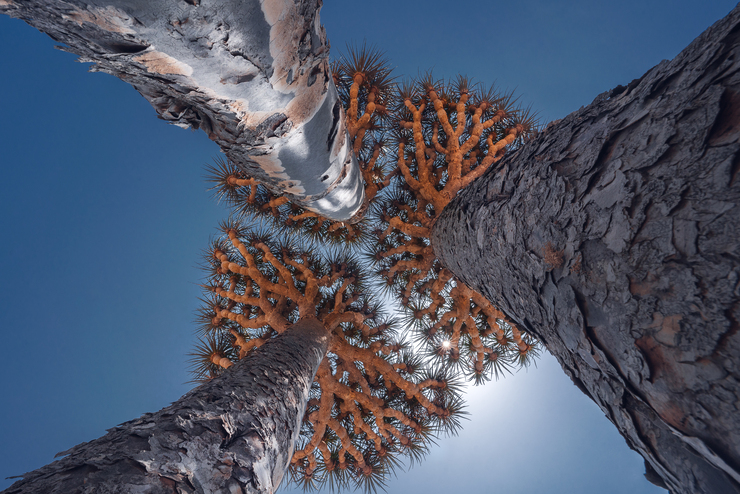
The action begins.
Our first shot will be the trees from above. The view of the green umbrellas under the golden light is fantastic. Also, getting the Sun setting over the forest will produce goosebumps in our skin.
Golden hour begins at 5:07 pm, Sunset is at 5:35 pm, golden hour ends at 5:48 pm, and blue hour ends at 5:56 pm.
7:30 pm
Dinner at the camp.
8:30 pm
Bed time. Sleep well my friends. Tomorrow the Milky Way awaits again!
Photographic pills:
- Milky Way arch and Galactic Center over a dragon blood tree (if skies are clear).
- Sunrise, golden hour and blue hour at the dragon blood forest.
- Sunset, golden hour and blue hour over dragon blood forest.
Day 6. Saturday, March 21st - The Cliff
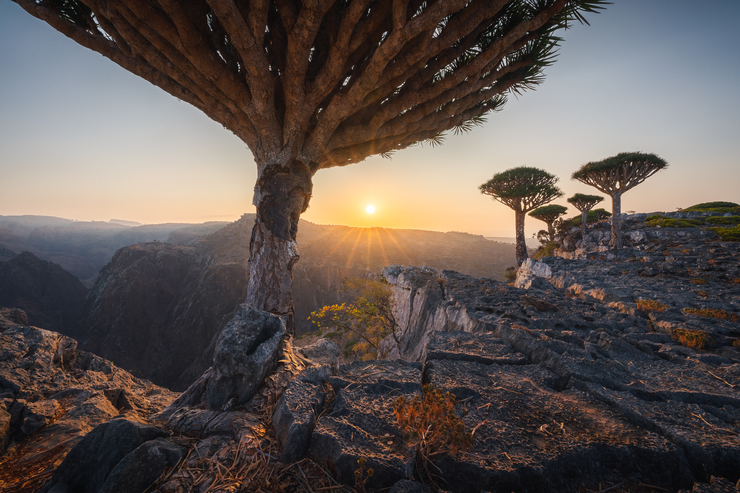
1:30 am
Ready for another early morning?
Come on. Get up... You won’t regret it!
2:25 am
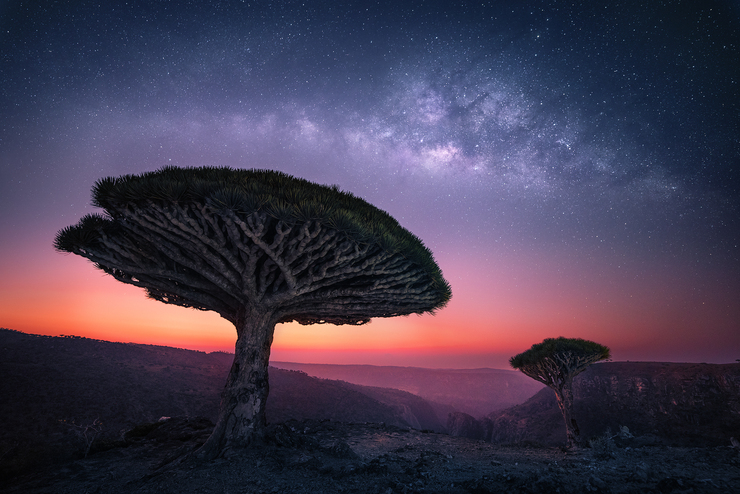
We’ll walk 20 min to a breathtaking location where a towering dragon blood tree stands boldly on the edge of a cliff.
Its sheer size and dramatic placement make it one of the most photogenic trees in the region. With vast open space surrounding it and a sweeping drop behind, the setting is perfectly framed to showcase the Milky Way in all its glory.
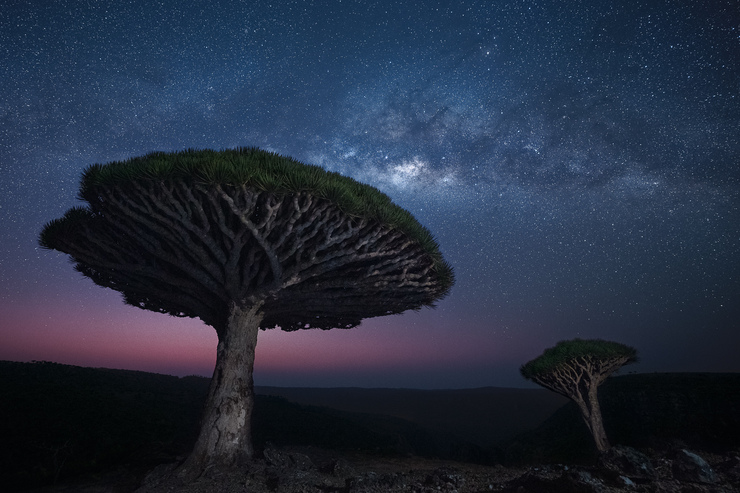
The Milky Way (visible from 11:23 pm to 4:13 am) will arc diagonally across the sky, adding a dynamic sense of motion to our composition.
The Moon (57.3%) rises at 11:41 am, so it will be under the horizon during the whole shooting session.
Throughout the session, we’ll experiment with light painting to highlight the tree’s unique silhouette, long exposures to reveal intricate details hidden in the shadows, and of course, image stacking to reduce noise and achieve a cleaner, richer night sky
As dawn approaches, we’ll capture the magical transition to blue hour, when a soft, ethereal glow emerges along the horizon. While nearly invisible to the naked eye, our cameras will unveil vivid, dreamlike colors blending with the last shimmering stars...
5:00 am
We’ll remain in the same striking area for Sunrise, perched on the edge of the cliff with a sweeping view of the landscape dotted with majestic dragon blood trees.
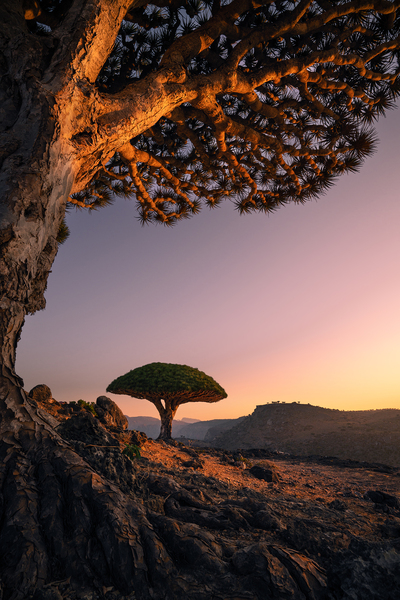
As the first light of day breaks, the scene transforms. The rising Sun backlights the trees, casting long, elegant shadows across the rocky terrain. The warm, golden glow brings out the rich textures of the bark and the intricate patterns of the canopy, giving depth and drama to every frame.
Go low and wide to capture the full silhouette of a tree against the glowing horizon...
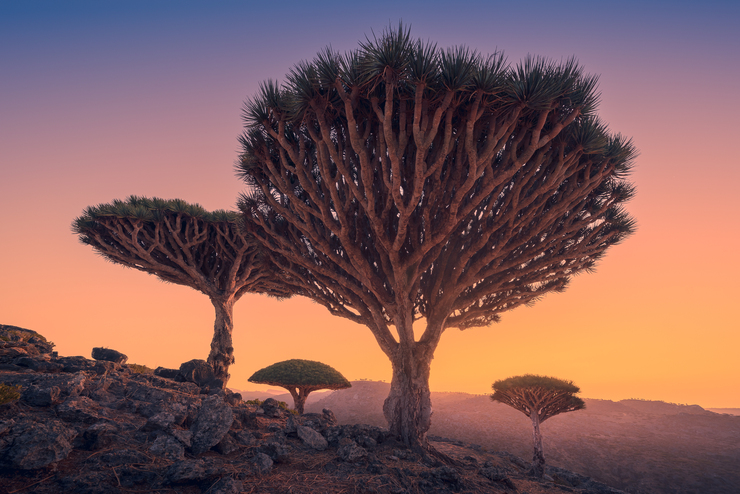
Move in close to frame the sun peeking through branches, creating radiant flares and graphic compositions...
Turn your lens toward the opposite side of the canyon, where minimalist scenes emerge as countless dragon blood trees dot the distant hillside...
The best thing about this location is that you can easily build a diverse series of Sunrise images without ever straying far.
Blue hour begins at 5:03 am, golden hour begins at 5:11 am, Sunrise is at 5:24 am and golden hour ends at 5:52 am.
6:35 am
Let’s pack our things and then have breakfast.
8:00 am
To the cars! Today we’re driving to Dihamri and you’re going to love it...
10:15 am
Nestled along Socotra’s rugged northern coastline, Dihamri is renowned for its crystal-clear turquoise waters, white-pebble beaches, and vivid marine biodiversity. Unlike typical sandy shores, its coastline is dotted with smooth, gleaming stones that shimmer under the Arabian sun, adding to its raw, untouched beauty.
What truly sets Dihamri apart is its marine protected area, making it one of the island’s top snorkeling and diving spots. Beneath the surface, you’ll find coral reefs teeming with colorful fish, rays, and occasional turtles, offering an unspoiled underwater paradise.
And you’ll have the chance to snorkel and see all its wonders with your own eyes!
We’ll have lunch at the beach so you can spend as much time as possible in these amazing waters...
2:00 pm
We’re back on track as we need to get to Homhil plateau and it’s a 1.5-hour drive from here.
3:30 pm
OK, while you’re organizing your luggage and getting your gear sorted, Andy will scout the location.
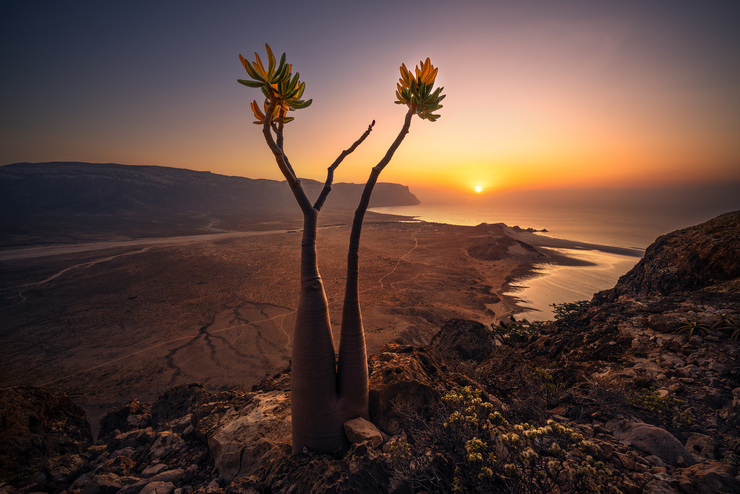
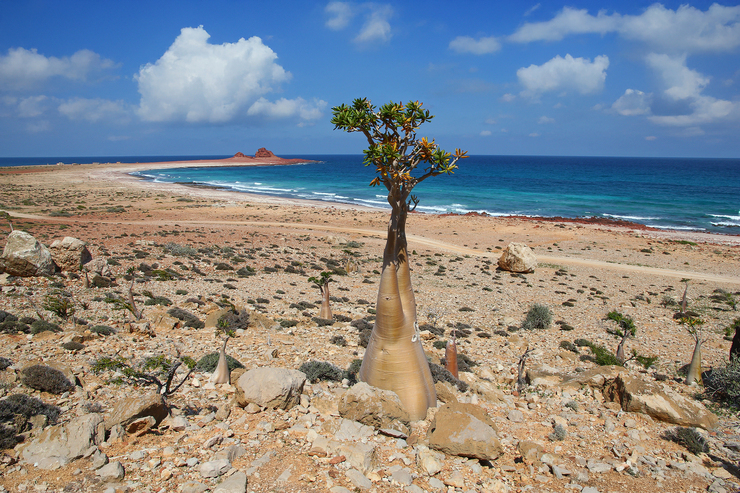
Just steps from our camp lies a hidden rocky creek, a secluded pocket of landscape where bottle trees with dramatic roots and twisting trunks rise from stone outcrops.
We want to find a special one to shoot it under the Milky Way :)
4:35 pm
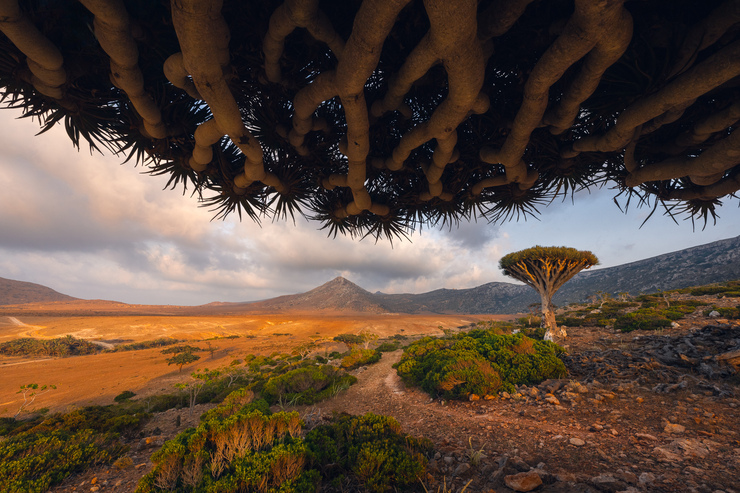
Homhil Plateau is an amazing place where a mix of bottle trees and scattered dragon blood trees creates a refreshing contrast to the denser groves we’ve previously explored. The terrain here unfolds in gentle slopes and rocky paths, gradually rising toward a clean, solitary mountain on the horizon that offers a strong visual anchor.
Before golden hour, we’ll move to a new and visually striking location along the creek nearby.
As the Sun begins to set, warm light will wash across the plateau from behind, casting long shadows and revealing the fine textures in the ground and tree trunks.
You’ll have countless creative options...
Go low and wide to frame the dramatic trees against the glowing sky.
Use the meandering paths or patches of vegetation as leading lines that guide the viewer’s eye toward the mountain.
Position yourself to layer different tree shapes and play with foreground/background depth.
Discover natural frames formed by branches, rocks, or the slope itself.
This location rewards exploration!
Golden hour begins at 5:07 pm, Sunset is at 5:35 pm, golden hour ends at 5:48 pm, and blue hour ends at 5:56 pm.
7:00 pm
After chilling a bit or reviewing your images, we have dinner at our camp.
8:30 pm
Alright... time to bed. We have another (very) early morning tomorrow!
Photographic pills:
- Milky Way arch and Galactic Center over a dragon blood tree (if skies are clear).
- Sunrise, golden hour and blue hour at the cliff.
- Sunset, golden hour and blue hour at a creek with bottle trees.
Day 7. Sunday, March 22nd - The Secret

I’ve been giving you lots of details of this amazing expedition to Socotra.
Maybe far too many...
But on March 22nd we’ll be photographing a few secret spots we know...
Where will that be?
Well, you'll have to be there, with us, to figure it out :P
Day 8. Monday, March 23rd - The Farewell
3:15 am
Tough decision so early this morning...
Those of you who want to hike up the dune with us are more than welcome. The others can sleep a bit more, and wake up a bit later to photograph the Milky Way (nighttime ends at 4:09 am) or Sunrise (5:20 am) from the beach. The seascape from sea level is stunning too.
4:00 am
Ready for the ascent?
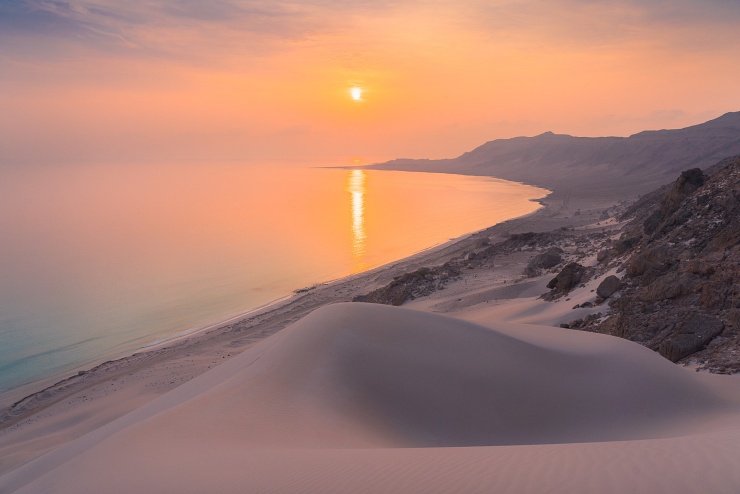
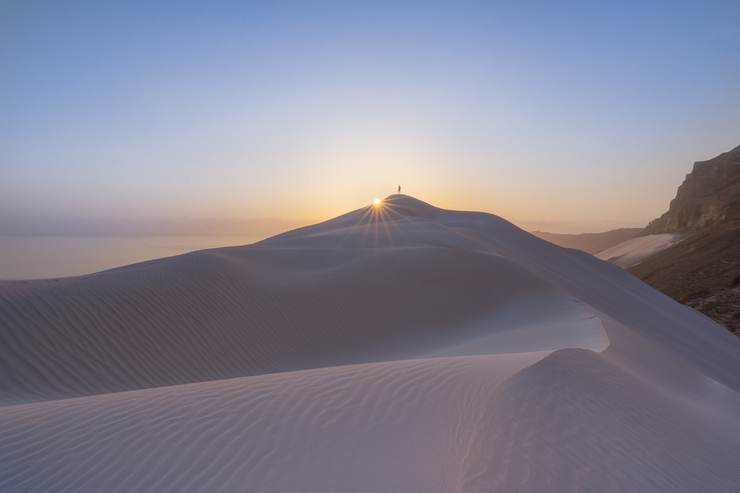
It takes a while but we get there (45-minute hike on sand), to the top of the tallest dune in Arher Beach. We’re on time to photograph the blue and the golden hours right before Sunrise.
5:00 am
Suddenly the natural light begins to invade the scene. First the cold blue hour and then the pink and orange tones of the golden hour.
The Sun begins to rise aligned with the end of the beach. What a beautiful dawn.
Blue hour begins at 4:59 am, golden hour begins at 5:07 am, Sunrise is at 5:20 am and golden hour ends at 5:48 am.
6:10 am
Breakfast at the camp.
10:30 am
We arrive at Socotra airport where we’ll take our flight back to Jeddah.
Bye bye Socotra!
We’re already missing you... We’ll be back!
Life goes on...
Book Now and Save €500 (Only 2 Spots Left)
To book your spot to join the Expedition to Socotra at a reduced price of €5,100 (the official price is €5,600), a €1,500 deposit is required by Sunday, January 18th.
Price summary:
- Booking Deposit: €1,500
- Total Price: €5,100
Payment in full is required by February 8th, 2026.
Please, finalize your booking as soon as possible. The seats are sold on a first come, first served basis.
What’s included in the price
- PhotoPills Welcome pack.
- A 8-day expedition photographing the Milky Way, the crescent Moon and the golden light with the hidden treasures of Socotra.
- 8 days of learning, fun and adventure with Andy Marty (PhotoPills Master) and the funniest geek community – the PhotoPillers.
- Full immersion in the PhotoPills method (Imagine.Plan.Shoot!).
- All lodging:
- 1 night atHotel Best Western Plus Airport Jeddah (bed only). Hotel lodging sharing with another PhotoPiller.
- 6 nights of camping (one person per tent). And you don’t have to pitch the tent.
- 3 meals a day with local ingredients (when in Socotra).
- Beverages (water and soft drinks)
- All activities on the Secret days.
- Ground transportation during the expedition in comfortable 4x4 vehicles.
- All transfers.
What’s not included
- Flights/transport to Jeddah, Saudi Arabia.
- Flight from Jeddah to Socotra and special VISA to get to Socotra. This will be booked and managed by our local partner.
- VISA Saudi Arabia
- Medical and travel insurance coverage (strongly recommended).
- Snacks and alcohol.
- Anything not mentioned in the “included” list.
Do you want an example of how huge this will be?
This is a glimpse to what happened in the PhotoPills Expedition to Iceland in 2016. We had so many adventures and so much fun... We can’t wait for Socotra!
But you don’t have to take our word for granted. Here’s what some PhotoPillers say about the PhotoPills adventures:

“I went to Iceland expecting to have the opportunity to photograph the marvelous landscape and master nightscapes. What I encountered was so much more – 14 kindred souls from across the globe who share a passion for photography. Together we expanded our creative boundaries, learned from one another and had an insane amount of fun in the process. I am confident that everyone came away from the experience a better photographer.”

“From the very moment the guys from PhotoPills announced the expedition to Iceland... I didn’t think it twice! I was using PhotoPills but not at its full capacity, so I had no better chance to learn from the creators of this amazing app. The experience was even more amazing than anything I could have imagined. In Iceland, I discovered a bunch of folks as crazy about photography as I am. I had a blast!
Photography is a continuous learning process, you always find something new that motivates you to improve. And this adventure made me improve more than I could imagine.”

"The PhotoPills guys know how to create a fantastic experience. They bring an infectiously fun energy and are always willing to drop some handy photography knowledge on you that you will take with you. You take their trip and you'll for sure have a good time, get some amazing pics and leave a better photographer."
“During my experience in Iceland I lived wonderful moments and had surprises that were beyond the expected. It completely exceeded my initial expectations! Sharing knowledge, experiences and ways of working and living photography with such a great group has been one of the most enriching life experiences I have ever had.
Who he said that learning and knowledge sharing can not be wonderfully fun?”

“I can't say enough about what a fantastic time I had during the PhotoPills Iceland photo tour! The guys from PhotoPills and Donal Boyd were so knowledgeable, accommodating, and especially lots of fun. Never a dull moment – nonstop action and shooting of amazing landscapes for 10 days. I came away with enough images and memories to last a lifetime!”
FAQs
Can tourists visit Socotra?
Yes! Despite the on-going civil war in Yemen, the island is open to tourists.
There is a weekly direct flight from Abu Dhabi to Socotra island. It's a governmental charter flight and they don’t offer online booking. In order to get a seat on this in demand flight you need to be assisted by a local agency. But fear not! To ease this process we use our local contacts who will take care of arranging flight reservations for the whole group.
The price of the flight is €995 (not included in the price).
Do I need a visa to visit Socotra?
All tourists need a Yemeni visa to visit Socotra island. Our local team will take care of the whole procedure for you.
The process usually takes a few days and the visa will be issued in Socotra by the island authorities.
The only thing we need from you is a photo of the main page of your passport. Once we obtain your visa, we’ll send you a copy by email. You just need to print it and show it at the Jeddah check-in counter in order to board the flight.
Our local team will be waiting for you with the original copy of your visa at the arrival hall at the Socotra airport.
IMPORTANT: You cannot obtain a Yemeni visa if you have a stamp from Israel in your passport, including border stamps from Jordan or Egypt. Change your passport before booking this trip up.
ALSO IMPORTANT: If you don't hold a US passport and intend to travel to the USA after this expedition, once you visit Yemen (after March 2011) you won’t be eligible for an ESTA application to the USA. Instead, you’ll need to apply for a regular tourist visa which is more expensive and requires a visit and interview at the American Embassy.
What’s the temperature in Socotra in March?
March is known as a warm month in Socotra.
Daytime temperatures usually reach 31ºC (88ºF) in Socotra in March with warm heat and humidity, falling to 21ºC (70ºF) at night.
What do you recommend I bring along for the expedition?
Your sense of adventure and fun, your camera and your sense of humour, of course.
Besides that? When you book your seat, we’ll send you an email that will give you further details and suggestions about what to bring (gear, clothing, etc.).
Is travel insurance included in the price of the expedition?
No. Participants are suggested to purchase national or international medical and travel insurance coverage.Also, we recommend you to choose a travel insurance that:
- Covers trip cancellation costs.
- Covers Covid-19 health, travel and cancellation costs.
What is the cancellation policy?
We hope you don’t need to cancel your spot, but if a situation arises where you don’t have a choice, our cancellation policy is the following.
If you choose not to join the Expedition, a cancellation fee may apply. This fee will be equivalent to the cost of the Expedition, minus any savings or additional income we generate
if we’re able to fill your spot with another participant.
If we’re able to fill your spot, we’ll refund the payments you’ve made, deducting a €300 administrative fee and any non-refundable costs retained by our travel partners.
However, if there are unavoidable and extraordinary circumstances at the destination or nearby that significantly affect the execution of the Expedition or the transportation of passengers to the destination, no penalty will be applied, and we will refund all payments you have made toward the Expedition.
Refunds will be paid by the same method that the original payment was made.
Credits: All images by Marco Grassi, Andy Marty and Ramiro Torrents.