Book Your Seat on the PhotoPills Expedition to Atacama & Uyuni (Chile & Bolivia) before December 28th and Get €500 Off (Only 1 Spot Left)
We’re going to Atacama & Uyuni (Chile & Bolivia)...
Are you in?
Around the New Moon...
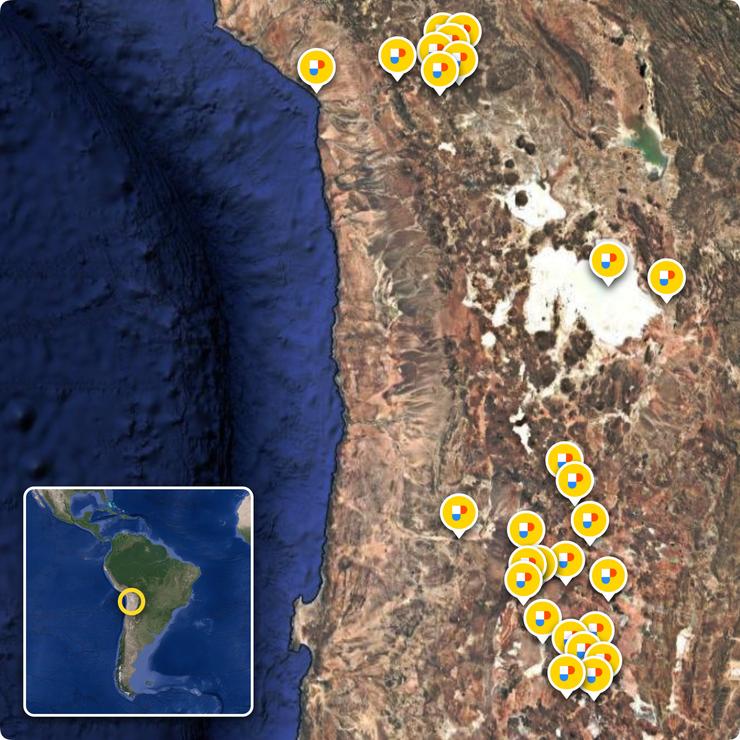
From March 14th to March 27th 2026, Marco Grassi, Jabi Sanz and Pato Oses (PhotoPills Masters) will be traveling across the Atacama Desert (Chile), Lauca National Park (Chile) and the Salar de Uyuni (Bolivia) to photograph the Golden Light and the Milky Way along with some of the treasures that hide under one of darkest skies on the planet...
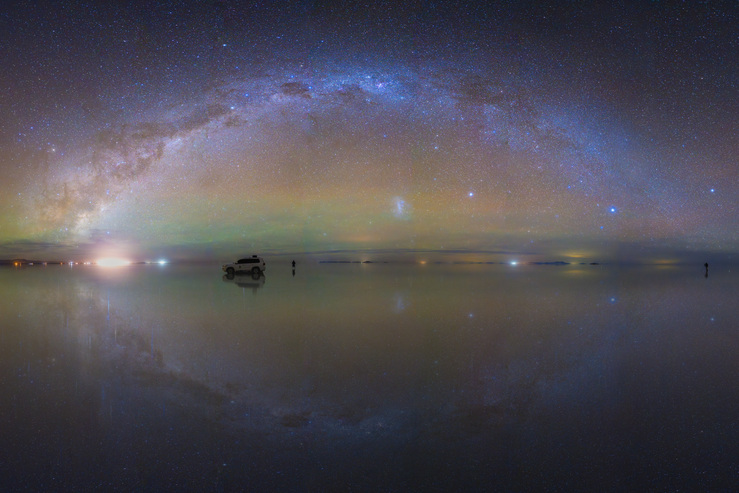
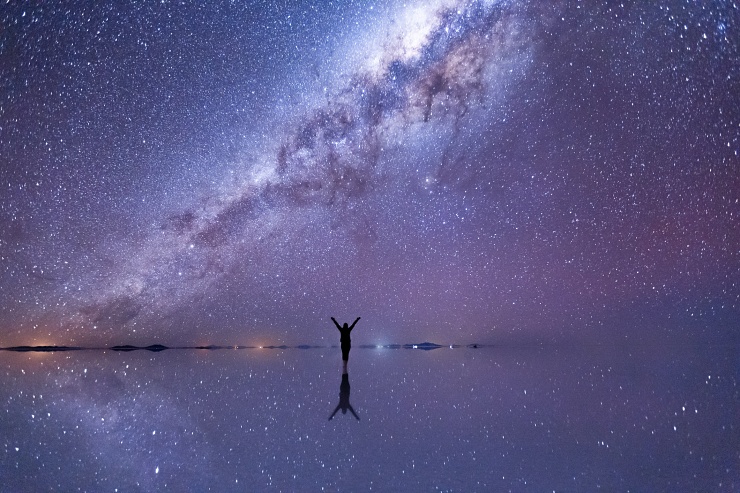
And in the best time of the year to photograph the infinite reflections on the world’s largest salt flat, where the landscape transforms into an expansive natural mirror...
Where stars meet the horizon!
Of course...
We’ll be taking photos all day long...
But...
Can you imagine it?
To photograph the Southern Hemisphere’s Milky Way and golden light over vast desert landscapes, multi-colored rock formations, snow-capped volcanoes, grassy meadows, striking red stones, imposing peaks, vibrant red and turquoise lagoons, intricate salt patterns, alien-like plants and cacti, herds of Vicuñas, flocks of pink flamingos... And the expansive mirror of the Uyuni salt flat!
We’re dreaming about it!
To achieve it, we’ll use the planning power of PhotoPills and the expert knowledge of Marco Grassi, Jabi Sanz and Pato Oses to always be at the right place at the right time.
Top secret: we have quite a few legendary photos planned already ;)
The Deal (Only 1 Spot Left)
We're offering you a €500 discount on the regular price!
All you have to do is to book the last spot available before Sunday December 28th.
Read carefully all the details of this unique adventure.
And when you’re ready, click here to book your spot:
Please, book as soon as possible. The seats are sold on a first come, first served basis.
The Adventure
12 PhotoPillers | 3 PhotoPills Masters | Atacama, Lauca, Sajama & Uyuni | Endless legendary photos
Warning! This is not a honeymoon...
But we’ll start our adventure in San Pedro de Atacama to slowly adapt to the high altitude difference.
Also, there are 6 hikes:
- Days 2 & 5. Optional easy hike, 700 m (2,297 ft) with 20 m (66 ft) ascent one way. Elevation above sea level 2,487 m (8,159 ft).
- Day 2. Easy hike, 1.5 km (0.93 mi) in total. Elevation above sea level 3,200 m (10,498 ft).
- Day 3. Easy hike, 1.5 km (0.93 mi) with 50 m (164 ft) descent in total. Elevation above sea level 4,200 m (13,780 ft).
- Day 7. Easy hike, 1 km (0.62 mi) with 18 m (59 ft) ascent one way. Elevation above sea level 4,300 m (14,108 ft).
- Day 13. Easy hike, 1.8 km (1.1 mi) with 13 m (42 ft) ascent one way. Elevation above sea level 4,553 m (14,937 ft).
On days 2, 3, 5 & 13 if you don’t feel like doing the hikes, the views from where we park our vehicle are stunning too.
The rest of the shooting spots in the Expedition are located at a short walking distance from our vehicle.
So...
Do you dare? Yes?
Here we go!
We’re recruiting 12 brave PhotoPillers (PhotoPills and photography nerds) to join us on an 14-day Expedition to photograph the Golden Light and the Milky Way along with some of the treasures that hide under one of darkest skies on the planet...
In the Atacama Desert (Chile), Lauca National Park (Chile), Sajama National Park (Bolivia), Reserva Nacional de Fauna Andina Eduardo Avaroa (Bolivia) and the Salar de Uyuni (Bolivia)!
It’s a non-stop adventure to chase legendary photos and you are a key asset!
We have planned tons of photos, and we’ll travel many kilometers to capture them...
But we also want to maximize our flexibility in terms of itinerary and schedule in order to take advantage of all the opportunities that the changing weather will surely put in our way.
If we're fortunate enough to be out photographing the Milky Way at night and it takes us into the late hours, we'll take a little extra sleep the next morning, skip Sunrise and kick start our day a bit later.
On the other hand, if the conditions make us skip the astrophotography session, we'll rise and shine early to catch the Sunrise.
Whichever path we take, you can count on us to seize every photo opportunity and be right where the magic happens!
You are about to embark on a PhotoPills’ style journey. And it’s not going to be a honeymoon precisely... :P
You’ll be a true PhotoPiller!
Are you in?
Day 1. Saturday, March 14th - Welcome to Atacama Desert (Chile)!
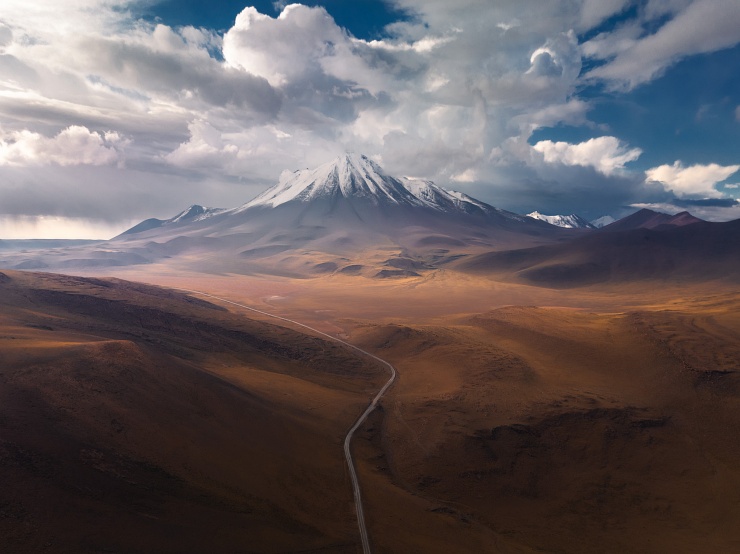
It’s Saturday morning...
And you land in an early flight at the International Airport El Loa (CJC) in Calama, Chile.
Although, I recommend you arrive the day before to have 1 day to decompress.
1:45 pm
After picking you up from the airport (or your hotel in Calama), we’ll head straight to San Pedro de Atacama, where we’ll settle into our base camp at the stunning Hotel Our Habitas for the first five nights/six days of this incredible adventure.
San Pedro de Atacama is a picturesque oasis town nestled in the heart of the Atacama Desert, the driest non-polar desert in the world.
Perched at 2,400 m (7,900 ft) above sea level, this high-altitude desert town is surrounded by an extraordinary landscape of towering volcanoes, vast salt flats, and breathtaking desert scenery.
The town itself exudes charm, with its adobe buildings and narrow streets that offer a timeless, authentic feel. Its rich cultural history connects visitors to ancient civilizations that once thrived in this region.
San Pedro serves as the perfect gateway to explore some of the most striking natural wonders on the planet.
Furthermore...
With its clear, dry skies, San Pedro is also a world-renowned destination for stargazing and astrophotography. The minimal light pollution offers awe-inspiring views of the Milky Way that are sure to leave you breathless.
Ready your camera, plan your shots... and hope for clear skies!
Plan & pray!
3:00 pm
Checking-in at the Hotel Our Habitas and siesta (nap time)!
4:30 pm
Expedition briefing.
Marco Grassi, Jabi Sanz and Pato Oses will walk you through the adventure’s itinerary, detailing the logistics, locations, and the incredible photo opportunities we’ve carefully planned just for you.
They’ll also provide guidance on the recommended gear, share expert shooting techniques, and go over essential safety instructions to ensure you’re fully prepared for this journey.
6:15 pm
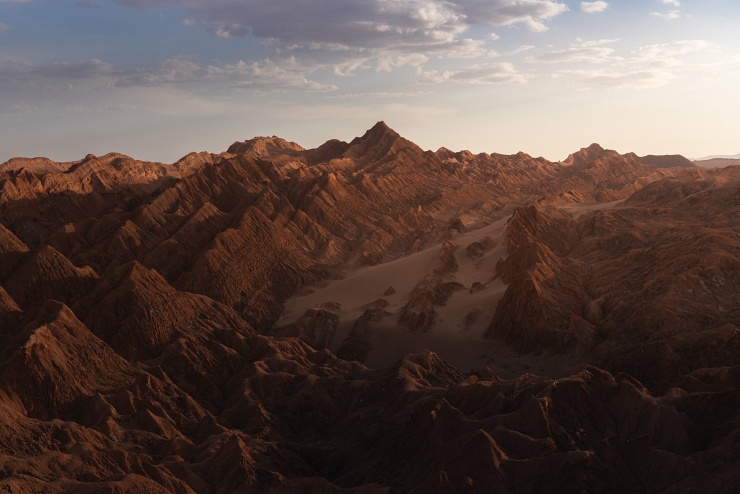
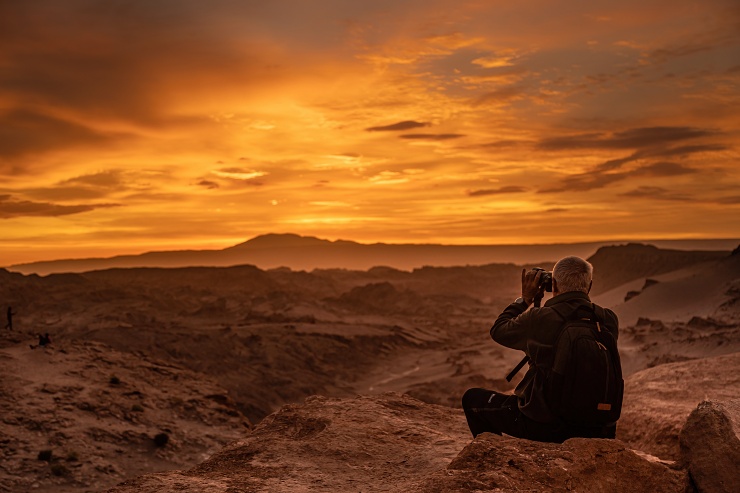
After the briefing session, we’ll take a short 15-minute drive to the breathtaking Mirador Linkanantai in the Atacama Desert.
From here, we'll have a panoramic view of a landscape so surreal it feels like stepping onto another planet.
It’s a world of dramatic rock formations, sweeping sand dunes, and salt-encrusted terrain.
Over millennia, wind and water have sculpted the valley’s jagged peaks, deep craters, and intricate textures, creating a truly otherworldly scene.
What makes this place particularly magical for us is how the colors shift throughout the day as sunlight plays off the mineral-rich rocks.
During Sunrise and Sunset, the valley glows in warm hues of orange, pink, and red, offering a stunning visual display.
The deep blue sky, contrasted with the rugged, alien-like terrain, makes for a perfect backdrop to capture the magic of the desert.
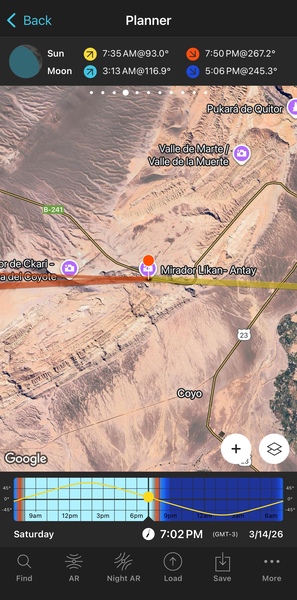
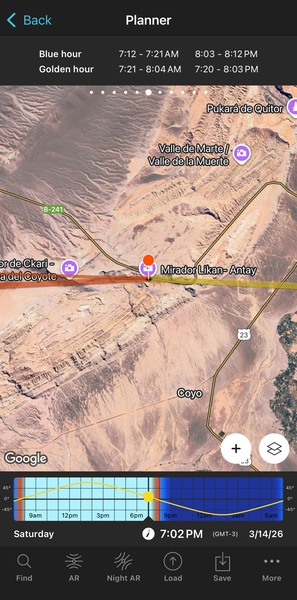
But before you choose your shooting spot, be sure to open PhotoPills and check the precise direction of the Sunset:
As the Sun sets, the view becomes even more captivating, with the light casting long shadows over the ancient rock formations...
The variety of subjects and the sweeping views provide endless creative possibilities. You can capture front light looking east toward the towering volcanoes, side light casting dramatic shadows on the rock formations to the south, or backlight as the Sun dips below the horizon to the west.
With a telephoto lens, focus on the intricate shapes, textures, and layers of the rock formations to create intimate landscape shots. A mid-range lens will allow you to incorporate both the formations and the distant volcanoes for a more expansive scene.
Click, click... the magic unfolds.
Golden hour begins at 7:20 pm, Sunset is at 7:50 pm, golden hour ends at 8:03 pm, and blue hour ends at 8:12 pm.
8:25 pm
After the blue hour, when light begins to fade away, we’ll start our journey back to San Pedro de Atacama, where a delicious dinner awaits.
8:40 pm
Dinner at Hotel Our Habitas.
10:30 pm
Bed time.
Tomorrow lunar landscapes and desert rainbows!
Photographic pills:
- Sunset, golden hour and blue hour at Mirador Linkan Antai.
Day 2. Sunday, March 15th - Lunar Landscapes and Desert Rainbows
5:30 am
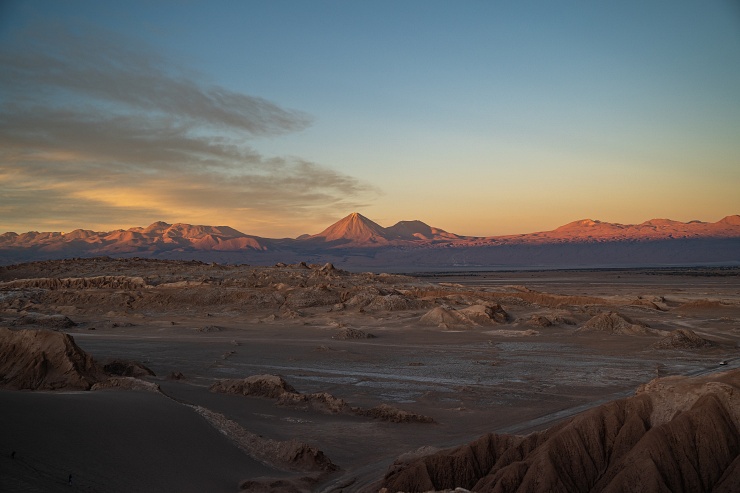
We start early today with a drive to Vallecito.
At Sunrise, Vallecito feels like stepping onto another planet.
The desert floor is cracked and rippled, sculpted by wind into natural patterns that beg to be used as foregrounds. All around, jagged ridges and salt-encrusted formations rise from the earth, catching the first light in glowing shades of gold and red.
To the east, the horizon begins to blaze behind the distant volcanoes, while the valley itself slowly emerges from shadow.
It’s a place of textures, contrasts, and infinite depth... perfect for wide landscapes that stretch to infinity, or intimate frames that highlight the raw detail of Chile’s Atacama Desert.
6:30 am
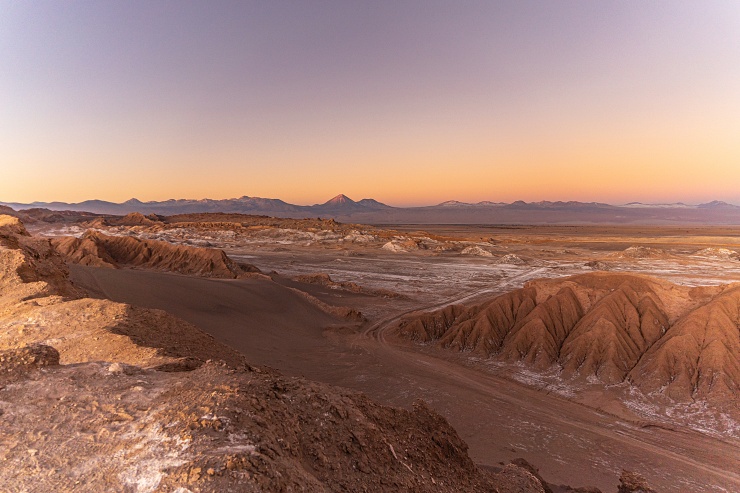
There’s an optional easy hike, 700 m (2,297 ft) with 20 m (66 ft) ascent one way. The elevation above sea level is 2,487 m (8,159 ft).
Some places feel like they were designed with photographers in mind, and this is one of them.
From our vantage point, we’re surrounded by 360-degree views of wide open terrain, textured ridges, and dramatic shapes. But it’s the eastern horizon that steals the show: the Sun will rise directly behind the distant volcanoes, setting the stage for an unforgettable morning.
As the first light breaks, we’ll line up our shots to catch perfect sunbursts cresting the ridgeline, the rays spilling across the landscape and igniting every detail: jagged rock, scattered trees, layered foregrounds...
Here, the challenge isn’t finding a composition, and deciding which of the endless possibilities to shoot first!
Blue hour begins at 7:12 am, golden hour begins at 7:21 am, Sunrise is at 7:34 am and golden hour ends at 8:04 am.
9:10 am
Back at Hotel Our Habitas, we’ll enjoy breakfast and some time to relax before our afternoon adventure.
12:30 am
Lunch in a restaurant nearby, giving us time to refuel before diving into a PhotoPills class.
Before returning to the hotel, don't forget to grab something for dinner too as we will have dinner in the field tonight!
2:00 pm
PhotoPills Class with Marco, Jabi and Pato.
You’ll get hands-on instruction on how to make the most of the app’s tools for planning your next shots, ensuring you're always prepared for the right moment.
3:15 pm
Following a short break, we’ll hold a class on How to Shoot the Milky Way, where you'll learn key techniques for capturing the night sky in all its glory.
We'll cover everything from camera settings to composition tips for photographing the Milky Way.
5:00 pm
In the late afternoon, we embark on a drive to the Valle del Arcoiris (Rainbow Valley), a striking desert landscape known for its multi-colored rock formations.
The vibrant reds, greens, yellows, and purples of the rocks create a surreal scene, made even more magical by the soft light of the setting Sun.
6:20 pm
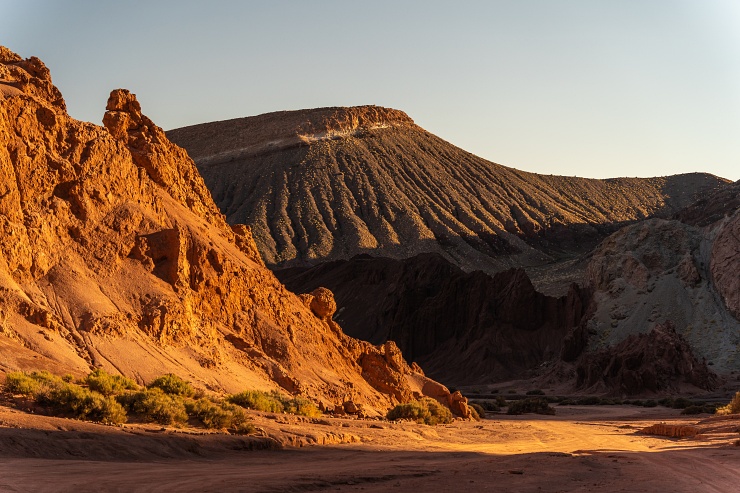
There’s an easy hike, 1.5 km (0.93 mi) in total. The elevation above sea level is 3,200 m (10,498 ft).
Arriving at Valle del Arcoiris, we’ll have plenty of time to explore and find the best compositions...
Use PhotoPills to check where the Sun is setting!
The colors of the rock formations are at their most vivid during golden hour, providing an ideal opportunity to capture this unique landscape in the soft, warm light.
A mid-range lens will be perfect for wide landscape shots, while a telephoto lens allows you to focus on the intricate shapes and textures of the rocks.
As the Sun sets and the golden light fades, we’ll enjoy dinner in the field, surrounded by the breathtaking beauty of the valley.
And while there is still light. Make sure to use the Night Augmented Reality view of PhotoPills to plan your Milky Way photo and save it for later.
Because we’ll stay here to shoot the stars!
Golden hour begins at 7:18 pm, Sunset is at 7:48 pm, golden hour ends at 8:02 pm, and blue hour ends at 8:10 pm.
8:25 pm
Dinner in the field.
9:55 pm
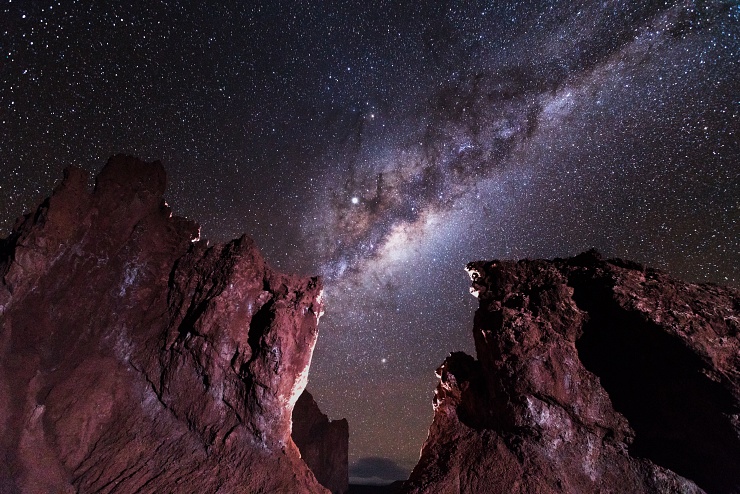
After dinner, it’s time to get ready for an epic night of astrophotography.
It’s time to capture your Milky Way plan.
Because the clear skies over the desert make it one of the best places in the world to photograph the Milky Way.
With a wide-angle lens and a large aperture, you’ll capture the stars above the colorful rocks, blending the magic of the night sky with the vibrant earth below.
We’ll spend quite a bit of time experimenting with long exposures and different compositions, making the most of this extraordinary setting before the Moon rises at 5:08 am (+1).
Plan & Pray!
Nighttime begins at 9:03 pm. Galactic center visibility begins at 12:48 am (+1) and the Galactic Center visibility ends at 6:19 am (+1). The Moon (8.2%) will rise at 5:08 am (+1).
2:45 am
What a day!
Sleep well my friends because another exciting day awaits!
Photographic Pills:
- Sunrise, golden hour and blue hour at Vallecito.
- Sunset, golden hour and blue hour with Rainbow rock formations at Valle del Arcoiris.
- Milky Way and Star Trails at Valle del Arcoiris (if there are clear skies).
Day 3. Monday, March 16th - Blue Lagoons and Majestic Volcanoes
9:25 am
Good morning! Or not...
Optional breakfast if you’re too hungry to sleep, but we totally understand that you prefer to stay in bed! We’ll spend the rest of the morning relaxing and recharging for the day ahead.
Today, we’ll be having dinner in the field, so please make sure to buy a packed dinner to take with you.
12:00 pm
Lunch at the hotel or in a restaurant nearby.
12:30 pm
Our next destination is the small town of Socaire, where we will take a quick stop for a toilet break before continuing our journey to some of the most picturesque high-altitude lakes in the region.
2:45 pm
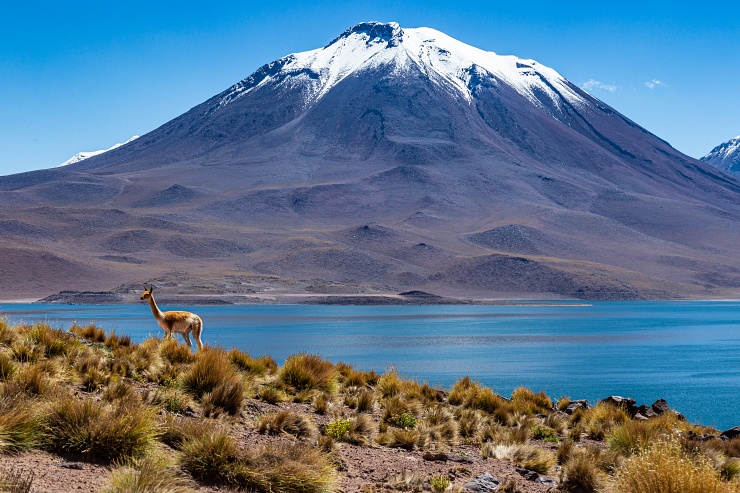
There’s an easy hike, 1.5 km (0.93 mi) with 30 m (164 ft) descent in total. The elevation above sea level 4,200 m (13,780 ft).
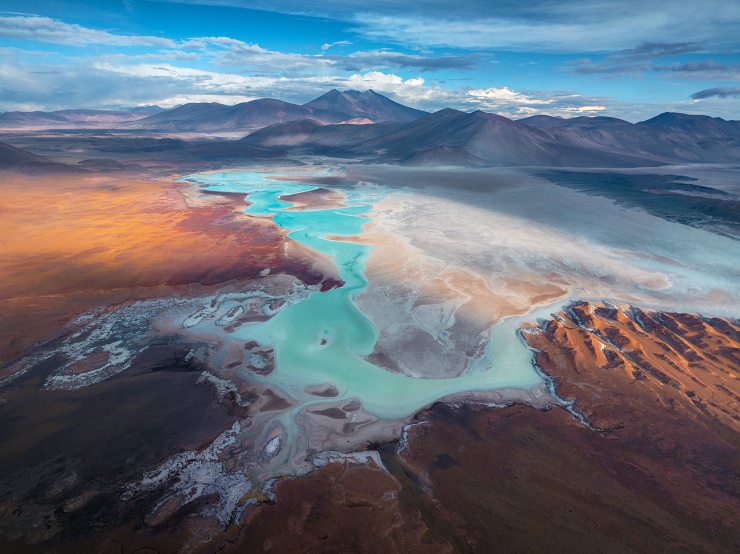
We arrive at the Lagunas Miscanti y Miñiques, two stunningly beautiful blue lagoons surrounded by majestic volcanic peaks.
The altitude above sea level here is 4,200 m (13,780 ft)! But by this time, our bodies will be adapted to the high-altitude difference.
The Miñiques Volcano has an elevation of approximately 5,910 m (19,390 ft), while the Miscanti Volcano stands at about 5,622 m (18,445 ft) above sea level.
The contrasting colors between the bright blue waters and the surrounding arid landscape are a photographer's dream.
As we capture the midday light, we may also spot some endemic bird species around the lagoons, adding to the variety of shots.
A mid-range lens will be perfect for capturing the wide, sweeping landscapes, while a telephoto lens can focus on the details of the wildlife.
5:00 pm
Next, we head to a lookout from where we can see Piedras Rojas, a location known for its striking red rocks, formed by the oxidation of iron.
Here, the vivid reddish hues of the rocks contrast beautifully with the calypso-colored waters of the Salar de Aguas Calientes.
Surrounded by towering volcanoes, the landscape is otherworldly!
Cerro Pili, a dormant volcano, rises to about 6,046 m (19,836 ft), while Cerro Láscar, one of the most active volcanoes in Chile, stands at 5,592 m (18,346 ft).
These towering volcanic peaks provide a dramatic backdrop to the red rocks and salt flats.
6:40 pm

Now, it’s time to drive to our Sunset spot.
This shooting spot offers a vast open landscape with Miscanti Volcano as the focal point (5,622 m or 18,445 ft). The bright yellow “paja brava” (Andean grass) in the foreground adds texture and vibrancy to the scene.
A wide-angle lens will work well here, especially if the sky is filled with dramatic clouds. A mid-range lens will also be ideal for making the volcano appear more dominant while still keeping the “paja brava” in the foreground.
7:10 pm
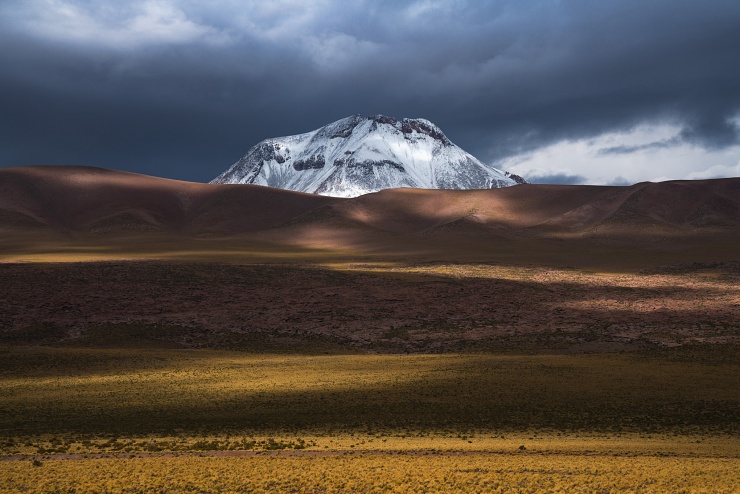
As the Sun sets, we’ll capture the last light on the altiplano, with the golden hues of the setting Sun casting a warm glow over the landscape, the “paja brava” and the towering volcano at the back.
Golden hour begins at 7:17 pm, Sunset is at 7:47 pm, golden hour ends at 8:01 pm, and blue hour ends at 8:09 pm.
8:10 pm
When the last glow of Sunset fades, we’ll make a short drive (just 10 minutes) to a nearby spot chosen specifically for one reason: it offers a better alignment with the Milky Way.
We’ll have dinner in the field, either on the bus or as soon as we get to our astrophotography shooting location.
8:25 pm
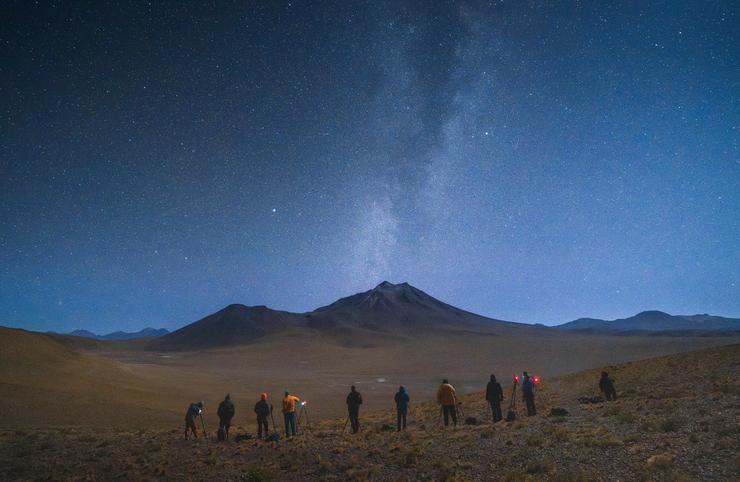
Out here, under a Bortle Class 1 sky, the night feels untouched, ancient, and impossibly vast. The horizon stretches wide and clear, giving us an unobstructed stage for the stars.
This is where the Milky Way reveals itself in full glory. Not just a faint streak, but a luminous arc stretching from edge to edge, so bright it casts a subtle glow on the ground.
The challenge, and the fun, is in the foreground. Scattered rocks, rugged terrain, or hardy desert plants become our anchors. We’ll silhouette them against the galactic core, or use gentle light-painting to bring out their texture without stealing from the stars.
Every angle tells a different story: a lone rock framed beneath the Milky Way’s core, twisted plants glowing faintly under starlight or wide, sweeping panoramas with the galaxy arching across the landscape...
It’s your call!
Nighttime begins at 9:02 pm. Galactic center visibility begins at 12:44 am (+1) and the Galactic Center visibility ends at 6:20 am (+1). The Moon (3.2%) will rise at 6:06 am (+1).
3:25 am
We arrive back in San Pedro de Atacama and head straight to bed.
It’s time to rest and prepare for the adventures of the next day.
Photographic Pills:
- Midday photos at Lagunas Miscanti y Miñiques.
- Afternoon photos from the spectacular lookout over the unique red rocks of Piedra Rojas.
- Sunset, golden hour and blue hour with Miscanti Volcano and the “paja brava”.
- Milky Way and Star Trails at Laguna en Salar de Aguas Calientes (if there are clear skies).
Day 4. Tuesday, March 17th - The Milky Way and the Monks
8:30 am
If you're starving and can't sleep, breakfast is an option, but honestly, we get it if you'd rather stay cozy in bed!
You have until 10:00 am to decide... ;)
11:30 am
Enjoy some relaxation time at the hotel before you walk to the town center to get something for tonight’s dinner (we’ll eat in the field).
12:25 pm
Lunch during your free time (you can walk in town or get something to eat on your own at the hotel), so you can unwind and review your morning shots.
Again, don't forget to get dinner for later, as we’ll be dining in the field tonight.
The Milky Way awaits!
4:00 pm
Post-processing Class with Marco, Jabi and Pato.
This class will provide tips on refining your shots, enhancing the stunning landscapes we've captured so far.
6:00 pm
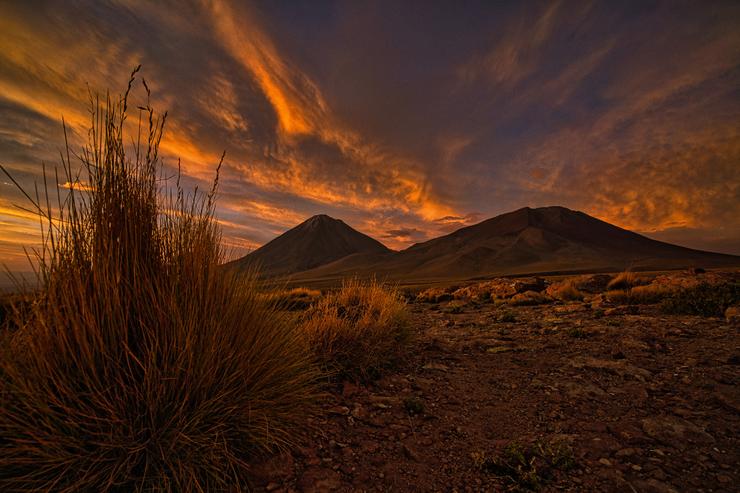
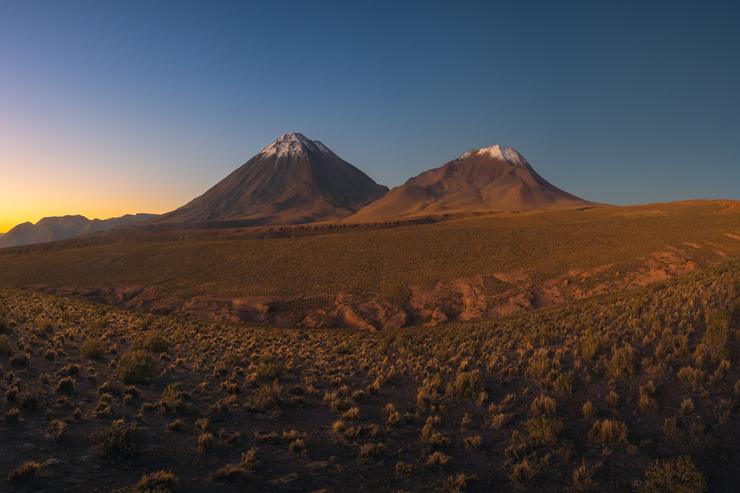
We head to the Licancabur Volcano (5,916 m or 19,409 ft), the majestic peak that we’ve admired from San Pedro de Atacama throughout our expedition.
Now, we get a much closer perspective, only 9 km (5.6 mi) from the base. The golden light of the setting Sun will highlight the rugged textures of the volcano, casting warm hues across the landscape.
Arriving just before Sunset, this location is ideal for a wide-angle lens to capture the full grandeur of the volcano against the expansive desert surroundings.
Golden hour begins at 7:16 pm, Sunset is at 7:46 pm, golden hour ends at 8:00 pm, and blue hour ends at 8:08 pm.
8:22 pm
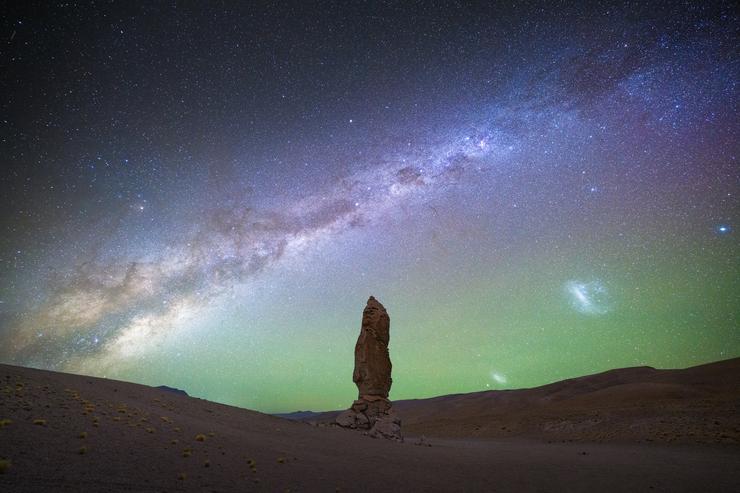
Once the blue hour fades, we drive to the Pacana Monks, a collection of massive rock formations that rise dramatically from the desert floor.
These towering monoliths, some up to 7 m (23 ft) tall, create a stark contrast against the flat, arid landscape.
We’ll dine in the field, under the stars, as we prepare for an incredible astrophotography session.
9:22 pm
The Moon (1.4%) is under the horizon.
With the Milky Way stretching across the sky, the Pacana Monks provide a stunning foreground.
The clear, dark skies (Bortle Scale Class 1) in this remote desert location will offer perfect conditions to capture the stars in vivid detail.
We’ll use a wide-angle lens with a large aperture to frame both the towering rocks and the starry expanse above.
We’ll shoot into the night, capturing this surreal combination of landscape and cosmos, creating a fitting end to another incredible day of photography.
Nighttime begins at 9:01 pm. The Galactic Center visibility begins at 12:40 am (+1) and it ends at 6:20 am (+1). The Moon (0.4%) will rise at 7:04 am.
3:22 am
Bed time! Tomorrow we’ll skip Sunrise (again)!
Sleep well my friends. It’s been a long day.
Photographic Pills:
- Sunset, golden hour and blue hour with Licancabur Volcano.
- Milky Way and Star Trails with the Pacana Monks (if there are clear skies).
Day 5. Wednesday, March 18th - The Secret Valley
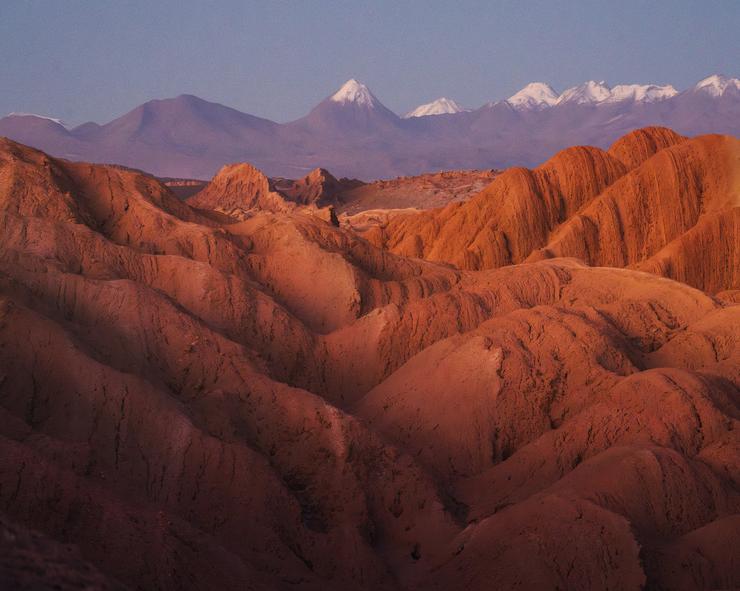
8:30 am
Optional breakfast at the hotel.
With long days behind us and many more adventures ahead, it’s perfectly okay to take it easy this morning.
Feel free to sleep in and skip breakfast if you need to recharge... We’re only on day 5 of this epic journey!
12:30 pm
Like you did yesterday, for lunch you can either take a short walk to a local restaurant or stay at the hotel. This gives us time to recharge and review our shots from the previous day.
2:00 pm
After lunch, enjoy some free time to fill up your form to go through immigration in Bolivia, start packing up, and of course relax and prepare for the evening's adventure.
5:30 pm
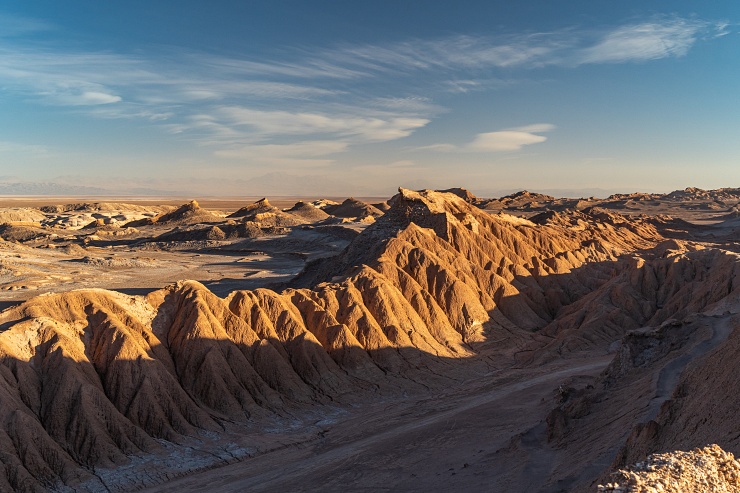
We set off towards our Sunset spot, our secret valley, a unique desert landscape with incredible geological formations and the ever-present Licancabur Volcano in the background (5,916 m or 19,409 ft).
This 50-minute drive will take us to one of the most visually captivating spots of the expedition.
6:20 pm
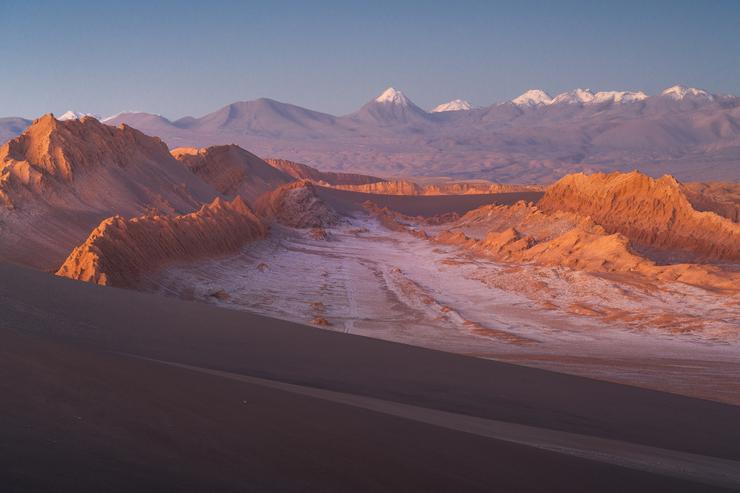
There’s an optional easy hike, 700 m (2,297 ft) with 20 m (66 ft) ascent one way. The elevation above sea level is 2,487 m (8,159 ft).
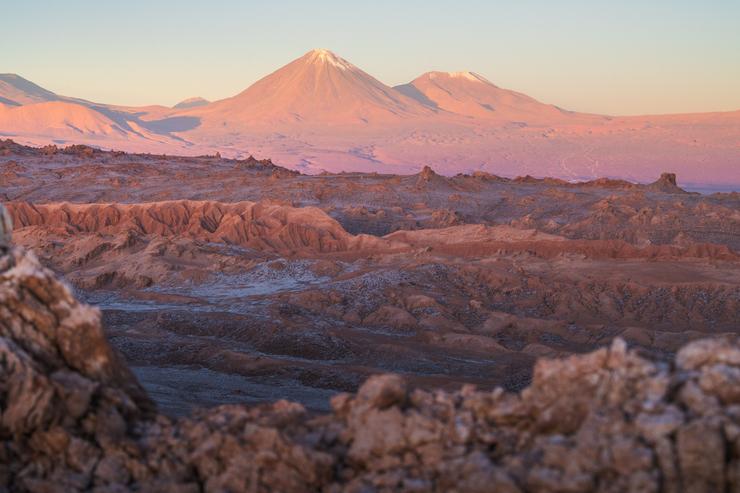
This landscape, with its colorful rock formations and rugged terrain, provides an ideal contrast to the towering Licancabur Volcano in the distance.
The low-angled sunlight will highlight the textures and details of the rocks, while the volcano remains illuminated as the foreground slips into shadow.
A mid-range or telephoto lens will allow you to capture both the intricate formations and the volcano’s grandeur in the background, creating a layered, dramatic composition.
The Sun sets over this remarkable landscape, casting a golden glow on the peaks and valleys. The fading light creates an interplay of shadow and color that brings depth to your images.
Time to shoot!
Golden hour begins at 7:15 pm, Moonset is at 7:31 pm, Sunset is at 7:45 pm, golden hour ends at 7:59 pm, and blue hour ends at 8:07 pm.
8:10 pm
After the blue hour, we walk back to the bus and return to the hotel.
9:10 pm
Dinner at Hotel Our Habitas.
10:10 pm
After a productive day of shooting, it’s time to rest and recharge for the next day’s adventures.
Photographic Pills:
- Sunset, golden hour and blue hour at Vallecito.
Day 6. Thursday, March 19th - Welcome to Bolivia
7:00 am
We gather for breakfast, fueling up for the day ahead. Afterward, it’s time to check out and get ready for the journey into Bolivia.
7:30 am
We hit the road, heading toward the Hito Cajon border pass, where we’ll officially cross into Bolivia. The drive takes about an hour, with plenty of stunning views along the way.
8:40 am
We arrive at the Bolivian border, where we’ll take care of entry formalities before venturing deeper into the breathtaking landscapes of southern Bolivia.
Before we continue, we’ll switch to 4x4 vehicles specially designed for the rugged terrain that lies ahead.
A whole new adventure begins!
10:40 am
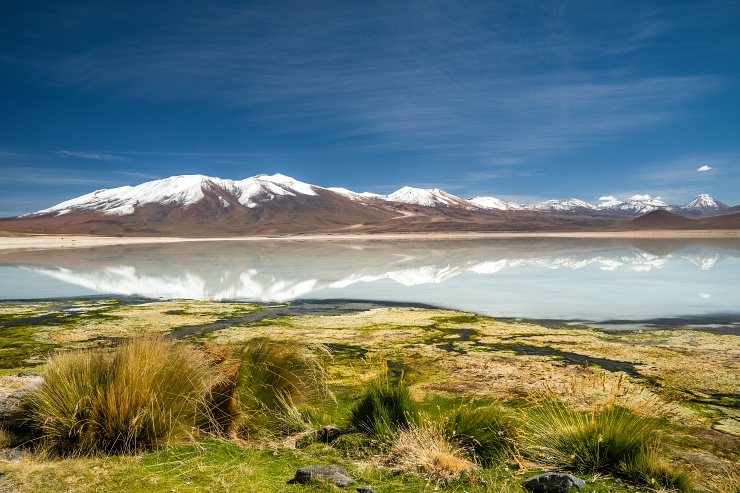
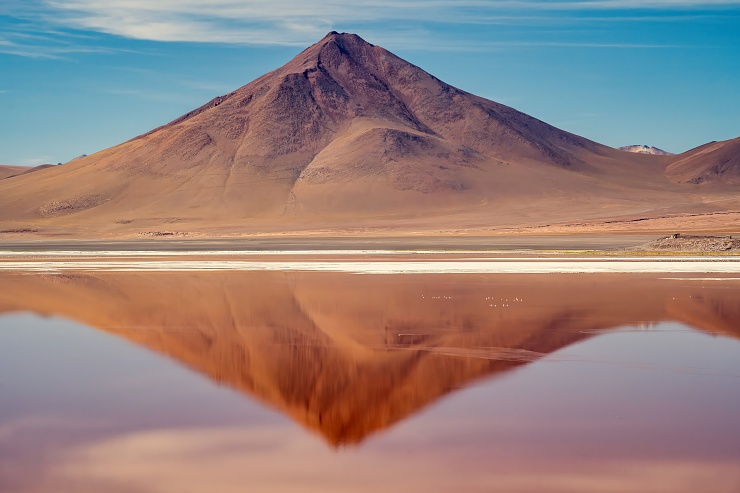
The morning will be filled with multiple quick stops at some of the most incredible natural wonders in the region.
1:40 pm
We stop for lunch near Laguna Salada, where we can enjoy a meal in a restaurant while soaking in the beautiful views.
This is a perfect moment to relax and recharge for the afternoon ahead.
2:40 pm
After lunch, we continue our drive toward the magnificent Laguna Colorada. The journey offers more spectacular views of the Bolivian altiplano.
4:40 pm
We arrive at our hotel, Luna Salada Hotel in Huayllajara Village, near Laguna Colorada, where we check in.
5:20 pm
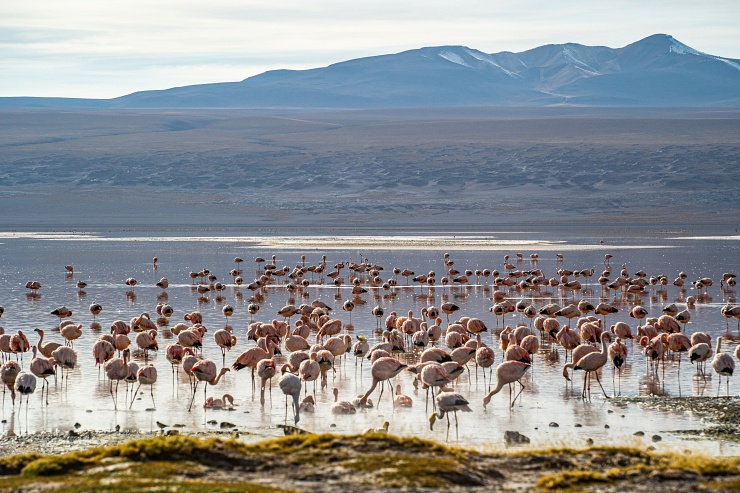
We drive to Laguna Colorada, a breathtaking high-altitude lagoon (4,278 m, 14,035 ft) known for its vivid red waters, caused by the abundance of algae and minerals.
The striking red hues of the water create an incredible contrast with the surrounding mountains and arid landscape.
As the Sun begins to set in the west, we’ll photograph the lagoon bathed in the warm, golden light of the late afternoon.
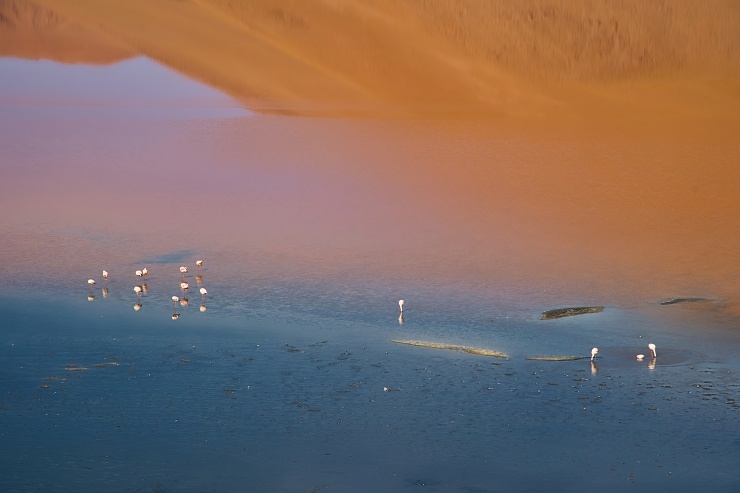
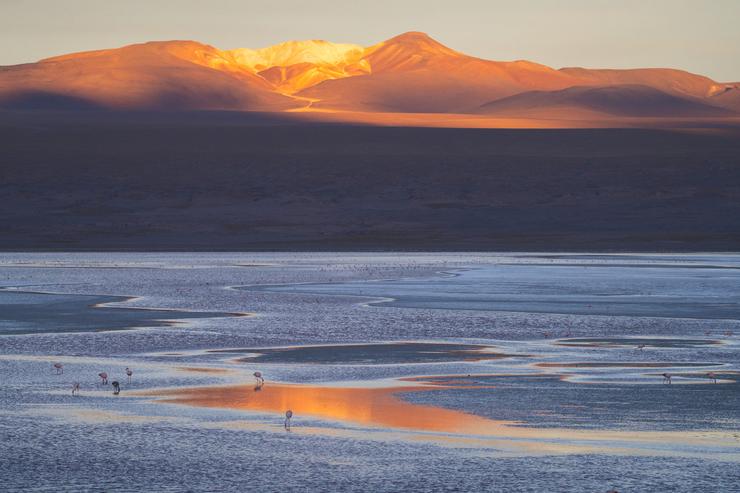
Flocks of flamingos wading in the red waters will add a dynamic element to our shots, with the rich colors of the Sunset reflecting on the water.
Wide-angle lenses will help capture the sweeping panorama of the lagoon, while telephoto lenses are ideal for focusing on the details of the flamingos and the rich hues of the water.
Golden hour begins at 6:13 pm, Sunset is at 6:42 pm, golden hour ends at 6:56 pm, and blue hour ends at 7:05 pm.
8:00 pm
Dinner is served at the hotel, giving us time to relax and reflect on the incredible landscapes we’ve captured today.
9:00 pm
With the day’s adventures behind us, it’s time to rest and recharge for what tomorrow has in store.
Photographic Pills:
- Serene reflections at Laguna Blanca.
- Emerald green waters of Laguna Verde with Licancabur Volcano.
- Surreal rock formations in the Dalí Desert.
- Sunset, golden hour and blue hour with Flamingos and red waters at Laguna Colorada.
Day 7. Friday, March 20th - Flamingos and Stone Trees
5:50 am
There’s an easy hike, 1 km (0.62 mi) with 18 m (59 ft) ascent one way. The elevation above sea level is 4,300 m (14,108 ft).
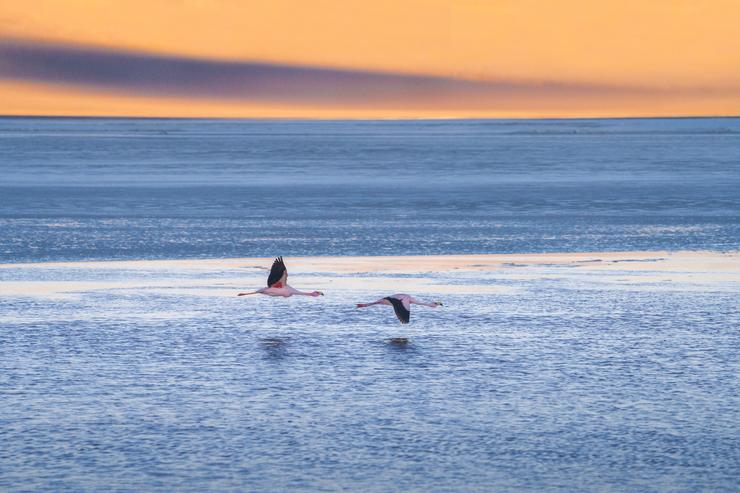
We kick off the day early with a drive back to Laguna Colorada, one of the most stunning high-altitude lagoons in Bolivia.
Arriving just before Sunrise, we start capturing the scene as the soft morning light bathes the lagoon in golden tones.
The flamingos wading in the vibrant red waters add an extra dimension of beauty to the scene, making this an ideal time for both landscape and wildlife photography.
With the interplay of light and shadow, the lagoon and its pink residents offer endless creative possibilities.
A wide-angle lens will allow you to capture the full panorama of the lagoon and surrounding mountains. A mid-range or telephoto lens will help you isolate the flamingos and other details, focusing on their graceful movements against the vibrant backdrop of the lagoon.
Blue hour begins at 6:12 am, golden hour begins at 6:21 am, Sunrise is at 6:34 am and golden hour ends at 7:04 am.
8:10 am
After our morning shoot, we drive back to the hotel for breakfast and check-out, getting ready to leave Laguna Colorada behind as we continue our journey.
9:30 am
On our journey into the deep deserts of Bolivia, we’ll also have the chance to photograph “Árbol de Piedra” or Stone Tree.
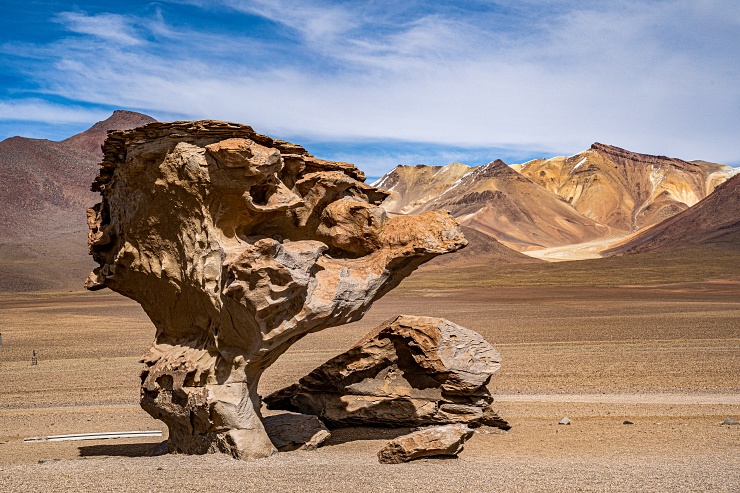
Surrounded by an arid, almost Martian-like landscape, the Árbol de Piedra stands as a solitary figure in the vast desert.
This iconic rock formation is around 7 m (23 ft) tall. It gets its name due to its distinctive tree-like shape, with a narrow "trunk" supporting a broader, mushroom-like "canopy."
The formation was sculpted by strong winds over thousands of years, which eroded the softer lower layers of sandstone, leaving the harder, upper sections intact.
11:30 am
At midday we’ll explore Laguna Kara, a remote, mirror-like lake set high in the Bolivian Altiplano.
The strong midday Sun transforms the scene into a play of contrasts: brilliant blues of the water and sky against the muted ochres and whites of the surrounding volcanic landscape. Flamingos often wade through the shallows, adding life and scale to the vast expanse.
With the Sun overhead, we’ll work with reflections, textures, and stark shadows, turning what might seem like harsh light into striking compositions.
Wide-angle shots capture the immense space, while telephoto frames isolate patterns of light, water, and wildlife.
It’s a chance to slow down, experiment, and let the high-altitude silence sink in as we photograph this surreal plateau.
1:30 pm
Lunch at Takya El Desierto, and free time to rest.
4:30 pm
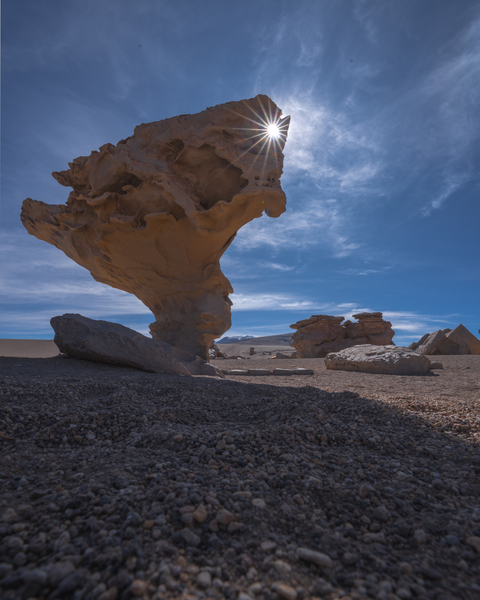
We start driving to our Sunset shooting location. It’s not defined as it will depend on the weather condition we had the previous day when shooting the lake. Based on that, we’ll shoot either one of the lakes with flamingos or Árbol de Piedra.
8:30 pm
Time to rest, check your Milky Way plan for tonight using PhotoPills and prepare your gear.
10:45 pm
The Moon's not up right now, so the sky’s nice and dark.
This is one of those nights where the Milky Way really puts on a show, and with the Árbol de Piedra standing tall in the foreground, the whole scene feels almost otherworldly.
Out here in the desert, the skies are about as dark as it gets (yep, true Bortle 1 conditions), which means you’ll be able to pull in crazy amounts of detail from the stars.
Best bet? Go with a wide-angle lens and a fast aperture so you can fit both the rock formations and that glowing sky in one frame.
We’ll keep shooting deep into the night: there’s just something magical about capturing that mix of land and stars. It’s the perfect wrap-up to a solid day of exploring with the camera.
Night kicks off around 8:56 pm. If you’re chasing the Galactic Center, it’ll show up around 12:23 am (+1) and stick around till 6:19 am (+1). And if you're wondering about the Moon, it’ll rise at 10:06 am (+1), way after we're done.
1:30 am
Bed time!
Photographic Pills:
- Sunrise, golden hour and blue hour with Flamingos and red waters at Laguna Colorada.
- Surreal rock formations, including Árbol de Piedra.
- Serene reflections and flamingos at Laguna Kara.
- Sunset, golden hour and blue hour in either one of the lakes with flamingos or Árbol de Piedra.
- Milky Way and Star trails with Árbol de Piedra (if there are clear skies).
Day 8. Saturday, March 21st - The Magic Mirror
8:30 am
Quick breakfast at the hotel.
9:00 am
We start our drive to Colchani, the gateway to the breathtaking Salar de Uyuni. The drive will take around 6 hours, with plenty of scenic views along the way.
On our way, we’ll stop at San Cristóbal for lunch.
3:00 pm
Arriving at our Laguna Salada Hotel in Colchani, we check in and relax for a couple of hours before heading out for a Sunset session at the salt flats.
5:00 pm
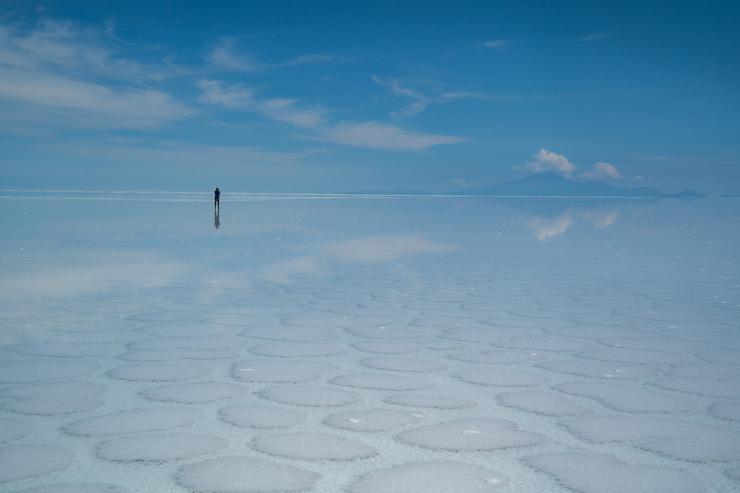
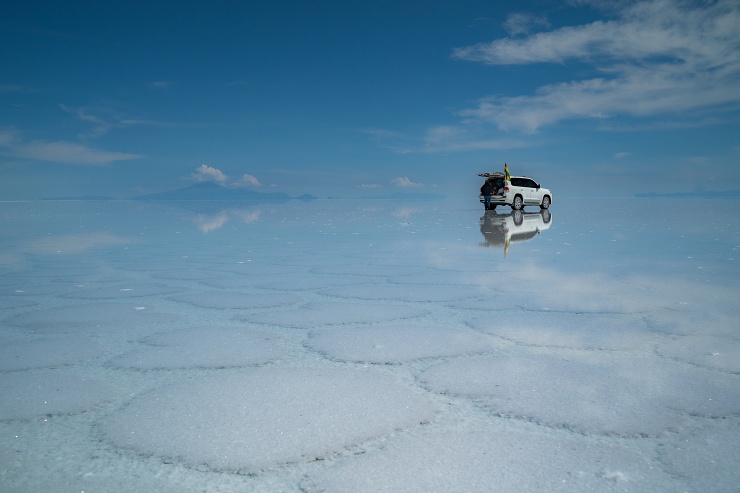
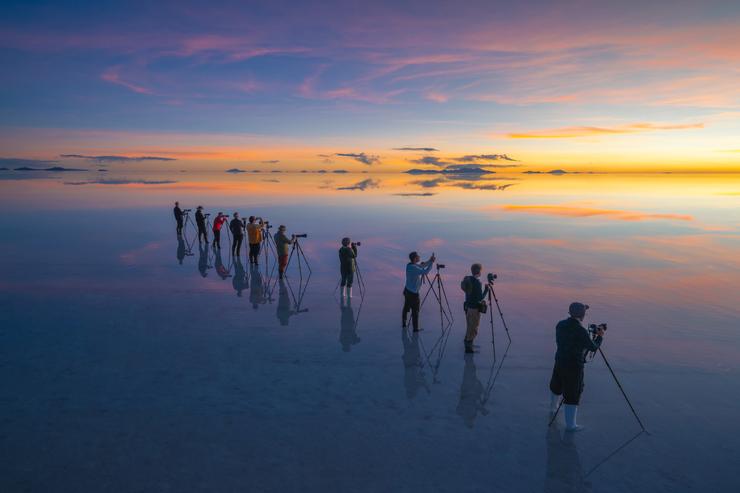
We set off for the iconic Salar de Uyuni, the world’s largest salt flat. At this time of year, the flats are often covered by a thin layer of water, transforming the landscape into a surreal mirror that perfectly reflects the sky and surrounding mountains.
It’s not magic, it’s nature...
Of course, like anything in nature, nothing is guaranteed, and the mirror effect depends on the water. But we’ll be there at the time when the odds are in our favor.
As always... Plan & Pray!
By the way... When it’s dry, it looks quite stunning as well!
6:30 pm
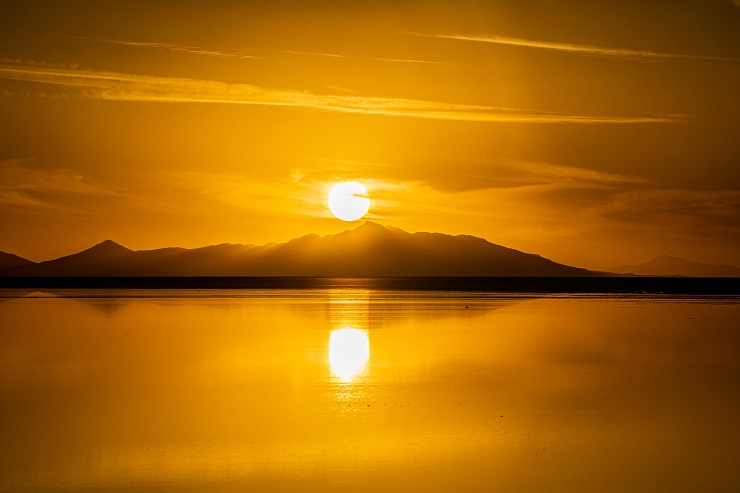
Arriving at our planned shooting spot, we prepare to capture the mesmerizing mirror effect of the salt flats at Sunset.
The reflection of the sky in the shallow water creates an illusion of walking on clouds, adding to the ethereal beauty of the landscape.
Suddenly...
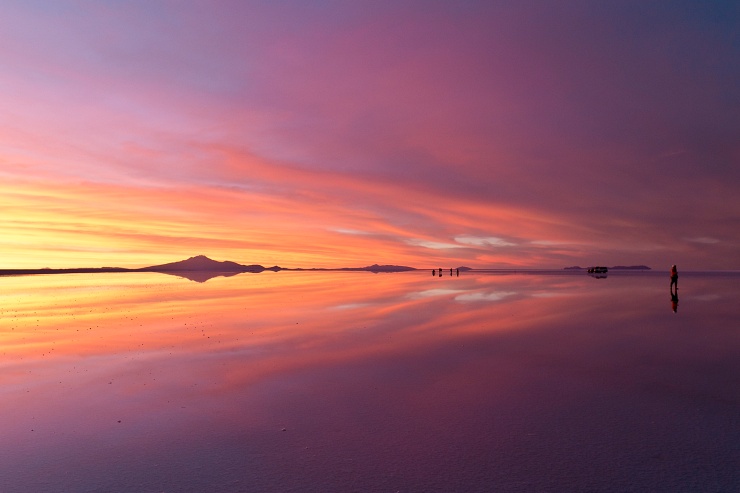
As the Sun begins to set, the golden hour light enhances the rich colors and reflections across the salt flats.
A wide-angle lens is ideal for capturing the vast, mirror-like surface, while a mid-range lens can help you focus on isolated clouds or reflections that create unique compositions.
Golden hour begins at 6:08 pm, Sunset is at 6:37 pm, golden hour ends at 6:51 pm, and blue hour ends at 6:59 pm.
8:00 pm
After Sunset, we’ll enjoy dinner in the field, surrounded by the surreal beauty of the Uyuni salt flats.
10:30 pm
The Moon (11.5%) is under the horizon.
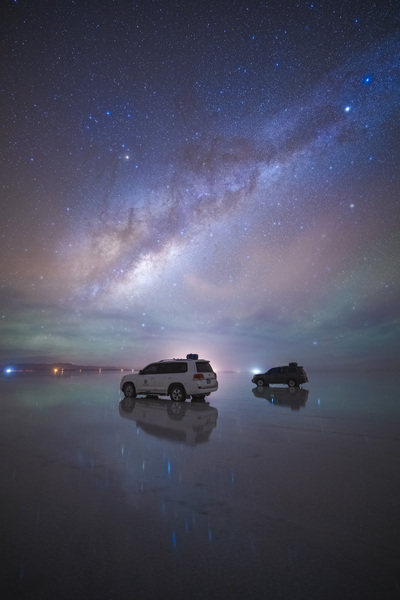
As night falls, the magical transformation begins...
The expansive mirror surface of the salt flats reflects the stars and the Milky Way, creating an extraordinary, otherworldly scene.
This is one of the most unique astrophotography locations in the world, with the dark skies offering an unparalleled opportunity to capture the night sky in all its glory.
A wide-angle lens with a large aperture will be essential for capturing the Milky Way and the stars reflecting on the vast salt flats.
We will shoot into the night, making the most of this incredible location, with the Galactic Center visible starting at 11:26 pm, providing more opportunities for stunning shots of the stars aligning with the reflective salt flats.
Nighttime begins at 7:51 pm. The Galactic Center visibility begins at 11:26 pm and it ends at 5:19 am (+1). The Moon (3.7%) sets at 8:26 pm.
4:00 am
We finish up our astrophotography session and head back to the hotel for some well-deserved rest.
Photographic Pills:
- Sunset, golden hour and blue hour at Salar de Uyuni.
- Milky Way and Star Trails at Salar de Uyuni (if there are clear skies).
Day 9. Sunday, March 22nd - The Secret

I’ve been giving you lots of details of this amazing expedition to Atacama & Uyuni (Chile & Bolivia).
Maybe far too many...
But on March 22nd we’ll do something very special...
What will that be?
Well, you'll have to be there, with us, to figure it out :P
Day 10. Monday, March 23rd - The Wonders of Salar de Uyuni
9:00 am
Breakfast is available at the hotel until 9:30 am for those who want to fuel up for the day. But if you’d rather catch a few extra hours of sleep, go ahead... You’ve definitely earned it!
Today will be dedicated to fully immersing ourselves in the surreal beauty of the Salar de Uyuni, offering endless opportunities to capture both the stunning mirror effect of the salt flats at Sunset and the star-filled skies at night.
12:00 pm
Let’s go for a round table session. You surely have lots of questions!
1:30 pm
Lunch at the hotel, enjoying a leisurely meal while reflecting on the incredible experiences we've had so far.
2:30 pm
Siesta time (nap time)!
Sleep as much as you can. Today, if we’re lucky with the stars, we’ll take photos until late.
5:00 pm
We set off toward our evening shoot location on the Salar de Uyuni.
The drive takes about 1h 30min, and by the time we arrive, the golden light of the late afternoon will be bathing the landscape.
Look!
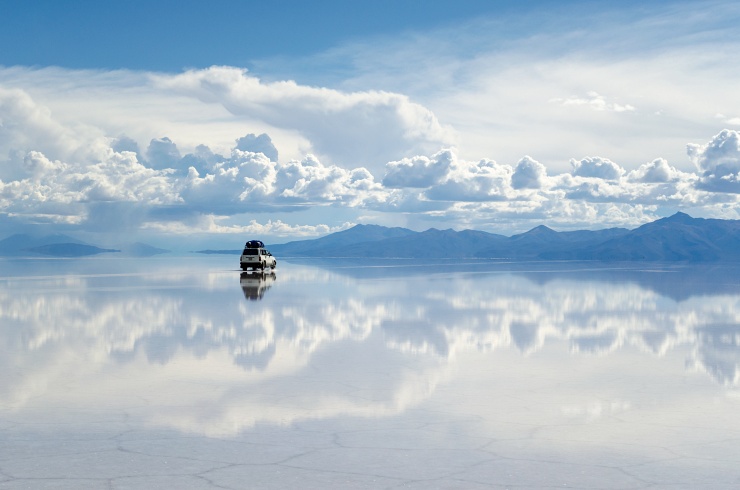
The vast expanse of Salar de Uyuni is transformed into a giant mirror, reflecting the sky and creating a surreal, dreamlike setting.
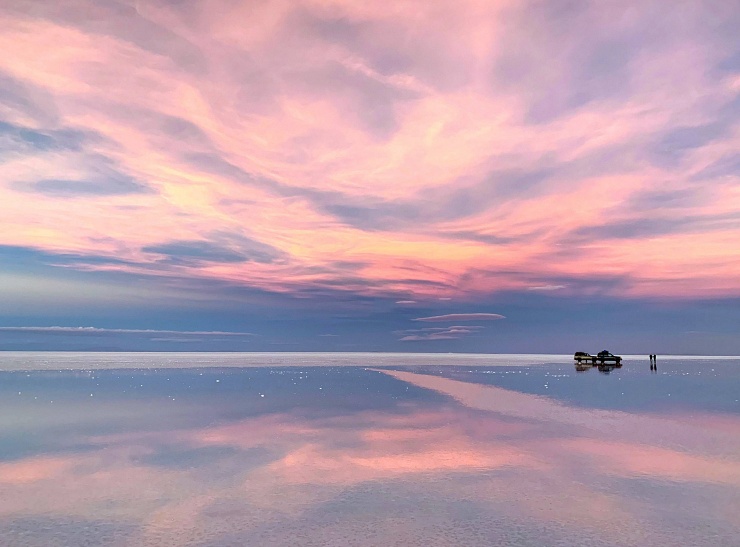
The reflection of the clouds and the surrounding mountains blurs the line between the earth and sky, making it feel like you're walking on air.
As Sunset approaches, we aim to capture the magical mirror effect as the colors shift from warm hues of orange and pink to the deep blues of twilight.
This is a prime opportunity for wide-angle shots that showcase the expansive beauty of the salt flats. Use a mid-range lens to focus on isolated reflections, like lone clouds or distant peaks, for more intimate compositions.
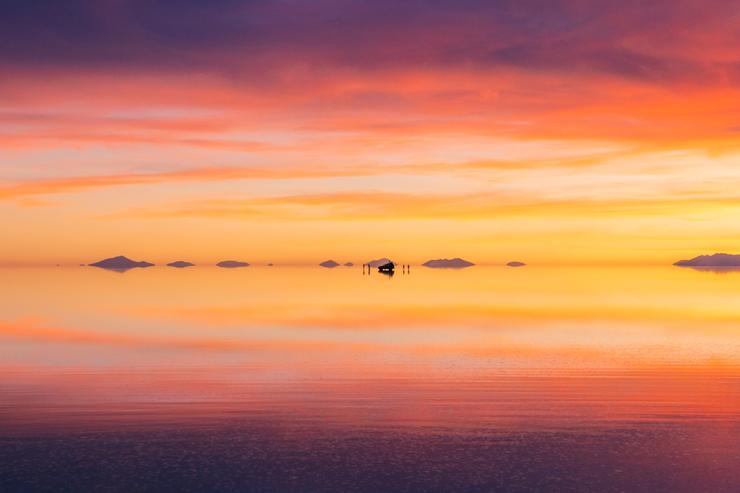
The Sun sets, and the magic of Uyuni deepens as the flats take on a more ethereal glow. We’ll continue shooting through the blue hour, making the most of this incredible landscape as night begins to fall.
Golden hour begins at 6:04 pm, Sunset is at 6:33 pm, golden hour ends at 6:46 pm, and blue hour ends at 6:55 pm.
8:00 pm
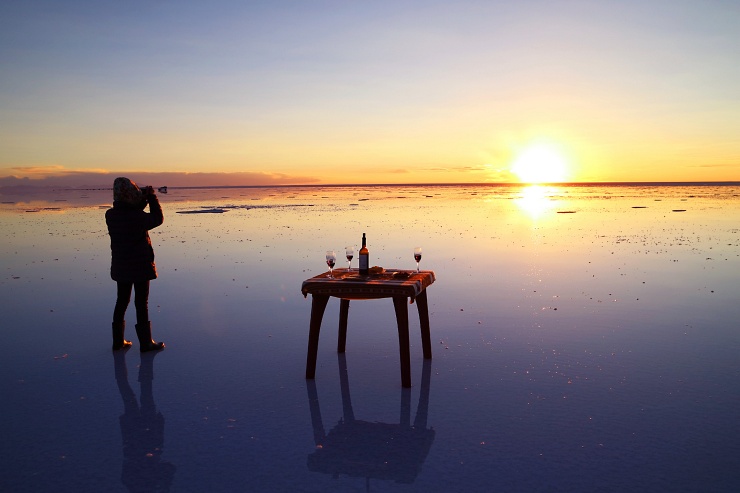
After Sunset, we gather for dinner on the salt flats, surrounded by the breathtaking scenery as the night sky begins to reveal itself.
9:00 pm
It's a new Moon...
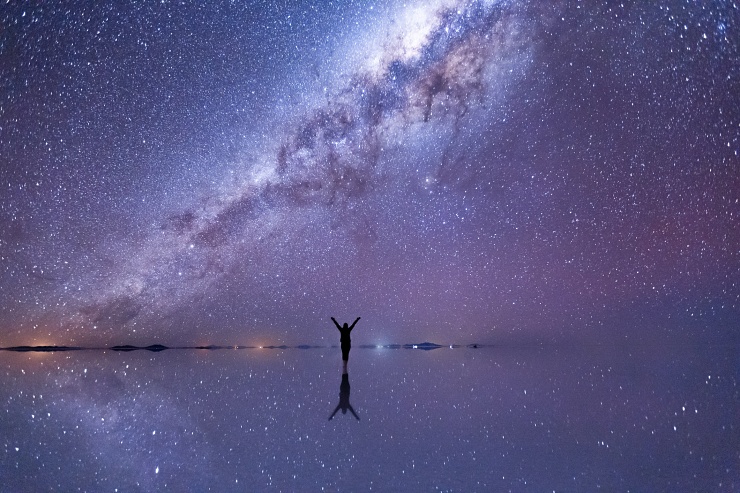
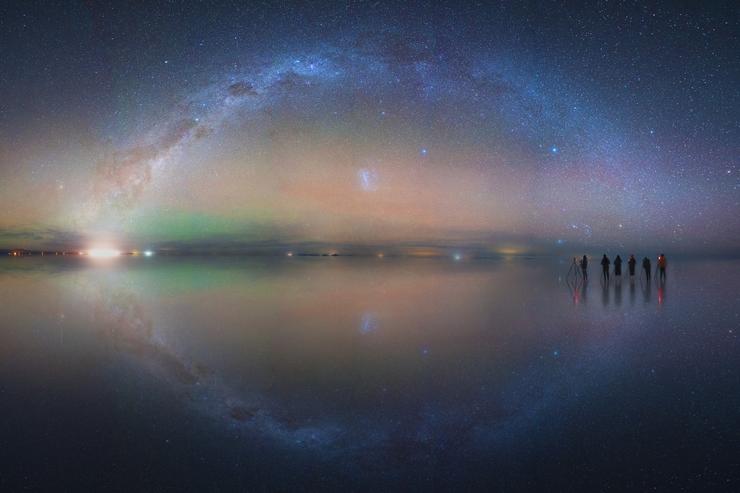
Once dinner is finished, the real magic begins. We transition into an astrophotography session, capturing the Milky Way as it stretches across the sky, perfectly mirrored on the reflective surface of the salt flats.
This creates an extraordinary scene where stars appear both above and below you, offering an otherworldly photographic experience.
We’ll continue shooting throughout the night, making the most of this once-in-a-lifetime location, with the Galactic Center visible from around midnight, offering stunning compositions with the night sky mirrored on the ground.
Nighttime begins at 8:53 pm. The Galactic Center visibility begins at 12:11 am (+1) and it ends at 6:20 am (+1). The Moon (30.2%) will set at 11:03 pm.
1:45 am
As the night’s photography wraps up, we drive back to the hotel for some well-deserved rest.
We’ve had a perfect blend of serene landscapes, surreal reflections, and celestial wonders.
Each moment spent on the Salar de Uyuni feels like a dream, where the sky and land merge into one, creating an unparalleled visual experience that will stay with you forever.
Sweet dreams my friends!
Photographic Pills:
- Sunset, golden hour and blue hour at Salar de Uyuni.
- Milky Way at Salar de Uyuni (if there are clear skies).
Day 11. Tuesday, March 24th - The Highest Volcano
8:00 am
We start the day with breakfast at the hotel, fueling up for a scenic drive ahead.
9:00 am
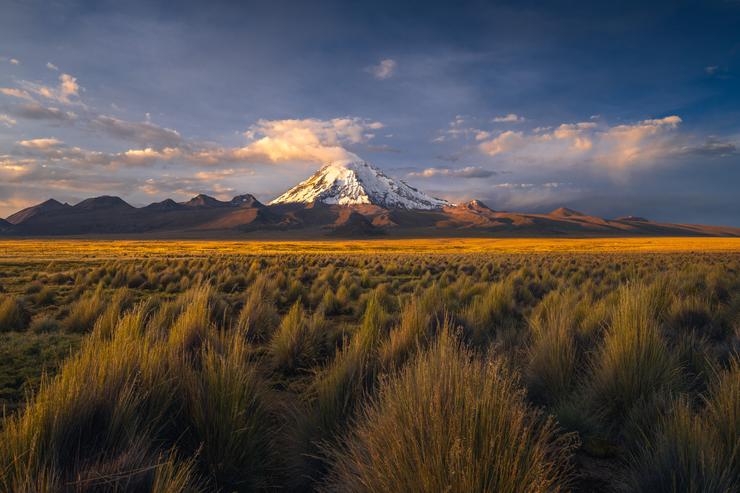
After checking out, we embark on a 5-hour drive towards the remote beauty of Sajama National Park. This journey will take us through incredible landscapes, offering endless photo opportunities along the way.
Sajama National Park is Bolivia’s oldest national park, established in 1939. Located in the Oruro Department near the Chilean border, it covers an area of approximately 100,230 hectares (247,660 acres) in the Bolivian Altiplano.
The park is renowned for its stunning natural landscapes, dominated by the Sajama Volcano, Bolivia’s highest peak at 6,542 m (21,463 ft).
The park is home to a wide variety of ecosystems, ranging from high-altitude grasslands (puna) to snow-capped peaks, and boasts a rich diversity of wildlife, including vicuñas, alpacas, llamas, Andean flamingos, condors, and pumas. Endemic plant species, such as the Queñua tree (Polylepis), are found at some of the highest altitudes in the world and help support the region's biodiversity.
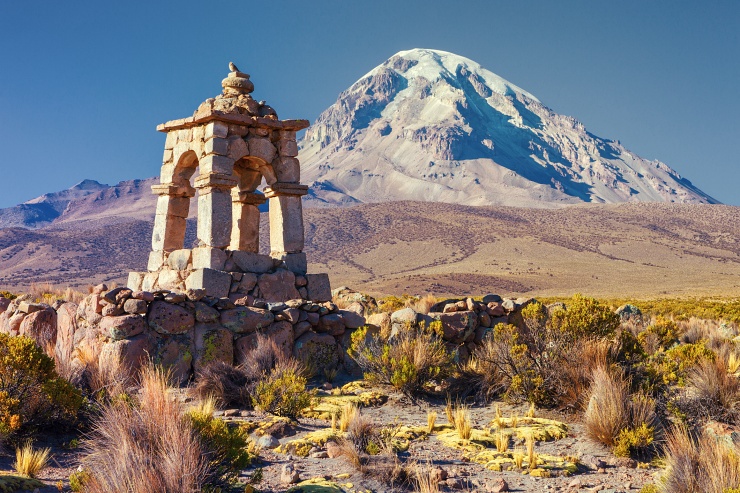
In addition, the park is home to ancient Aymara culture, with chullpas (pre-Columbian burial towers) scattered across the landscape. The area also has colonial-era churches, showcasing the historical and cultural heritage of the region.
2:00 pm
We stop for a leisurely lunch at a scenic spot, taking in the vast Bolivian altiplano.
2:45 pm
Back on the road, we continue our drive through the rugged terrain of western Bolivia.
As we approach Sajama, the imposing Sajama Volcano 6,542 m (21,463 ft) begins to dominate the horizon.
4:45 pm
Arriving at our basic but comfortable Hostal Oasis in the small village of Sajama, we check in and take some time to relax before our evening shoot.
Sajama Village is a small, traditional settlement located in the Oruro Department of Bolivia, at the base of the Sajama Volcano.
Situated at an altitude of around 4,200 m (13,780 ft), this remote village is part of the Sajama National Park, one of Bolivia’s most beautiful and biodiverse protected areas.
The village itself has a population of a few hundred people, primarily of Aymara descent, who live in adobe houses and practice traditional livelihoods such as herding llamas and alpacas.
Sajama is also known for its colonial-era church, one of the oldest in the region, and for its ancient tombs, called chullpas, which are pre-Incan funerary towers found throughout the area.
5:45 pm
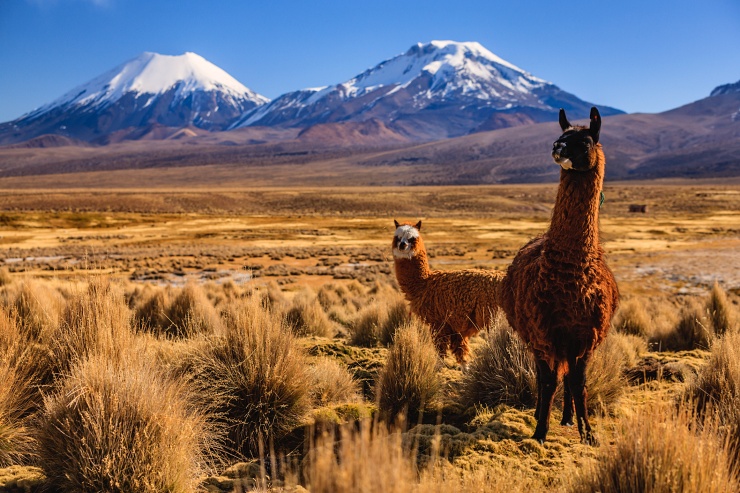
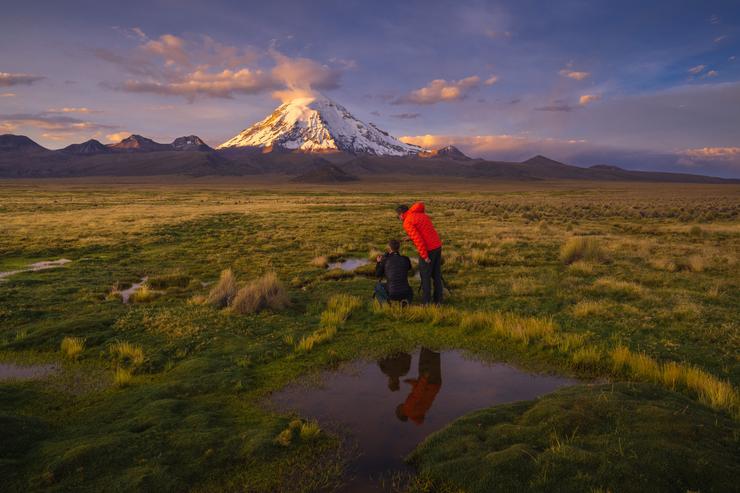
We head out for a Sunset session in the nearby grasslands and lagoons, with the Sajama Volcano providing an awe-inspiring backdrop.
The area is a photographer’s dream, with its mix of grassy meadows, small streams, and reflective lagoons contrasting against the volcanic landscape. And we’ll also photograph the llamas using the volcanoes as the perfect background!
6:45 pm
It’s Sunset time!
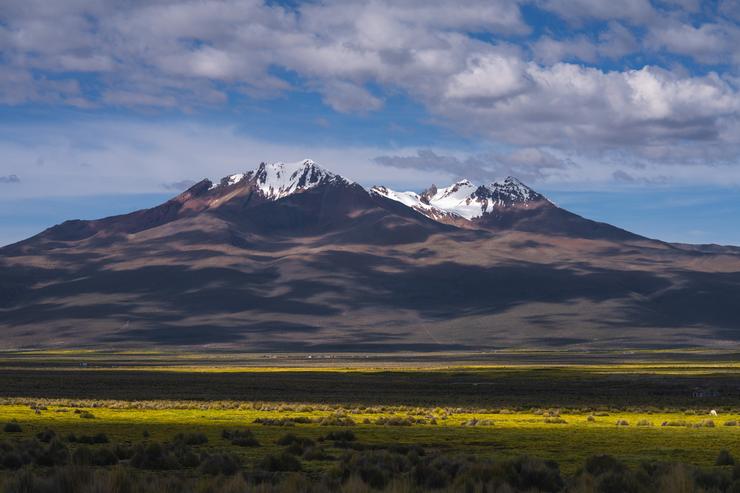
We position ourselves at the planned shooting spot to capture the sidelight as it illuminates the Sajama Volcano.
The foreground of lagoons and streams adds depth to the composition, while the distant snow-capped peak of Sajama brings grandeur to the scene.
A mid-range lens is perfect for balancing the foreground and the towering volcano, allowing us to create visually rich and dynamic compositions.
As the light fades, we capture the last rays of sunshine hitting the landscape, making for a dramatic and beautiful Sunset scene.
Golden hour begins at 6:14 pm, Sunset is at 6:43 pm, golden hour ends at 6:56 pm, and blue hour ends at 7:05 pm.
8:30 pm
After the Sunset session, we return to Hostal Oasis for a hearty dinner and some well-earned relaxation.
10:00 pm
Dinner wraps up, and it’s time to rest up for another day of adventure.
Photographic Pills:
- Sunset, golden hour and blue hour at the foot of Sajama Volcano.
Day 12. Wednesday, March 25th - Sajama National Park (Bolivia)
4:00 am
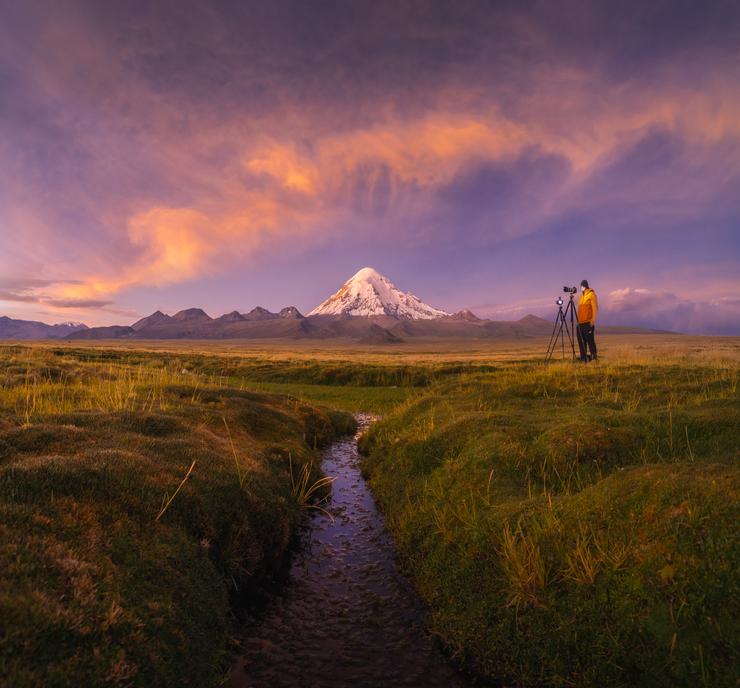
We head to our Sunrise location on the west side of Sajama Volcano.
We’re heading somewhere totally new and pretty far off the usual trail. We’ll hop into the 4x4s and drive up to this high-up spot that looks out over endless grasslands.
Hardly anyone comes out here... Seriously, we haven’t even seen any photos taken from this place. That’s part of the thrill.
From up there, you get this amazing view of Sajama in the distance, rising up over the plains and catching that soft, golden morning light. It’s one of those views you don’t forget.
A wide-angle lens is ideal here for capturing the expansive landscape, while a mid-range lens will help emphasize the grandeur of the volcano.
Blue hour begins at 6:18 am, golden hour begins at 6:27 am, Sunrise is at 6:40 am and golden hour ends at 7:09 am.
7:20 am
We return to the hotel for breakfast and a bit of downtime before continuing our journey.
9:45 am
After a 25-minute drive, we get to Aguas Termales de Colchapata, a hidden gem tucked into the Bolivian Altiplano, where the harsh, high-altitude desert meets an oasis of warmth.
At over 4,000 m (13,123 ft) above sea level, the landscape around it is stark and otherworldly: rolling plains, distant volcanoes, and a sky so clear it feels endless.
And right there, steaming pools of geothermal water bubble up from the earth, inviting you to step in and experience the contrast between the crisp mountain air and the soothing heat.
You can soak in the natural hot springs while watching wild vicuñas graze nearby, or just breathe in the silence of the high plateau. It’s the perfect place to slow down, warm up, and recharge before or after long shooting sessions in the vast landscapes of Bolivia.
11:40 am
Back at the hotel, you have a bit of free time until lunch.
12:15 pm
Lunch at the hotel and time to relax afterwards.
5:05 pm
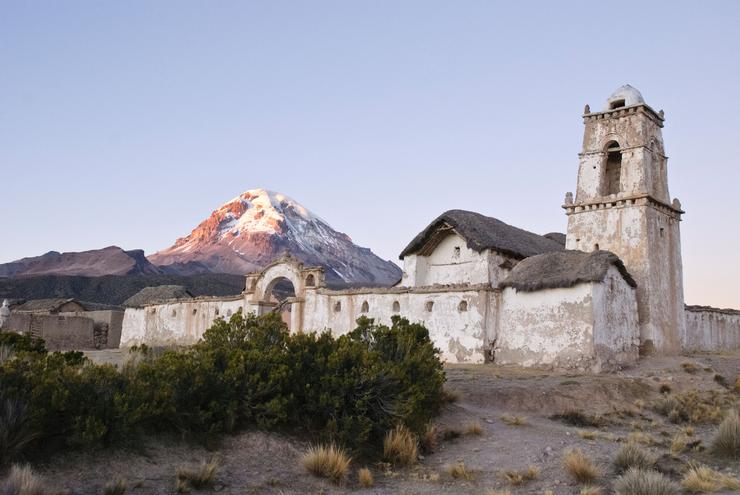
As the day winds down, we arrive at Tomarapi Church, a small adobe chapel that feels frozen in time. Nestled at the foot of Nevado Sajama, Bolivia’s highest peak, the chapel stands as a quiet reminder of the region’s culture and history. Its humble form contrasts beautifully with the grandeur of the altiplano and the snowcapped giant towering behind it.
At Sunset, the light transforms the scene. Golden tones sweep across the grasslands, side-lighting the church and adding warmth to its textured adobe walls.
We can frame it as a solitary subject glowing in the vast emptiness, or pull back to place it in dialogue with Sajama’s dramatic silhouette.
Depending on the clouds, the sky may ignite in fiery hues or soften into pastel gradients. Either way, the contrast between simplicity and grandeur makes this shoot unforgettable.
This is the kind of place where every frame feels like a story: the timeless chapel, the towering peak, and the fading light of the Altiplano.
Golden hour begins at 6:13 pm, Sunset is at 6:42 pm, golden hour ends at 6:55 pm, and blue hour ends at 7:04 pm.
7:55 pm
As the blue hour fades, we’ll make our way back to the vehicle and return to Hostal Oasis for a well-deserved dinner.
9:45 pm
We’re back at Tomarapi church for an astrophotography session!
With Nevado Sajama rising in the background and the adobe chapel in the foreground, the scene becomes the perfect canvas for astrophotography.
The Milky Way arcs above the altiplano, its Galactic Core becoming visible around midnight and stretching overhead until dawn. We’ll frame the church beneath the stars, using its textured walls and simple form as a striking silhouette against the cosmos. With no light pollution, the sky is impossibly dark, making every star stand out in crisp detail.
From wide-angle shots capturing Sajama, the church, and the galaxy, to closer compositions highlighting the building as a cultural anchor beneath infinity, the possibilities are endless. Whether experimenting with light-painting to reveal the adobe texture or keeping it pure silhouette, this is the kind of session that feels both surreal and timeless.
The night belongs to us!
Nighttime begins at 7:54 pm. The Galactic Center visibility begins at 11:24 pm and it ends at 5:29 am (+1). The Moon (41.7%) will set at 12:03 am (+1).
12:35 am
Bed time!
After a long, fulfilling day of shooting, we call it a night and rest up for more adventures to come.
Photographic Pills:
- Sunrise, golden hour and blue hour at Sanjama volcano.
- Sunset, golden hour and blue hour at Tomarapi church.
- Milky Way and Star Trails at Tomarapi church (if there are clear skies).
Day 13. Thursday, March 26th - The Lake and the Volcano
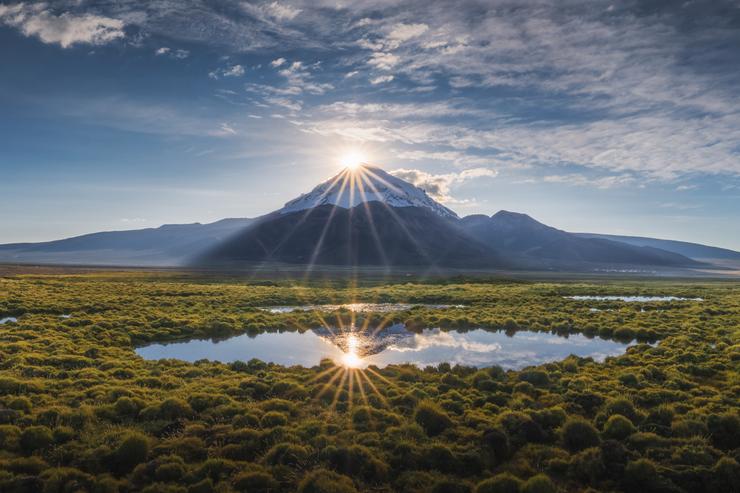
6:05 am
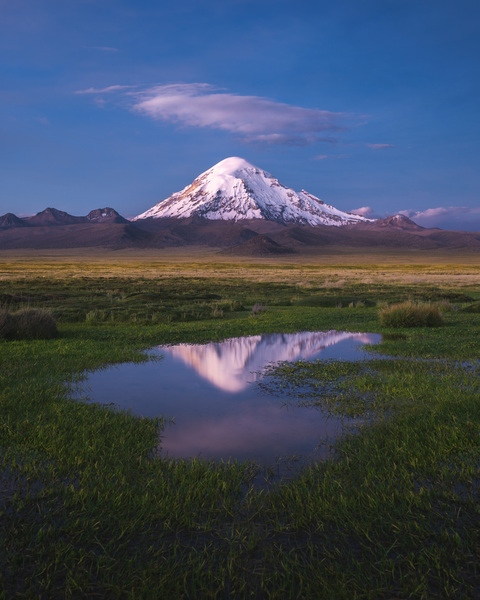
Before the Sun rises, we make our way to a quiet field (30-min drive from our hotel), where a handful of small ponds lie scattered across the open grassland.
When the air is still, these pools become perfect mirrors, reflecting the immense presence of Nevado Sajama rising above the plains. The scene is peaceful, yet the scale of the mountain gives it undeniable power.
6:20 am
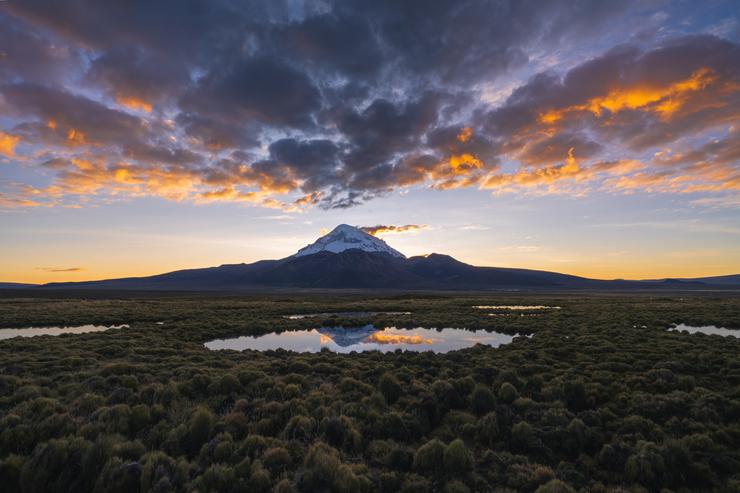
Look!
As the Sun crests the horizon, we’ll position ourselves to catch it peeking directly over Sajama’s summit, igniting the sky in warm hues and casting soft light across the grass.
With reflections doubling the drama, our frames will feel balanced and harmonious, whether we go for low perspectives with foreground grasses or minimalist, graphic compositions of mountain and mirror.
And if we’re lucky, warm light on the fields will add that extra layer of atmosphere, turning a serene sunrise into something unforgettable.
Imagine. Plan. Shoot!
Blue hour begins at 6:19 am, golden hour begins at 6:27 am, Sunrise is at 6:40 am and golden hour ends at 7:10 am.
7:35 am
After an incredible Sunrise shoot, we head back to the hotel for breakfast and check out.
9:00 am
Let’s load the luggage to our vehicles. We’re heading to the border!
10:00 am
Crossing the border into Chile, we meet our local partners who will transport us to the village of Putre
1:50 pm
We have a quick lunch before resuming our drive to our hotel.
2:50 pm
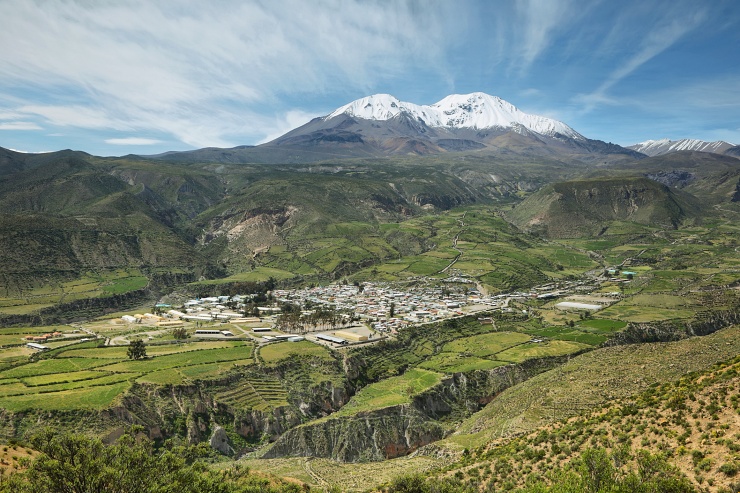
Putre is a small, picturesque village nestled in the Chilean Altiplano, situated at an altitude of around 3,500 m (11,483 ft).
Located in the Arica y Parinacota Region, Putre serves as a gateway to Lauca National Park.
The village is known for its tranquil atmosphere, traditional Aymara culture, and stunning views of the snow-capped Parinacota (6,348 m, 20,827 ft) and Pomerape (6,282 m, 20,577 ft) volcanoes.
Just over 1,500 people live here.
Following our check in at Hotel Kukuli, we have some free time to rest and prepare for the evening shoot.
4:00 pm
We head out again, this time to the Parinacota area for Sunset. The drive offers more breathtaking views of the Altiplano, with its rugged terrain and wide-open spaces.
6:00 pm
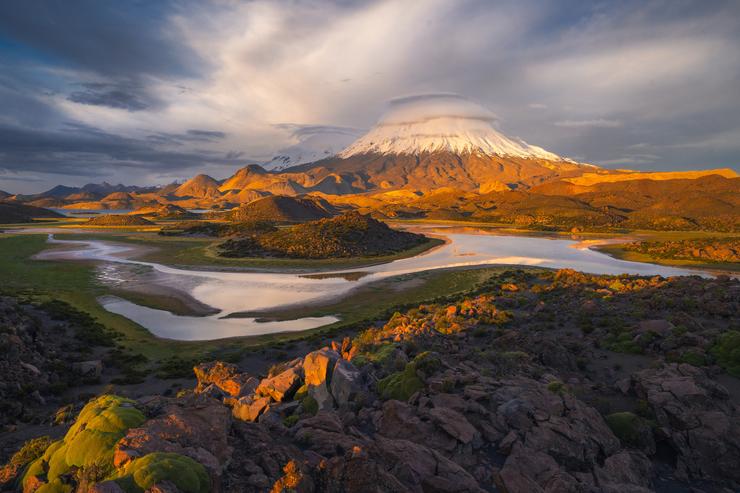
There’s an easy hike, 1.8 km (1.1 mi) with 13 m (42 ft) ascent one way. The elevation above sea level is 4,553 m (14,937 ft).
In the late afternoon, we’ll drive to the area near Parinacota, where we will divide the group in two. Each group will go to a different spot for Sunset.
We’re in Lauca National Park!
Where the Andes touch the sky, and nature thrives untamed.
The park covers an area of approximately 1,379 km² (532 mi²). And it sits at altitudes ranging from 3,200 m (10,500 ft) to over 6,300 m (20,669 ft) in the Andes Mountains.
To get to the shooting spot, we’ll hike a bit.
This area is a PhotoPillers’ dream, with alien-like Yareta plants, dark volcanic rocks, and multi-colored lakes that can serve as beautiful foregrounds.
In the distance, the Parinacota and Pomerape volcanoes will be lit by the setting Sun, providing a stunning backdrop.
And we may even spot flamingos wading in the lakes!
A wide-angle lens is ideal here to emphasize the foreground elements and capture the full scale of the landscape.
This area offers endless possibilities for creativity, as each of us will discover unique angles and compositions!
Be creative!
7:00 pm
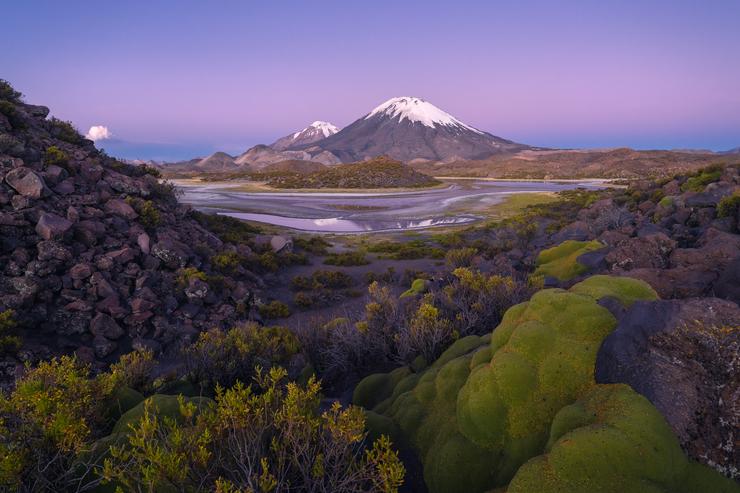
As the Sun starts to set, we capture the west side of the volcanoes, which are beautifully illuminated by the fading light.
The combination of striking volcanic peaks and interesting foreground elements allows for countless creative compositions.
A wide-angle lens is ideal for this scene, emphasizing the foreground details while capturing the grand landscape.
We’ll stay until the last light fades, capturing the transition from golden hour to blue hour.
Golden hour begins at 7:13 pm, Sunset is at 7:42 pm, golden hour ends at 7:56 pm, and blue hour ends at 8:04 pm.
8:00 pm
We hike back to the car and begin the drive to Putre.
10:00 pm
We return to Putre for dinner, enjoying a hearty meal and reflecting on the day’s adventures before heading to bed.
Tomorrow we’re going home...
Photographic Pills:
- Sunrise, golden hour and blue hour over Chungará Lake with Parinacota Volcano.
- Sunset, golden hour and blue hour with Yareta plants and Parinacota and Pomerape volcanoes.
Day 14. Friday, March 27th - The Farewell
5:00 am
One last dance?
Sure!
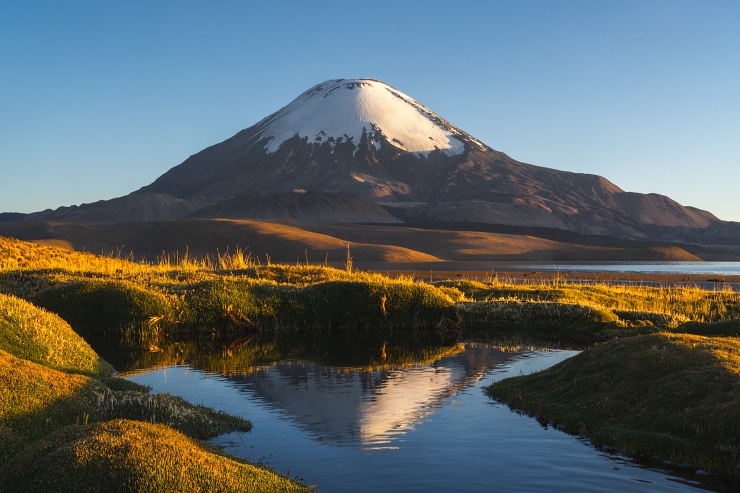
We set off early for our final Sunrise session, driving to a beautiful grassland near Chungará Lake.
This lush landscape is dotted with streams, often visited by grazing vicuñas and flamingos.
It’s the perfect spot to capture one last stunning image before our adventure ends.
6:10 am
Arriving just in time for blue hour, we set up our gear and get ready to shoot.
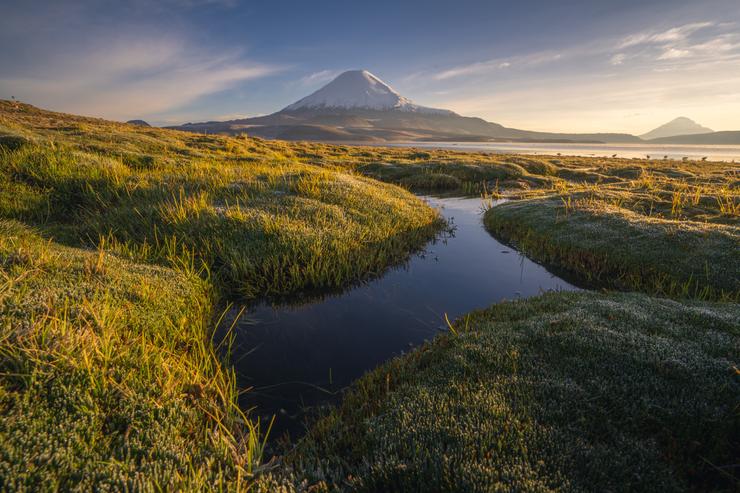
The scene is breathtaking, with a river winding through the vibrant green grasslands, leading the eye towards the towering Parinacota volcano.
The contrast between the lush foreground and the snow-capped volcanic peaks in the background offers an ideal composition for landscape photography.
As the Sun rises, we capture flamingos feeding by the lake with the distant Sajama volcano in the background.
Suddenly, the golden light hits the landscape, casting a warm glow over the grasslands and creating the perfect farewell shot.
With both wide-angle and telephoto lenses, we capture the final moments of our adventure, focusing on the serene atmosphere and vibrant wildlife of the Altiplano.
Blue hour begins at 7:20 am, golden hour begins at 7:28 am, Sunrise is at 7:42 am and golden hour ends at 8:10 am.
8:10 am
We drive back to the hotel for breakfast and to gather our belongings before checking out.
11:00 am
After saying goodbye to our beautiful surroundings, we embark on the final leg of our journey, driving towards the Aeropuerto Internacional Chacalluta (ARI), located at 18 km (11 mi) from the town of Arica.
The stunning landscapes of northern Chile provide a fitting backdrop for reflection as we make our way back to civilization.
Obviously, we stop for lunch on our way to Arica.
3:00 pm
We arrive at Arica to drop off those of you who’ve decided to extend their stay, while those heading straight home will continue with a short drive to the airport.
As our 14-day expedition through the breathtaking landscapes of the Atacama Desert, Salar de Uyuni, and Lauca National Park comes to a close, it’s time to reflect on the unforgettable journey we’ve shared.
From the surreal mirror effect of the Uyuni salt flats to the towering peaks of Sajama and Parinacota, the vastness of the altiplano, and the rich colors of the desert, we’ve captured not only photos but memories that will last a lifetime.
The quiet moments at Sunrise, the endless stars at night, and the laughter shared along the way have made this adventure truly special.
We came here as photographers, but we leave as friends, bonded by the magic of these extraordinary landscapes.
May these images forever remind you of the beauty we’ve witnessed and the challenges we’ve conquered together.
Until we meet again on another adventure, keep chasing the light, and may your lenses always find beauty in the world.
Safe travels, and thank you for being a part of this incredible journey!
Book Now and Save €500 (Only 1 Spot Left)
To book your spot to join the Expedition to Atacama & Uyuni (Chile & Bolivia) at a reduced price of €8,900 (the official price is €9,400), a €2,000 deposit is required by Sunday December 28th.
Price summary:
- Booking deposit: €2,000
- Total price: €8,900
Payment in full is required by January 25th, 2026.
Please, finalize your booking as soon as possible. The seats are sold on a first come, first served basis.
What’s included in the price
- PhotoPills Welcome pack.
- An 14-day expedition photographing the Atacama Desert (Chile), Lauca National Park (Chile), Sajama National Park (Bolivia) and the Salar de Uyuni (Bolivia) with the Golden Light and the Milky Way.
- 14 days of learning, fun and adventure with Marco Grassi, Jabi Sanz, Pato Oses (PhotoPills Masters) and the funniest geek community – the PhotoPillers.
- Full immersion in the PhotoPills method (Imagine.Plan.Shoot.!).
- All lodging sharing with another PhotoPiller (optional €1,400 single supplement upon availability):
- 5 nights at Hotel Our Habitas (bed and breakfast).
- 1 night at Hotel Luna Dorada (bed, breakfast and dinner). This accommodation is basic, but best available in the area.
- 1 night at Takya El Desierto (bed, breakfast, lunch and dinner). This accommodation is basic, but best available in the area.
- 3 nights at Luna Salada Hotel (bed and breakfast).
- 2 nights at Hostal Oasis (bed, breakfast and dinner). This accommodation is basic, but best available in the area.
- 1 night at Hotel Kukuli (bed and breakfast). This accommodation is basic, but best available in the area.
- All activities on the Secret day.
- Airport transfers. Only one pick up time and one drop off time (not individual transfers).
- National Park entry fees and special accesses.
- Ground transportation during the expedition, including 4x4 vehicles in Bolivia.
- Lunch on days 6, 11, 13 & 14.
- Dinner on day 8, 9, 10 & 13.
What’s not included
- Flights/transport to/from Chile & Bolivia.
- Tourist visa (if necessary).
- Medical and travel insurance coverage (strongly recommended).
- Lunch & dinner (except when mentioned as included).
- Snacks, alcohol and beverages.
- Tips.
- Anything not mentioned in the “included” list.
Do you want an example of how huge this will be?
This is a glimpse to what happened in the PhotoPills Expedition to Iceland. We had so many adventures and so much fun... We can’t wait for Atacama & Uyuni!
But you don’t have to take our word for granted. Here’s what some PhotoPillers say about the PhotoPills adventures:

“I went to Iceland expecting to have the opportunity to photograph the marvelous landscape and master nightscapes. What I encountered was so much more – 14 kindred souls from across the globe who share a passion for photography. Together we expanded our creative boundaries, learned from one another and had an insane amount of fun in the process. I am confident that everyone came away from the experience a better photographer.”

“From the very moment the guys from PhotoPills announced the expedition to Iceland... I didn’t think it twice! I was using PhotoPills but not at its full capacity, so I had no better chance to learn from the creators of this amazing app. The experience was even more amazing than anything I could have imagined. In Iceland, I discovered a bunch of folks as crazy about photography as I am. I had a blast!
Photography is a continuous learning process, you always find something new that motivates you to improve. And this adventure made me improve more than I could imagine.”

"The PhotoPills guys know how to create a fantastic experience. They bring an infectiously fun energy and are always willing to drop some handy photography knowledge on you that you will take with you. You take their trip and you'll for sure have a good time, get some amazing pics and leave a better photographer."
“During my experience in Iceland I lived wonderful moments and had surprises that were beyond the expected. It completely exceeded my initial expectations! Sharing knowledge, experiences and ways of working and living photography with such a great group has been one of the most enriching life experiences I have ever had.
Who he said that learning and knowledge sharing can not be wonderfully fun?”

“I can't say enough about what a fantastic time I had during the PhotoPills Iceland photo tour! The guys from PhotoPills and Donal Boyd were so knowledgeable, accommodating, and especially lots of fun. Never a dull moment – nonstop action and shooting of amazing landscapes for 10 days. I came away with enough images and memories to last a lifetime!”
FAQs
What’s the temperature in Chile and Bolivia in March?
At the end of March, temperatures in the Atacama Desert (Chile) and Salar de Uyuni (Bolivia) can vary significantly due to the altitude and desert climate. Here's what you can generally expect:
Atacama Desert (Chile):
- Daytime temperatures: Range from 20ºC to 25ºC (68ºF to 77ºF), making the days warm and pleasant.
- Nighttime temperatures: Can drop significantly, ranging from 5ºC to 10ºC (41ºF to 50ºF), so it's cooler in the evenings.
Salar de Uyuni (Bolivia):
- Daytime temperatures: Around 15ºC to 20ºC (59ºF to 68ºF), with moderate warmth during the day.
- Nighttime temperatures: Drop to around -5ºC to 5ºC (23ºF to 41ºF), with very cold nights, especially at higher altitudes.
In both locations, it's crucial to be prepared for the extreme temperature shifts between day and night. Dressing in layers is recommended.
What do you recommend I bring along for the expedition?
Your sense of adventure and fun, your camera and of course your sense of humor.
Besides that? Once you book your spot, we’ll send you further details and suggestions about what to bring (gear, clothing, etc.).
Is travel insurance included in the price of the expedition?
No. Participants are suggested to purchase national or international medical and travel insurance coverage.
Also, we recommend you to choose a travel insurance that:
- Covers trip cancellation costs.
- Covers Covid-19 health, travel and cancellation costs.
What is the cancellation policy?
We hope you don’t need to cancel your spot, but if a situation arises where you don’t have a choice, our cancellation policy is the following.
If you choose not to join the Expedition, a cancellation fee may apply. This fee will be equivalent to the cost of the Expedition, minus any savings or additional income we generate if we’re able to fill your spot with another participant.
If we’re able to fill your spot, we’ll refund the payments you’ve made, deducting a €300 administrative fee and any non-refundable costs retained by our travel partners.
However, if there are unavoidable and extraordinary circumstances at the destination or nearby that significantly affect the execution of the Expedition or the transportation of passengers to the destination, no penalty will be applied, and we will refund all payments you have made toward the Expedition.
Refunds will be paid by the same method that the original payment was made.
Credits: Images by Marco Grassi and Pato Oses.