Book Your Seat on the PhotoPills Annular Solar Eclipse Expedition to Argentina before August 2nd and Get €500 Off (Only 12 Spots)

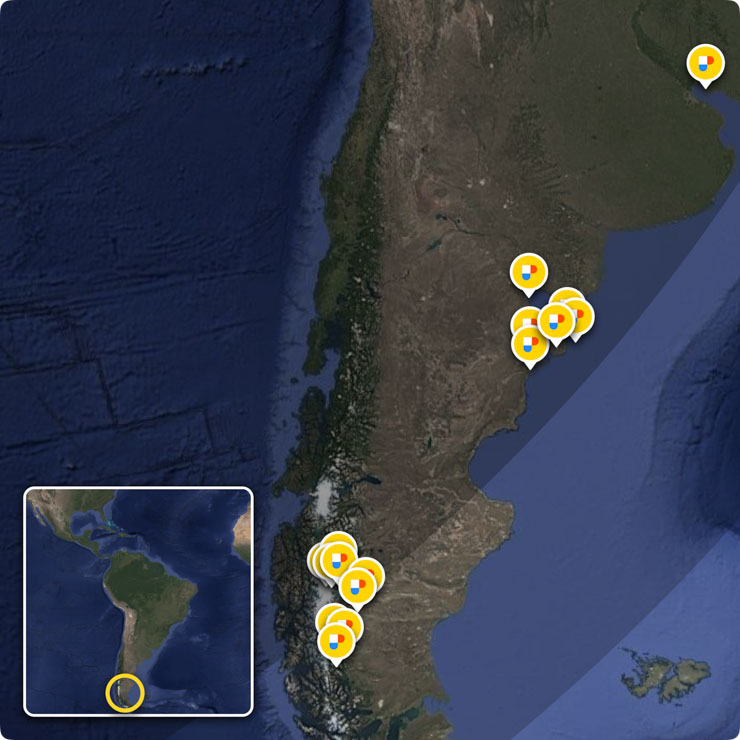
We’re going to Argentina (Patagonia + Península Valdés)…
To witness and photograph a magical Annular Solar Eclipse (Ring of Fire)!
Are you in?
Around the New Moon...
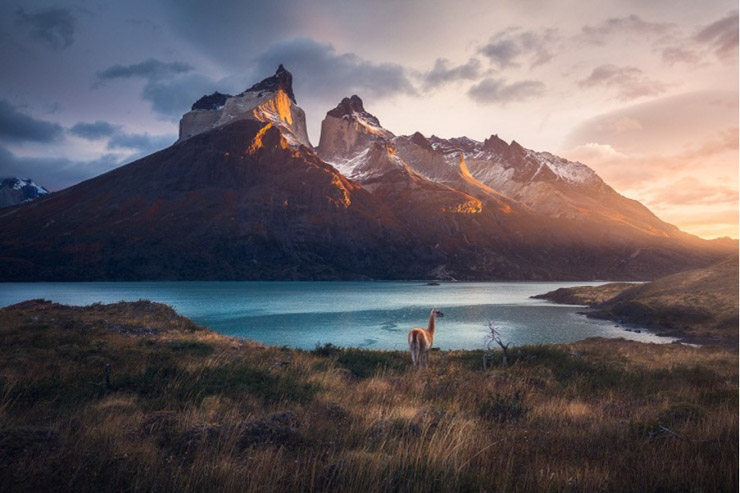
From January 30th to February 7th 2027, Antoni Cladera and Felix Inden (PhotoPills Masters) will be traveling across Argentina to capture the striking Annular Eclipse, the local wildlife, and the majestic golden hours over iconic natural wonders.
We’ll photograph Patagonia, including Perito Moreno glacier and Mount Fitz Roy.
And we’ll cross over to Buenos Aires, Puerto Madryn, and the incredible Península Valdés reserve to photograph the Annuar Solar Eclipe!
An adventurer’s dream!
Of course...
We’ll be taking photos all day long...
But...
Can you imagine it?
To photograph the breathtaking "Ring of Fire" Annular Eclipse, the immense walls of the Perito Moreno glacier, the granite peaks of Mount Fitz Roy, and the rich marine wildlife of Península Valdés: from penguins at Estancia San Lorenzo to the coastal landscapes of Puerto Pirámides!
We’re dreaming about it!
To achieve it, we’ll use the planning power of PhotoPills and the expert knowledge of Antoni Cladera and Felix Inden to always be at the right place at the right time.
Top secret: we have quite a few legendary photos planned already ;)
The Deal (Only 12 Spots)
Since you subscribed to the Priority Access list...
We're offering you a €500 discount on the regular price!
All you have to do is to book 1 of the 12 spots available before Sunday August 2nd.
Read carefully all the details of this unique adventure.
And when you’re ready, click here to book your spot:
Please, book as soon as possible. The seats are sold on a first come, first served basis.
The Adventure
12 PhotoPillers | 2 PhotoPills Masters | Argentina | Endless legendary photos

Warning! This is not a honeymoon...
We’re recruiting 12 brave PhotoPillers (PhotoPills and photography nerds) to join us on a 9-day expedition to capture the striking Annular Solar Eclipse, the local wildlife, and the majestic golden hours over iconic natural wonders across Argentina.
This expedition is a non-stop adventure to chase legendary photos and you are a key asset!
We have planned tons of photos, including a stunning Annular Solar Eclipse, and we’ll travel many kilometers to capture them...
But we also want to maximize our flexibility in terms of itinerary and schedule in order to take advantage of all the opportunities that the changing weather will surely put in our way.
Whichever path we take, you can count on us to seize every photo opportunity and be right where the magic happens!
You are about to embark on a PhotoPills’ style journey. And it’s not going to be a honeymoon precisely... :P
You’ll be a true PhotoPiller!
Are you in?
Day 1. Saturday, January 30th - Welcome to Argentina
It’s Saturday morning...
You land at Aeropuerto Internacional Comandante Armando Tola de El Calafate (FTE), and your grand adventure begins there, at the gateway to Argentina's most dramatic glacial landscapes and legendary mountain peaks.
Surrounded by the vast Patagonian steppe and the endless shores of Lago Argentino, this region is a true haven for outdoor enthusiasts and landscape photographers alike. From the massive walls of ice to the windswept plains, it's a place where the scale of nature completely takes your breath away.
Our team will be gathering from different parts of town to jumpstart our journey toward the frontier wonderland of El Chaltén.
10:10 am
With everyone gathered and our gear securely loaded, we start driving toward Parador La Leona along the classic Patagonian highways.
11:20 am
Quick stop for toilet access and snacks at the historic Parador La Leona. This legendary roadside stop has welcomed travelers, climbers, and historical figures for decades.
11:40 am
We hit the road again, driving straight toward El Chaltén, watching the granite peaks of the Fitz Roy massif rise ever larger in the distance.
1:30 pm
After dropping our bags, it’s lunch time and shopping!
We'll recommend some excellent places to grab a bite and find out if anyone needs to purchase any additional outdoor gear before we head out into the wild.
Excellent local options include La Lomiteria (great burgers and sandwiches), La Wafleria (all kinds of sweet and savory waffles), La Zorra (brewery food and burgers), or the cozy La Tapera.
If you need an extra layer or a gear tune-up, Viento Oeste Outdoor Shop is the place to go.
3:00 pm
Check in at Hotel Chaltén Suites. Take a few minutes to settle into your room.
3:30 pm
Expedition Briefing and Meet & Greet starts!
Antoni and Felix will introduce themselves and go over the week's logistics. They will also share the first tips for what will be an unforgettable trip.
4:00 pm
PhotoPills Class starts!
Get ready to unlock the secrets of the app. Antoni and Felix will guide you through planning alignments, understanding local sun angles, and preparing your gear to elevate your craft to the absolute maximum.
5:30 pm
Presentations end. Enjoy some free time to relax, unpack, and double-check your camera settings.
6:30 pm
Time for dinner at the hotel's restaurant to fuel up for our first evening shoot.
8:00 pm
Grab your tripods! We head to the Cañadón del Río de las Vueltas for our first session.
8:15 pm
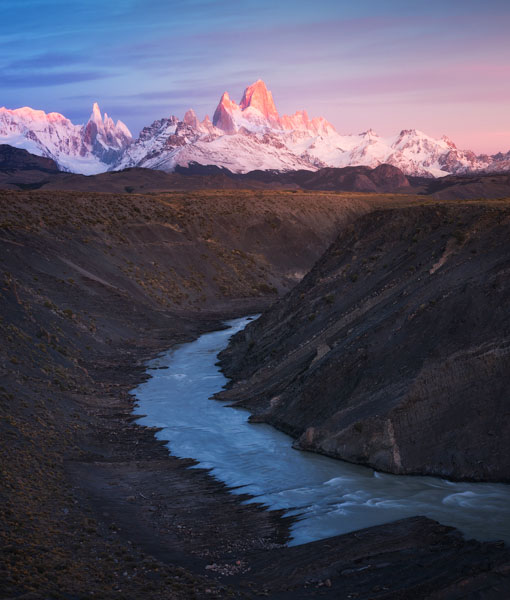
Arrive at the parking lot and take a short, easy 5-minute walk to our primary shooting spot.
Get your cameras ready, because this area features an iconic view of the long road leading directly towards the majestic mountains.
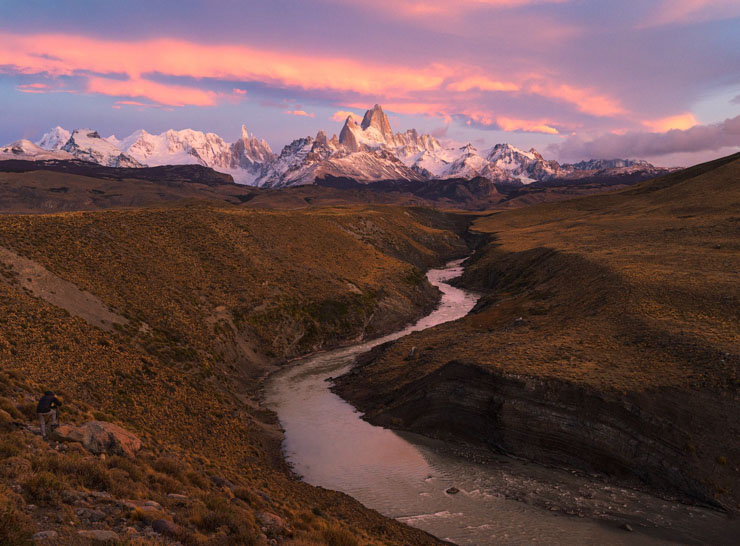
Cañadón del Río de las Vueltas gives us one of those wide Patagonian views where the landscape feels carved open by wind, water, and time.
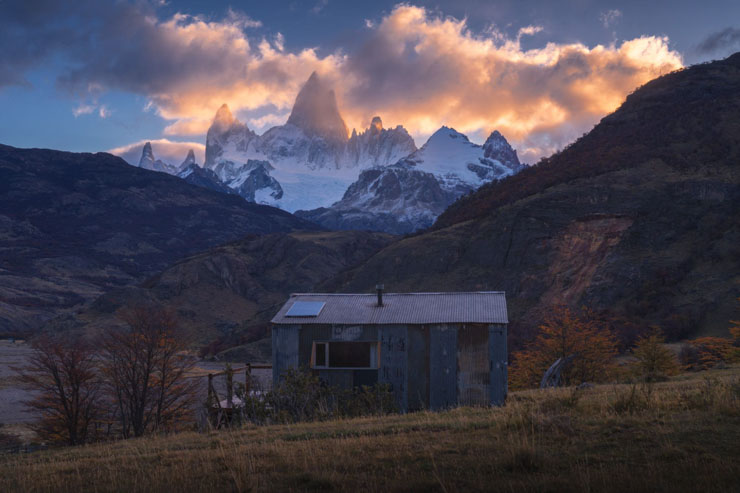
From the canyon area, we look across the winding river, the textured valley, and the distant skyline of the Fitz Roy massif, with both Fitz Roy and Cerro Torre visible in the scene.
The combination of river curves, dry Patagonian terrain, and iconic granite peaks gives us strong layers to work with, especially during the long evening light of late January.
For Sunset, we use the bends of the Río de las Vueltas as our main compositional anchor, letting the river guide the eye through the canyon and toward Fitz Roy, Cerro Torre, and the surrounding peaks.
The low evening light can bring out the textures in the ridges and the dry valley floor, while patches of shadow help separate the different landscape layers. Wider compositions allow us to show the full relationship between the canyon, the river, and the mountain skyline, while tighter frames let us isolate individual river bends, illuminated ridges, or compressed views of Fitz Roy and Cerro Torre together.
If the sky keeps glowing after sunset, we can continue into blue hour for a quieter, cooler version of the scene.
But before you choose your shooting spot, open PhotoPills and check where exactly the Sun will set:
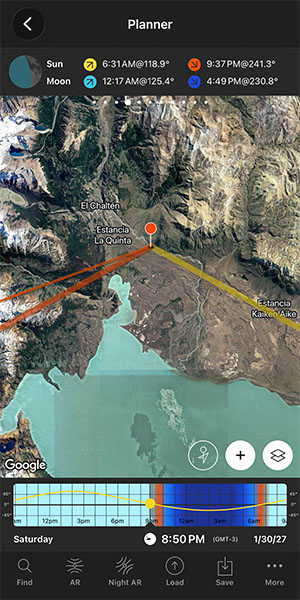
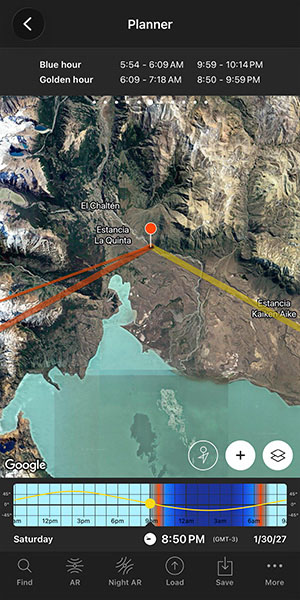
Golden hour starts 8:50 pm, Sunset 9:37 pm, Golden hour ends 9:59 pm, and Blue hour ends 10:14 pm
10:35 pm
What an incredible start to our adventure!
Get some rest, look over your images, and prepare your gear for another legendary day in Patagonia.
Sweet dreams, team!
Photographic pills:
- Sunset, golden hour, and blue hour landscapes at Río de las Vueltas.
Day 2. Sunday, January 31st - The Hidden Waterfall and the Higher Ground
2:45 am
Wake up, PhotoPillers!
After a short but deep night's sleep at Hotel Chaltén Suites, the true adventure begins as we head out to capture our first Patagonia sunrise.
Grab your breakfast and your warm layers, and check your camera gear.
3:30 am
We start hiking toward the scenic Cascada Escondida which translates to Hidden Waterfall.
This spectacular moderate to challenging trek of 6.5 km (4 miles), 400 m (1,312 feet) ascent, takes us to a legendary Patagonian falls, perfectly positioned against the granite backdrop of the Fitz Roy massif.
The path rises consistently, particularly during the initial 2 kilometers, and will definitely get your heart racing if you aren’t accustomed to mountain trails.
However, the payoff is immense: sweeping vistas, untamed nature, and world-class frames. Sturdy boots are essential, and trekking poles will be your best friends on the way down.
Safety Note: This trail is not suitable for those with significant physical limitations or underlying health concerns.
5:30 am
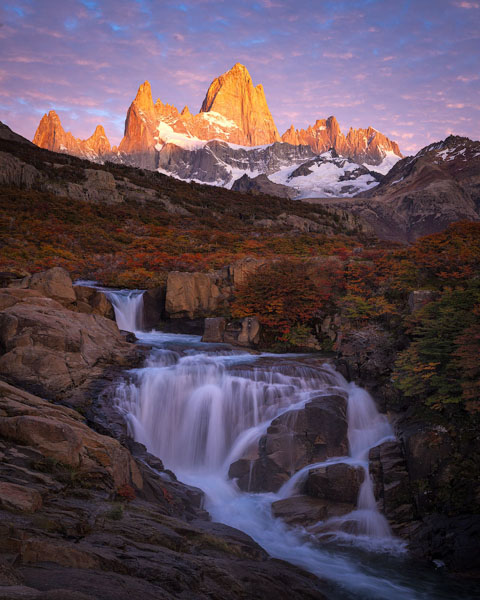
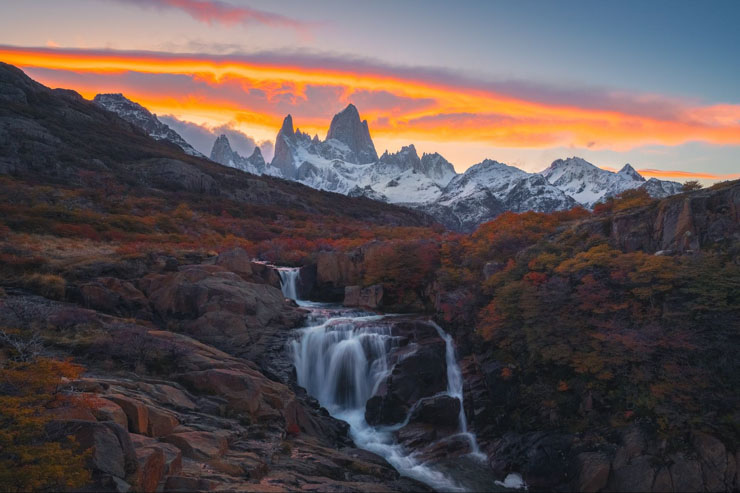
At Cascada Escondida we encounter one of the most compelling sunrise vistas near El Chaltén.
This location masterfully merges the dynamics of rushing water and a rugged foreground with a clear perspective of the Fitz Roy and Cerro Torre massif.
While the granite spires in the distance catch the day's initial light, the waterfall serves as a powerful natural anchor in the foreground, capturing a scene that is simultaneously wild and meticulously composed of rock, water, and forest edges.
Our pre-dawn arrival allows us to capitalize on the soft, ethereal light before the summits begin to glow.
By utilizing the waterfall as a primary lead-in element, we guide the viewer’s eye through the frame toward the massif. As sunlight first strikes the granite, we work to balance the luminous skyline with the darker foreground tones.
This is an ideal time to experiment with shutter speeds, either to create a silky effect on the water or to preserve its powerful texture.
We can take wide-angle compositions to illustrate the grand relationship between the falls and the peaks, or switch to tighter framing to distill the scene into a focused study of moving water and sunlit mountains.
Blue hour begins at 5:56 am, golden hour begins at 6:11 am, Sunrise is at 6:33 am, and golden hour ends at 7:20 am.
8:00 am
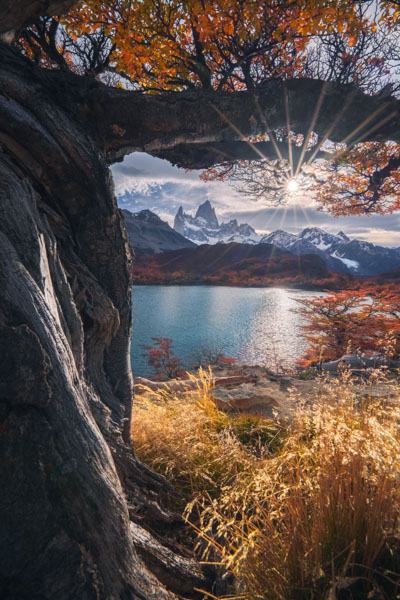
If the photography conditions are in our favor, we’ll seize the moment and keep those shutters clicking, taking the opportunity to capture the nearby river before heading toward Laguna Capri, beginning our descent back toward El Chaltén.
12:30 pm
Time for a relaxed lunch in town. El Chaltén has fantastic local restaurants where you can try traditional Argentine empanadas or a comforting stew. After lunch, enjoy some free time to rest, nap, or explore the local shops.
5:30 pm
We meet early for an early dinner at the hotel’s restaurant to ensure we are fueled up and ready before the golden hour begins.
7:00 pm
We set out for our sunset session at El Paredón viewpoint.
Don't forget to bring a reliable headlamp! The hike down will be in total darkness.
The trail is 2.5 km (1.55 miles) long with an 80 m (262 feet) ascent. It is short but steep, with most of the elevation gain coming right at the very end. Take your time on the trail, once you reach the top and see the village layout below and the majestic condors soaring past the cliffs, all the effort will be forgotten.
This trail is not recommended for anyone who has severe difficulties walking down steep, loose terrain, as the return trip after dark can be quite tricky.
8:00 pm
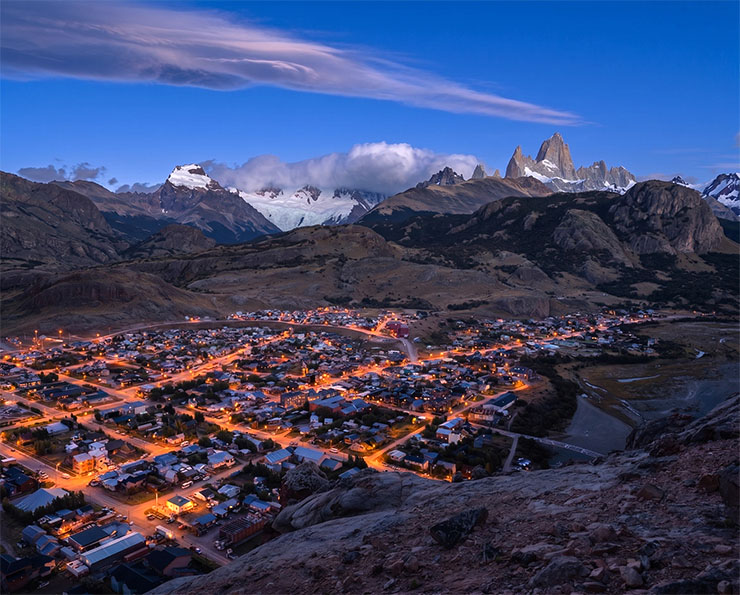
El Paredón de los Cóndores gives us a magnificent elevated view directly over El Chaltén. The small mountain town sits nestled in the valley right below us, while the legendary granite spires of the Fitz Roy and Cerro Torre massif rise like giants in the background.
It is a perfect spot to capture multiple layers: the village lights, the valley floor, the surrounding ridges, and the high peaks.
For Sunset, we will frame the town of El Chaltén as a key part of our storytelling, providing scale to the immense mountain backdrop. Look for the warm, red highlights as the setting sun hits the granite peaks, while soft shadows stretch across the valley. As the sun dips lower, keep shooting into the blue hour. The cool ambient tones of the landscape will contrast beautifully with the warm, twinkling lights of the town turning on.
Golden hour starts 8:49 pm, Sunset 9:35 pm, Golden hour ends 9:57 pm, and Blue hour ends at 10:12 pm.
10:15 pm
Pack up your gear, switch on your headlamps, and carefully start hiking back down the steep trail toward the valley.
11:00 pm
Arrive safely back at Hotel Chaltén Suites. A brilliant day of sweeping rivers and high viewpoints is in the books! Time to clear your memory cards, plug in your battery chargers, and get some deep sleep.
Tomorrow we head out early for our Secret Day
Photographic pills:
- Sunrise, golden hour and blue hour at Cascada Escondida
- Sunset, golden hour and blue hour at El Paredón de los Cóndores
Day 3. Monday, February 1st - The Secret

I’ve been giving you lots of details of this Annular Solar Eclipse to Argentina (Patagonia + Península Valdés).
Maybe far too many...
But on February 1st we’ll do something very special...
What will that be?
Well, you'll have to be there, with us, to figure it out :P
Day 4. Tuesday, February 2nd - Car Trails and the Grand Glacier
5:00 am
Rise and shine! I hope you are well-rested, as a full day of exploring the breathtaking wonders of Argentine Patagonia awaits us.
5:40 am
Following a brief drive and a very short stroll, we will reach our designated sunrise photography location.
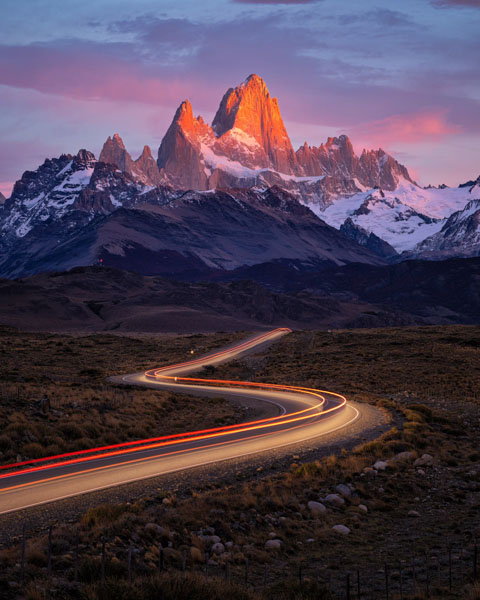
We will be stationed on a small, perfectly situated hill adjacent to the road that winds toward El Chaltén. This vantage point offers a magnificent view where a gentle s-curve in the road leads the eye straight toward the iconic peaks we have grown to admire. In landscape photography, roads serve as powerful storytelling elements.
By getting into position during the blue hour, we can attempt to capture the ethereal alpenglow illuminating Cerro Torre and Fitz Roy. The road’s curvature acts as an ideal leading line to draw the viewer toward the massif, and we might even have the chance to photograph light trails from cars traveling to and from El Chaltén.
Blue hour starts at 5:57 am, blue hour ends at 6:12 am, Sunrise is at 6:34 am, and golden hour ends at 7:21 am.
7:50 am
Arrive at Hotel Chaltén Suites, have breakfast and pack the luggage.
9:30 am
Check out time. We start our journey to El Calafate.
10:50 am
Quick coffee/snack break at La Leona..
12:50 pm
Arrive at Hotel Esplendor by Wyndham, check in and go for free lunch in town.
4:30 pm
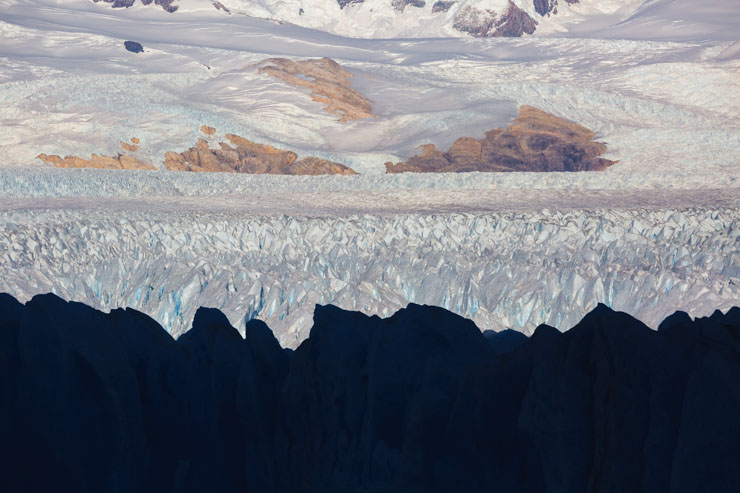
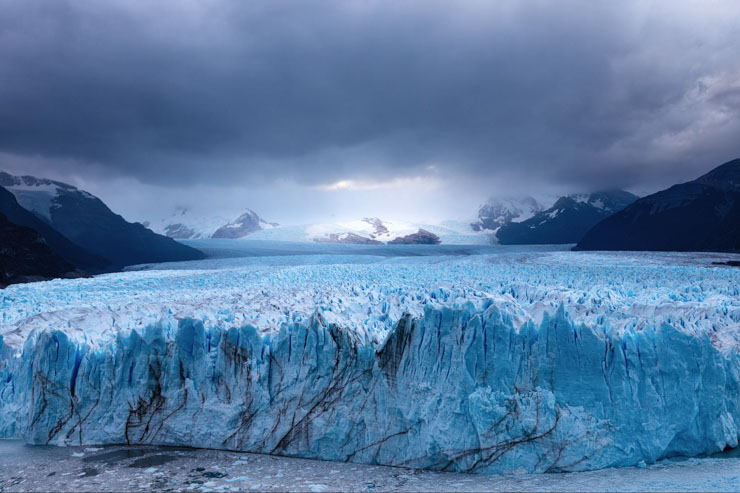
Now, we’re going to Perito Moreno, an ice field that represents the world's third largest reserve of freshwater.
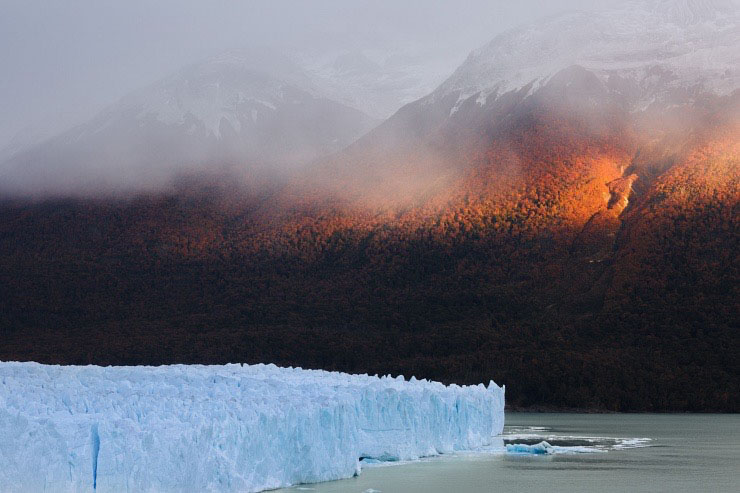
With a 250 km2 ice formation, 30 km (19 mi) in length, the Perito Moreno is one of 48 glaciers fed by the Southern Patagonian Ice Field located in the Andes system shared with Chile.
What’s so special about Perito Moreno is that from time to time it cuts off Brazo Rico, a part of Lago Argentino. The glacier tong advances across the lake to meet the opposite shoreline.
We will arrive at Perito Moreno with plenty of time to enjoy the views from the walkways overlooking the glacier.
Also, with extra time, the chances of seeing calving are increased...
Do you hear the glacier roaring?
Plan & pray!
9:00 pm
Back to the hotel, drop off your gear and get ready to dinner
9:30 pm
Time for dinner at Restaurant La Tablita.
Known as one of the best places in El Calafate to experience an authentic Argentine asado, it’s the perfect spot to toast to our first successful days in Patagonia.
11:15 pm
Arrive at the hotel and go to sleep. Tomorrow, we prepare for the next stage of our adventure as we transition toward Buenos Aires.
Photographic pills:
- Sunrise, blue hour and golden hour capturing car trails along the winding road to El Chaltén.
- Afternoon and early evening shots at Perito Moreno Glacier
Day 5. Wednesday, February 3rd - the Capital Skyline
5:45 am
Good morning PhotoPillers!
This is the wake-up call for an epic day ahead. Get ready for check out from Hotel Esplendor by Wyndham.
6:40 am
Arrive at the Comandante Armando Tola International Airport (FTE) and check in.
11:27 am
A 3h flight will take us to Aeroparque Jorge Newbery (AEP).
Welcome to Buenos Aires, Argentina’s vibrant capital!
Get ready to experience a city where grand European-style boulevards meet a passionate, uniquely South American spirit.
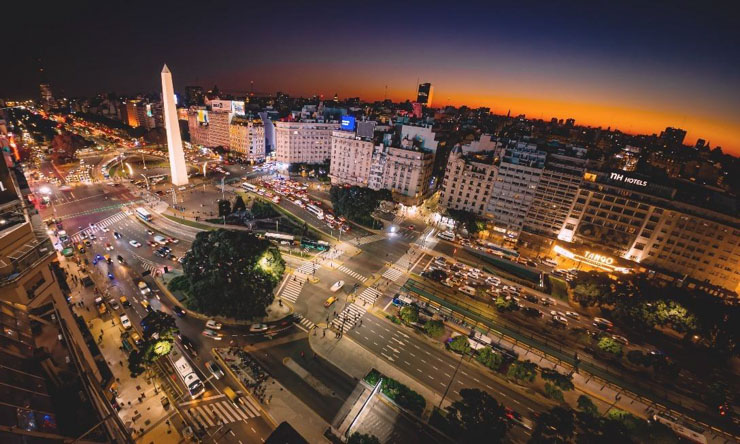
From the iconic Obelisk standing tall in the city heart to the endless energy of its bustling streets, you’re about to dive into the pulse of this incredible metropolis.
12:30 pm
Arrive at Marriott Buenos Aires Downtown followed by a good lunch at the hotel restaurant.
2:00 pm
Take some time to relax. After the flight from El Calafate, this is the perfect moment to recharge before we dive into the city's energy.
If you have the chance, explore the immediate surroundings of the hotel to buy some snacks and supplies for the next day. Being in the heart of the capital, you'll find plenty of local shops and small markets just steps away.
4:00 pm
Time for a Eclipse photography class.
We’ll meet at the conference room, where Antoni and Felix will lead a vital technical session dedicated to the Annular Solar Eclipse.
You will discover how to use solar filters to shield your equipment and master the exposure settings needed to capture the "Ring of Fire".
The class also covers interval shooting to help you create professional composites or time-lapses of the event.
5:30 pm
Post-processing class
Learn to transform your RAW data into stunning imagery during this workshop.
7:15 pm
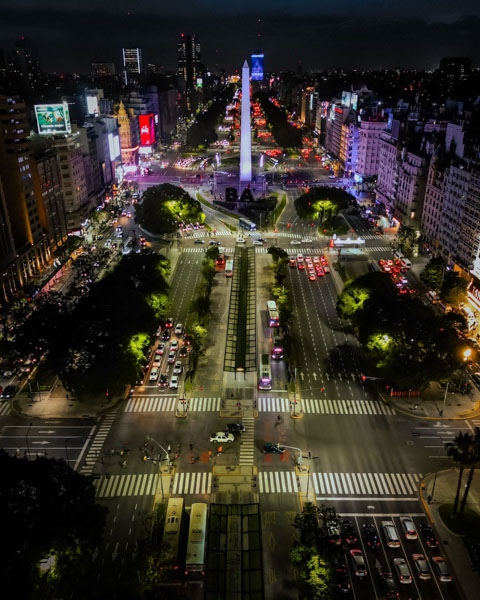
We gather at the Marriott Buenos Aires rooftop bar for an elevated perspective of the capital.
With the Obelisk as our central landmark, we will capture the essence of the city: its historic architecture, dense layers, and grand avenues.
As sunset approaches, we will frame the Obelisk against the shifting skyline, using the city's geometry to guide our compositions. During the blue hour, the transition from natural light to artificial streetglow provides a sophisticated evening atmosphere, turning the Obelisk into a radiant centerpiece amid the energy of the night.
Golden hour begins at 7:23 pm, Sunset is at 7:58 pm, and blue hour ends at 8:25 pm.
8:45 pm
Dinner at the hotel restaurant.
10:15 pm
Rest and recharge for the next day.
Photographic Pills
- Sunset golden hour and blue hour at Buenos Aires skyline.
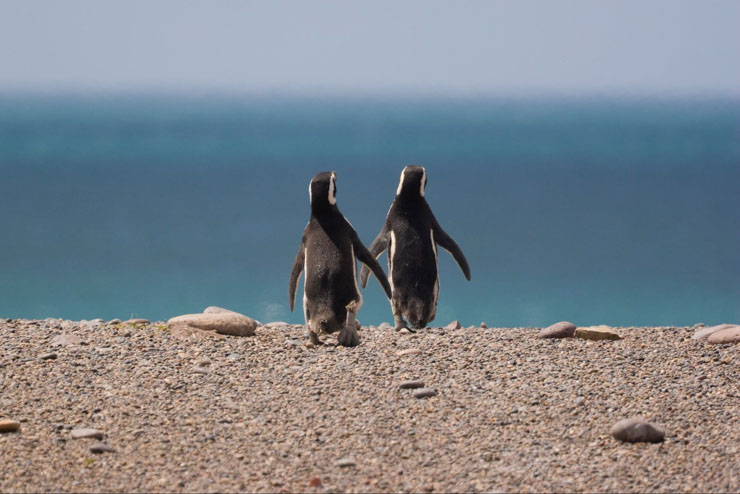
Day 6. Thursday, February 4th - Penguins and the Patagonian Coast
6:15 am
Gooooood morning PhotoPillers!
Are you ready for another beautiful day full of incredible experiences?
Yeah?
Alright! Get your stuff ready!
7:00 am
Fuel up with a hearty breakfast at the hotel restaurant.
We have a long journey ahead of us as we transition from the urban energy of Buenos Aires back to the wild landscapes of Patagonia, specifically to the marine sanctuary of Península Valdés.
9:20 am
Arrive at Aeroparque Jorge Newbery (AEP) and check in.
Take a moment to buy some snacks and beverages to bring for the long day ahead. Since we will be heading into remote areas, having extra supplies is highly recommended.
11:05 am
The skies call once more as we board our flight.
As we lift off, the sprawling urban tapestry of Buenos Aires fades away, marking our transition back into the heart of Patagonia.
This is your chance to rest, review your shots from the capital, or simply enjoy the view as we trade the skyscrapers for the vast, untamed horizons that lie ahead.
1:10 pm
Touchdown at Trelew Almirante Marcos A. Zar Airport (REL).
Once we’ve retrieved our gear, we’ll quickly navigate our way out and hit the road toward the coast.
The anticipation builds with every kilometer as we drive toward Puerto Pirámides, knowing that by the time we check into our hotel, we’ll be just moments away from the incredible marine sanctuary of Península Valdés and our first afternoon shoot in this coastal paradise.
4:00 pm
Arrive at Hotel Rayentray, in Puerto Pirámides. We’ll check in and get ready for photography right away.
Light waits no one .
6:00 pm
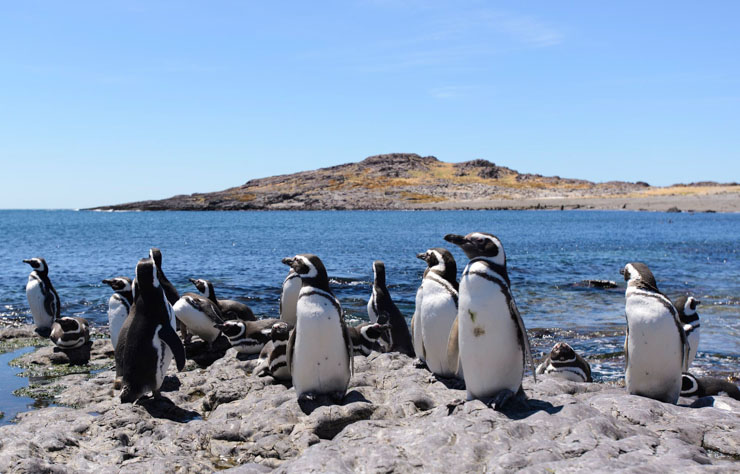
Our Sunset session at Estancia San Lorenzo will offer a distinctive Patagonian experience where wildlife and landscape converge.
As we explore the grounds of an expansive Magellanic penguin colony, we find these charismatic little ones navigating the terrain and congregating near their burrows, providing endless opportunities for visual storytelling.
The late-afternoon light bathes the coast in warm hues, softening shadows and bringing a vibrant sense of scale and life to the rugged environment.
During this golden hour, we prioritize a respectful approach, utilizing telephoto lenses to capture intimate portraits while maintaining a non-intrusive distance.
Our focus shifts between expansive wide-angle views that place the colony within the dramatic coastal setting and tighter compositions that isolate interesting behaviors, gestures, or silhouettes against the fading light.
As the sun nears the horizon, the conditions become ideal for experimental techniques, including backlighting and rim lighting, which help separate the penguins from the background and create striking, graphic images that embody the true mood of the Patagonian coast.
Blue hour begins at 7:55 pm, Moonset (Waning Crescent 2.8%) is at 7:43 pm, Sunset is at 8:34 pm, golden hour ends at 8:53 pm, and blue hour ends at 9:05 pm.
10:15 pm
We arrive at the Hotel Rayentray in Puerto Pirámides, tired but exhilarated from our first encounter with the Península Valdés wildlife.
As the crisp Patagonian night air settles over the coast, we head straight to the hotel restaurant for a late dinner.
This is the perfect time to share our favorite shots of the penguins, discuss the lighting challenges we faced, and enjoy a well-deserved meal while the sound of the Atlantic Ocean provides a soothing backdrop to our conversations.
11:15 pm
Dinner ends, and it is time to retire to our rooms.
Sleep well, for tomorrow we continue our journey deeper into the marine sanctuary of Península Valdés.
Photographic Pills
- Sunset, golden hour and blue hour at a Magellanic penguin colony near Estancia San Lorenzo.
Day 7. Friday, February 5th - Wildlife Frontiers and Coastal Cliffs
3:45 am
Wake up PhotoPillers!
Get ready for our Sunrise shooting session...
5:45 am
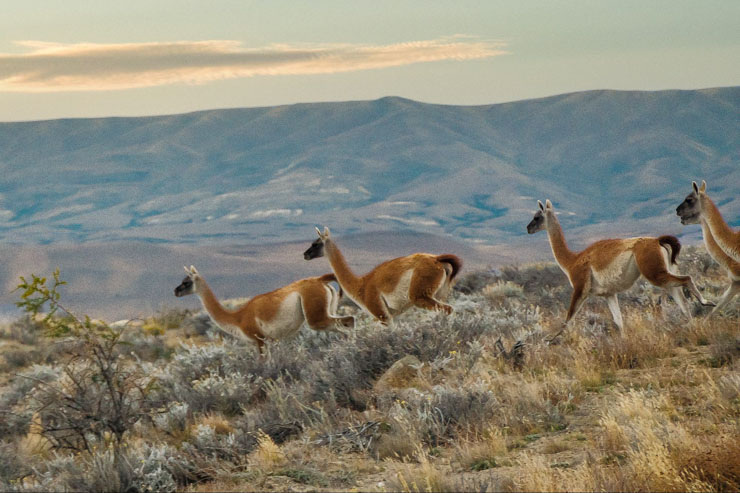
Returning to Estancia San Lorenzo for a dawn session allows us to experience the Magellanic penguin colony in an entirely new light.
As we walk toward the shore under the soft morning glow, the landscape reveals a quieter, more serene version of the rugged Patagonian coast we explored the previous afternoon.
With the colony waking up and moving near their burrows, the early light offers a perfect opportunity to capture these charismatic creatures against the backdrop of the emerging sunrise, creating intimate, beautifully lit portraits while maintaining our respectful distance from the wildlife.
Blue hour begins at 5:51 am, golden hour begins at 6:03 am, Sunrise is at 6:22 am, golden hour ends at 7:02 am.
7:45 am
Breakfast at Estancia San Lorenzo.
Enjoy a warm, hearty meal at the historic Estancia as we refuel and discuss the morning’s penguin encounters before moving on to our next wildlife destination.
8:35 am
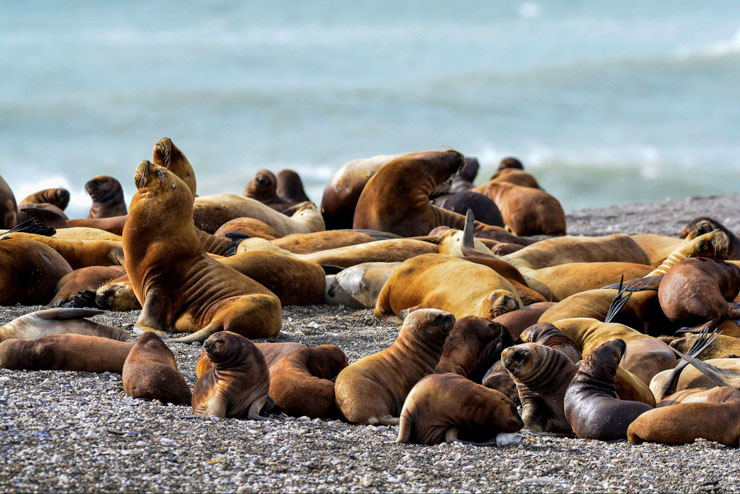
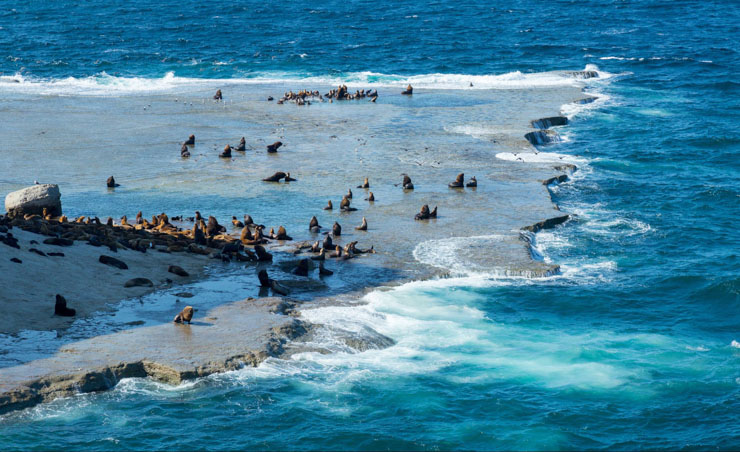
Punta Norte is famous for its dramatic coastline and the high concentration of Southern sea lions and elephant seals.
However, what truly makes this location legendary among wildlife photographers is the unique behavior of the local Orcas. If we are lucky, we might witness the incredible "intentional beaching" technique, where these powerful predators surge onto the shore to hunt.
Even if the Orcas don't make an appearance, the sheer volume of wildlife is staggering. We will focus on capturing the interactions within the sea lion colonies, the textures of the rugged cliffs, and the relentless energy of the Atlantic waves crashing against the shore.
This is the place to push your telephoto lenses to the limit, capturing intimate details and powerful action shots in one of the most wild corners of Argentina.
11:20 am
We return to Hotel Rayentray to complete a swift check-out.
Before we set off for Puerto Madryn, we’ll gather at the hotel’s restaurant for lunch, savoring the views of the bay one last time.
2:15 pm
After a 1h 30 minute drive through the vast, windswept landscapes of the Chubut province, we get to Hotel Dazzler by Wyndham, in Puerto Madryn.
This modern hotel, located right on the shores of the Golfo Nuevo, serves as our comfortable base for the final leg of our journey. Here, we’ll have some downtime to relax, recharge our batteries, and backup our latest wildlife captures.
It is also the perfect moment to double-check our solar filters and intervalometers in preparation for the main event tomorrow.
With another late dinner ahead, we’ll grab empanadas or sandwiches from nearby shops. Now is also the time to stock up on snacks and drinks for tomorrow’s multi-hour Eclipse shoot.
5:45 pm
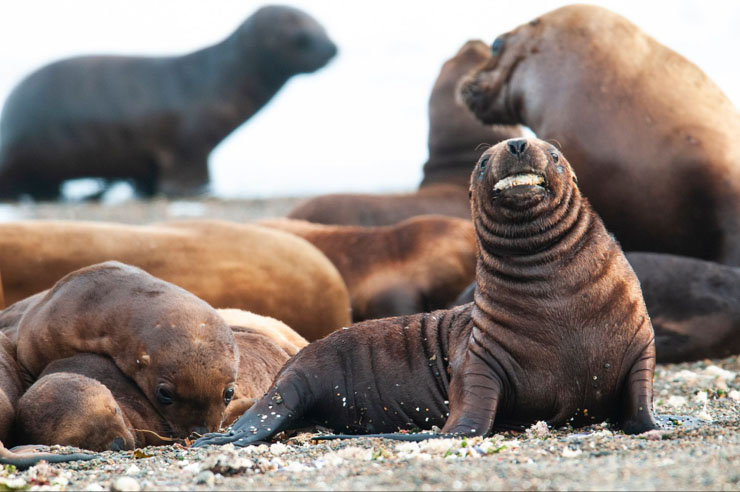
We’re now at the Lobería de Punta Loma, a spectacular sanctuary for some of Patagonia's most charismatic marine wildlife.
For us as photographers, it is an exceptional location: the dramatic cliffs provide the perfect elevated vantage point to capture the raw energy and playful interactions of the colony against the vast, windswept backdrop of the Atlantic.
Whether you are framing intimate portraits of the sea lions or capturing wide-angle shots of the coastline's wild beauty, Punta Loma is an ideal setting to sharpen your wildlife photography skills before the main eclipse event.
This time also serves as a critical window for conducting a comprehensive eclipse shooting test, allowing us to calibrate our equipment and verify our technical settings under real-world conditions.
By practicing our workflows now, we ensure that every participant is fully prepared to capture the "Ring of Fire" with precision during the main event.
8:10 pm
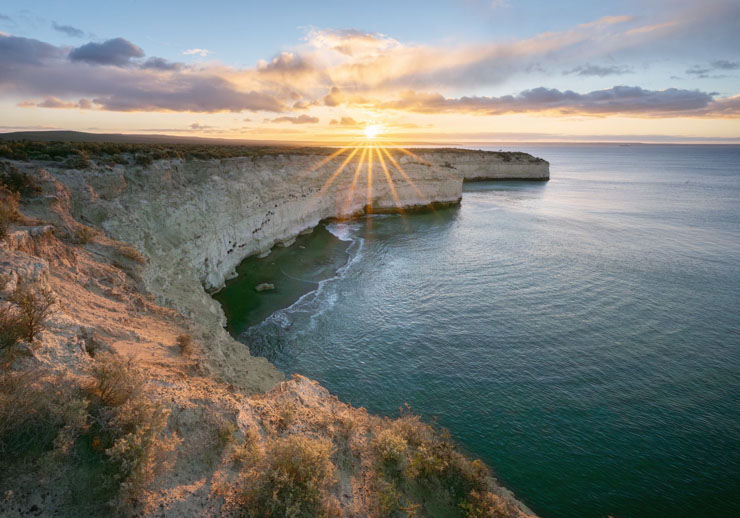
The sunset session at Cerro Avanzado, located near Puerto Madryn, offers a compelling blend of arid desert, rugged cliffs, and the vast Atlantic coast.
This raw and expansive landscape is defined by eroded geological formations, warm earthy hues, and panoramic ocean views. As the day fades, the intricate textures of the Patagonian terrain and cliffs take center stage, with the sea providing a striking sense of depth.
Our sunset work focuses on utilizing the receding light as it rakes across the cliffs, emphasizing the complex layers, shapes, and colors of Cerro Avanzado.
Eroded structures serve as excellent foreground elements, creating leading lines that draw the viewer toward the Atlantic horizon.
While wide-angle shots capture the grand scale of the desert meeting the sea, tighter compositions allow us to isolate illuminated ridges, cliff patterns, and the abstract beauty of the landscape.
As the sun nears the horizon, we focus on side lighting and warm highlights to create shadow separation and enhance the scene's dimensional quality.
Golden hour begins at 7:59 pm, Moonset (a tiny Waning Crescent 0.5%) is at 08:17 pm, Sunset is at 8:38 pm, and blue hour ends at 9:10 pm.
9:40 pm
Time for dinner at the Hotel Dazzler by Wyndham restaurant.
As we enjoy our meal, we’ll take a moment to reflect on the diverse photography we’ve captured today, from the sea lion colonies at Punta Loma to the eroded geological formations of Cerro Avanzado.
This is also the time for any final technical questions before the big event tomorrow: the Annular Solar Eclipse.
10:40 pm
Dinner ends, and it is time to sleep. Make sure your batteries are charging and your memory cards are ready, because tomorrow we witness the "Ring of Fire".
Photographic Pills:
- Sunrise, blue hour and golden hour photographing Magellanic penguins at Estancia San Lorenzo
- Afternoon shots at Punta Norte and Punta Loma
- Sunset, golden hour and blue hour at Cerro Avanzado.
Day 8. Saturday, February 6th - The Ring of Fire and Sunset on the Water
5:45 am
Wake up and get ready.
The wait is over!
6:30 am
Fuel up with a hearty breakfast and plenty of coffee at the hotel restaurant, as we have a monumental day of celestial photography ahead of us.
7:15 am
Today we venture into the heart of the path of annularity.
Grab your stuff and double-check that your solar filters are easily accessible in your camera bag.
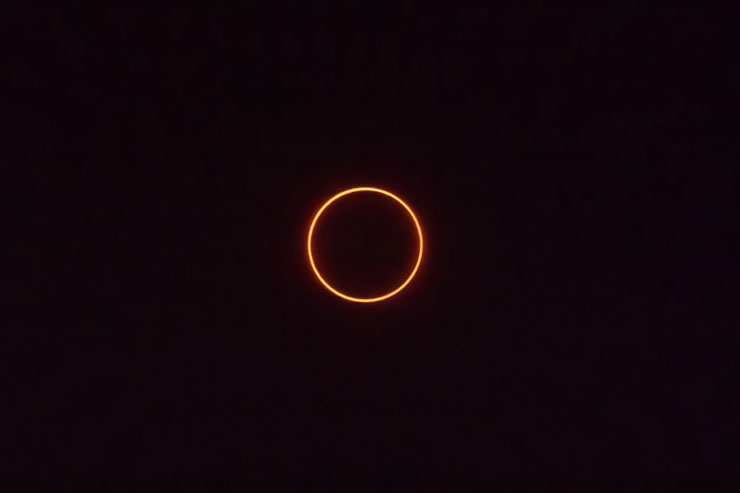
We’ll head to the heart of the path of annularity near Sierra Grande for the Solar Eclipse. The vast Patagonian steppe offers limitless horizons and isolation, providing the perfect stage to document the Moon’s full transit, from C1 through the partial phases to the legendary maximum eclipse.
Our mission is a high-precision sequence of the entire eclipse story, culminating in the "Ring of Fire" at annularity.
Safety is paramount, whether you are shooting with a wide angle or a tele lens.
In any case, we will utilize certified solar filtration and follow a rigorous interval schedule to capture every second of maximum annularity.
A 14–24mm or 16–35mm will be useful for wide environmental composites. A 24–70mm/24–120mm for documentary shots.
For the eclipse, 70–200mm is the minimum; ideally, use 400mm glass with a solar filter to isolate details of the annular ring.
Open PhotoPills to trace the sun's path and prepare for the eclipse sequence.
You’d better shape up, the moment of truth is here!
10:31 am
First Contact: C1.
Partial Eclipse begins. This marks the moment when the Moon’s edge first touches the solar disk, beginning the slow dance that will lead to annularity.
12:04 pm
Second Contact: C2.
The Moon is now fully within the boundaries of the Sun, signaling the start of the annular phase where theRing of Fire becomes visible.
12:08 pm
Annularity: Maximum Eclipse.
This is the peak of the celestial event, where the Moon is perfectly centered against the Sun, creating a brilliant halo of light across the Patagonian steppe.
12:12 pm
Third Contact: C3.
The annular phase ends as the Moon's leading edge moves outside the Sun’s disk, returning to a partial eclipse state.
1:50 pm
Fourth Contact: C4
Partial Eclipse ends. The Moon completely clears the Sun, concluding the solar transit as we pack our specialized filters and prepare for the next leg of our journey.
The morning celestial event is over, leaving us with memory cards full of the Ring of Fire.
What a thrilling and once-in-a-lifetime experience it has been!

2:30 pm
We arrive at Posada de los Amigos to recharge. It is time to sit back, share the excitement of the eclipse capture with the team, and enjoy a well-deserved lunch before we continue our Patagonian transit.
3:30 pm
With our batteries recharged, we hit the road again.
We start driving through the vast, windswept landscapes toward Puerto Madryn, making our way back to the comfortable Hotel Dazzler by Wyndham.
5:15 pm
Take a well-deserved moment to relax.
This is a great opportunity to back up your eclipse files, clean your lenses from the Patagonian dust, and prepare for a completely different photographic challenge we prepared for you.
6:30 pm
The day is not over yet!
Leaving the precision of the eclipse behind, we travel to Puerto Madryn for a private coastal boat expedition.
This journey marks a shift from celestial alignments to the spontaneous beauty of the Atlantic's marine inhabitants.
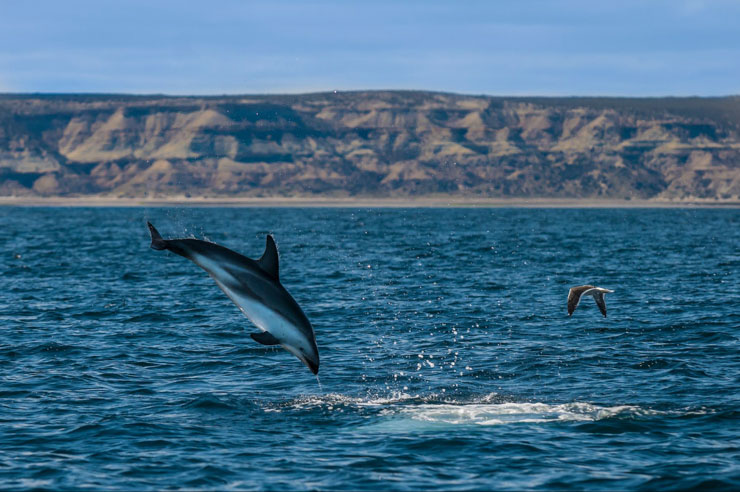
During early February, the area is alive with sea lions, dolphins, and diverse seabirds, while elephant seals and penguins also call these shores home. With our own private vessel, we remain agile, ready to pivot based on animal behavior and the shifting quality of the afternoon light.
The core of this session is capturing motion: the rhythm of the waves, the agility of the wildlife, and the drift of our boat.
To freeze the action of surfacing dolphins or birds in mid-air, we'll employ high shutter speeds. As sunset approaches, our focus will expand to include atmospheric silhouettes, backlit sea spray, and the evocative coastal scenery, potentially extending our shoot into the blue hour if the sky retains its vivid colors.
Golden hour begins at 7:59 pm, Sunset is at 8:38 pm, blue hour starts at 8:57 pm, and blue hour ends at 9:09 pm.
9:30 pm
It’s about time we wind down after an exhausting day of chasing the unique alignment of the cosmos and the pulse of the ocean.
We will gather together to share our favorite shots of the legendary "Ring of Fire" and the marine wildlife of the Atlantic during a farewell dinner at the hotel restaurant.
11:00 pm
Dinner ends, time to pack and sleep.
Tomorrow we’re going home.
Photographic Pills
- Capturing the legendary "Ring of Fire" annular solar eclipse near Sierra Grande
- Sunset and golden hour on a boat expedition in Puerto Madryn.
Day 9. Sunday, February 7th - The Farewell
5:45 am
One last early wake up call.
Pack your things! Time flies, doesn’t it?
6:30 am
Breakfast at the hotel restaurant.
Take this final opportunity to fuel up and share one last meal with your fellow PhotoPillers as we toast to the incredible memories made from the Patagonian steppe to the Atlantic coast.
It's a time for final goodbyes and exchanging contact details with the new friends you've journeyed with through the "Ring of Fire".
8:00 am
After a 1h drive, we finally get to our final destination: Almirante Marcos A. Zar Airport (REL).
As planes take to the sky, leaving behind the breathtaking vistas of Argentina that span from the jagged peaks of El Chaltén to the untamed marine wildlands of Península Valdés, every one of us carries not just photos but life-changing experiences.
The memory of the magnificent "Ring of Fire" annular solar eclipse, the crashing walls of Perito Moreno, the playful penguins at Estancia San Lorenzo, and the deep bonds forged with your fellow PhotoPillers have left an indelible mark on our souls.
This was not just another trip. It was an immersion, a deep dive into the raw pulse of nature, enriched by every sunrise chased, every coastline explored, and that magical moment when the sun turned into a blazing golden ring.
In the words of an old traveler's saying, "You will never be completely at home again because part of your heart will always be elsewhere." For many, a part of our hearts will forever belong to Argentina.
To every PhotoPiller: May the winds of the Atlantic plains forever echo in your heart, reminding you of this magical journey.
Until we meet again, keep chasing the light and capturing the wonders of our beautiful world.
Safe travels and adiós, dear friends.
Book Now and Save €500 (Only 12 Spots)
To book your spot to join the PhotoPills Expedition to Argentina (Annular Solar Eclipse) at a reduced price of €6,900 (the official price is €7,400), a €1,000 deposit is required by Sunday, August 2nd.
Price summary:
- Booking deposit: €1,000
- Total price: €6,900
The balance payment will be made via two payments due on the following dates:
- September 6th, 2026
- October 11th, 2026
Please, finalize your booking as soon as possible. The seats are sold on a first come, first served basis.
What’s included in the price
- PhotoPills Welcome pack.
- A 9-day expedition photographing Argentina with the Annular Solar Eclipse, the golden light, and local coastal wildlife.
- 9 days of learning, fun, and adventure with Antoni Cladera, Felix Inden (PhotoPills Masters), and the funniest geek community – the PhotoPillers.
- Full immersion in the PhotoPills method (Imagine.Plan.Shoot.!).
- All rooms are shared with another PhotoPiller (optional €900 single supplement upon availability)
- 3 nights at Chalten Suites Hotel (Bed and Breakfast).
- 1 night at Hotel Esplendor by Wyndham El Calafate (Bed and Breakfast).
- 1 night at Hotel Marriott Buenos Aires Downtown (Bed and Breakfast).
- 1 night at Hotel Rayentray Puerto Pirámides (Bed and Breakfast).
- 2 nights at Hotel Dazzler by Wyndham Puerto Madryn (Bed and Breakfast).
- Direct entry and specialized activities inside the solar eclipse target area.
- Special access to private land at Estancia San Lorenzo.
- Premium sunset boat expedition along the coastal marine wildlife reserve.
- National Park entry fees and wildlife area access codes.
- Domestic flights El Calafate - Buenos Aires (3rd February) / Buenos Aires - Trelew (4th February).
- Ground transportation during the entire expedition route
What’s not included
- International flights before and after the expedition.
- Arrival airport: Aeropuerto Internacional Comandante Armando Tola de El Calafate (FTE).
- Departure Airport: Almirante Marcos A. Zar Airport (REL)
- Airport transfers not explicitly mentioned in the timeline.
- Medical and travel insurance coverage (mandatory).
- Lunch & dinner.
- Snacks, alcohol, and carbonated beverages.
- Tourist visa.
- Personal certified solar filtration filters for camera lenses.
- Anything not mentioned in the “included” list.
Do you want an example of how huge this will be?
This is a glimpse to what happened in the PhotoPills Expedition to Iceland. We had so many adventures and so much fun... We can’t wait to go back for Argentina!
But you don’t have to take our word for granted. Here’s what some PhotoPillers say about the PhotoPills adventures:

“I went to Iceland expecting to have the opportunity to photograph the marvelous landscape and master nightscapes. What I encountered was so much more – 14 kindred souls from across the globe who share a passion for photography. Together we expanded our creative boundaries, learned from one another and had an insane amount of fun in the process. I am confident that everyone came away from the experience a better photographer.”

“From the very moment the guys from PhotoPills announced the expedition to Iceland... I didn’t think it twice! I was using PhotoPills but not at its full capacity, so I had no better chance to learn from the creators of this amazing app. The experience was even more amazing than anything I could have imagined. In Iceland, I discovered a bunch of folks as crazy about photography as I am. I had a blast!
Photography is a continuous learning process, you always find something new that motivates you to improve. And this adventure made me improve more than I could imagine.”

"The PhotoPills guys know how to create a fantastic experience. They bring an infectiously fun energy and are always willing to drop some handy photography knowledge on you that you will take with you. You take their trip and you'll for sure have a good time, get some amazing pics and leave a better photographer."

“During my experience in Iceland I lived wonderful moments and had surprises that were beyond the expected. It completely exceeded my initial expectations! Sharing knowledge, experiences and ways of working and living photography with such a great group has been one of the most enriching life experiences I have ever had.
Who he said that learning and knowledge sharing can not be wonderfully fun?”

“I can't say enough about what a fantastic time I had during the PhotoPills Iceland photo tour! The guys from PhotoPills and Donal Boyd were so knowledgeable, accommodating, and especially lots of fun. Never a dull moment – nonstop action and shooting of amazing landscapes for 10 days. I came away with enough images and memories to last a lifetime!”
FAQs
What’s the temperature in Argentinian Patagonia in late January / early February?
It’s summer, but don't let that fool you: Patagonia can still be incredibly unpredictable.
The average temperature in January ranges between 15ºC (59ºF) and 5ºC (41ºF), though fierce winds can make it feel much colder. While you won't find the valleys buried in deep winter snow, the high granite peaks will still flaunt their permanent glacial ice caps, contrasting beautifully against the summer terrain.
It’s key to wear different layers of clothing, including a lightweight base layer, an insulating middle layer, and a windproof, waterproof shell layer, to be able to adapt quickly to sudden temperature drops, intense Patagonian winds, and unexpected rain.
What do you recommend I bring along for the expedition?
Your sense of adventure and fun, your camera and your sense of humor, of course.
Besides that? Once you book your spot, we’ll send you further details and suggestions about what to bring (gear, clothing, etc.).
Is travel insurance included in the price of the expedition?
No, it’s not included.
You’ll need to secure your own coverage option. Under Decreto 366/2025, published in the Boletín Oficial de la República Argentina, all travelers in the country are legally required to maintain formal medical and travel insurance, either national or international.
We recommend choosing a travel insurance path that explicitly covers trip cancellation factors and unexpected medical contingencies.
What is the cancellation policy?
We hope you don’t need to cancel your spot, but if a situation arises where you don’t have a choice, our cancellation policy is the following.
If you choose not to join the Expedition, a cancellation fee may apply. This fee will be equivalent to the cost of the Expedition, minus any savings or additional income we generate
if we’re able to fill your spot with another participant.
If we’re able to fill your spot, we’ll refund the payments you’ve made, deducting a €300 administrative fee and any non-refundable costs retained by our travel partners.
However, if there are unavoidable and extraordinary circumstances at the destination or nearby that significantly affect the execution of the Expedition or the transportation of passengers to the destination, no penalty will be applied, and we will refund all payments you have made toward the Expedition.
Refunds will be paid by the same method that the original payment was made.
Credits: Images by Marco Grassi and Felix Inden.